Now, I’m 33.

When I was 3,

Thrilled to be a cowboy

I got a train set for Christmas or a birthday. Can’t remember which, my memory is fuzzy here, but it was definitely around the time I was obsessed with Thomas the Tank Engine – even with his creepy ass face. I was fascinated: to be able to create a mini-world with mere toys and to play out scenarios with imagination alone. Without instructions or prompting, I would “choo choo!” and move the train along and create stories. According to a reputable source (mom), I played very well alone. 

I remember the 요구르트 아줌마 (yogurt cart lady), pushing her yellow mini-refrigerator cart with her yellow umbrella and yellow outfit. The bell would ring through the streets and our apartment parking lot, calling children and grandmas (purchasing for their grandkids) within an earshot. They would gather with coins in hand. She’d greet us warmly, ask us about school, tell us to play nice and study hard, and to drink a lot of 요구르트. Sometimes, she would slip an extra little bottle for me. “한아 빨리 마셔라 아가!” (“drink one quickly, little one!”). I’d rush home with a slight sugar high.

In a short few years, my family and I would move to America. I would be introduced to Legos. My first set was an Old Wild West set. While I loved the cowboy, my favorite was the black plastic stallion. I’d just take the horse and gallop it all throughout my family friend’s house. Up and down the stairs, across the table, the bed, the ground, and even soar it through air – because why not? 

I would learn a language nearly wholly different from my mother tongue, and become much, much better at it. I would go from “뭐라고?“ to “watchu say?” This would set me on a certain path of language barriers between me and my parents. What started as overlapping frequencies – one playing 2000s American pop and the other 1980s Korean news – would eventually turn to radio silence. They would say something in Korean; I would respond in English; we’d go back and forth until either of us gets a sniff of understanding or gives up. 

I would become a Saturday morning cartoon kid. The only time I’d willingly and consistently wake up early was to catch Cartoon Network at 6:00 am. I didn’t know which show would play when, so I’d watch all of them. Ed, Edd, and Eddy; PowerPuff Girls; Courage the Cowardly Dog; Dexter’s Laboratory; Johnny Bravo; KND (Kids Next Door); Scooby Doo; Foster’s Home for Imaginary Friends; and the classics, such as Looney Tunes and Tom and Jerry. I’d watch any of these on repeat. 

I would be on the opposite of the largest ocean. I would see faces unlike mine, and befriend them. They would say I have small eyes. I would say they smell. They would make fun of my food. I would say their food looks like plastic. They would come over, and we’d run around the yard, playing make-belief about Dragonball Z or Transformers or Star Wars. Boyhood.


When I was 13,
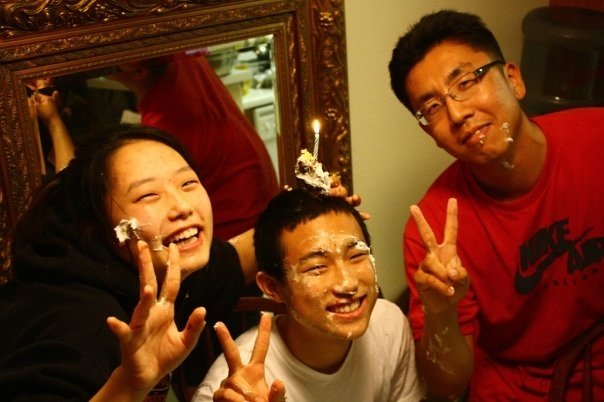
Sweet, sweet 16.

I changed my name from “Michael” to “Sooho.” My best friend at the time was also Michael, and we were together like white on rice. This was one of my earliest moments of agency. Reclaiming my birth name. 

My friends became family. We bonded over games and movies (not girls, yet). Sleepovers were the best. We crammed into the game room and played co-op Halo missions, freaking out about the space zombie Flood chasing us. We fought with Super Smash Bros, and then got into real brawls. We stayed up all night, wired and zoned in to finish that annoying mission or that boss. We even went to Barnes and Noble to check out game guides and walkthroughs. We brought our desktops to each other’s houses for a lan party. I crushed them in Star Craft but got seriously handled in Counter-Strike. We dared each other to drink a concoction of lemon juice, hot sauce, mayo, coke, and sesame oil just to stay awake and play more games into the night. 

In a year’s time, my parents would get divorced. I would move out of the house and live with my sisters. I wouldn’t be surprised. I saw it coming. The constant fights, both of them rarely home, the frequent flights to Korea. I don’t remember witnessing a moment of tenderness or affection between them. And it’s not like at that age my sisters and I were the glue holding the family together. We all had our own circles and lives. So, when the news dropped, I wasn’t surprised. I just asked what was for dinner. 

High school would start, and I would begin one of my obsessions: bboying or breakdancing. I mean I don’t want to say I was naturally talented, but I was kind of naturally talented. Years of Taekwondo honed my internal sense of balance and translated well to holding a freeze or pulling off a power move. 

It would be everything my friends and I ever did. After school, we’d rush back to either one of our houses (we all lived within a 10 min walk of each other), watch YouTube of the latest Korean bboy battles (IBE 2005 still legendary), go to the tennis courts or rec center and dance for hours. 

We’d rarely study (except for the dude who got into UC Berkeley). Only subject I was decent in back then is the subject I suck the most now: math. I could have taken linear algebra (higher than Calculus BC). Now, I can’t do a simple calculation without a calculator. 

I still talk to those guys. Our new obsession is F1. And I love it. We had a bit of a lull in our friendship after high school. Each of us went our own separate ways for a bit. But all it took was one short text, a shot in the dark. I didn’t even know if they had the same phone number. Anxiously I sent, “You still in SD? Wanna grab drinks?” I had no reason to be nervous. Three hours of laughter-filled yapping and beers, catching up and reminiscing. The Berkeley dude eventually moved back from the east coast, and we all got together. We got shit-faced on sipping tequila, played drunk Mario Kart, cackled till our bellies popped and tears ran down. I also got an earful for being horrendous on sim-racing. Reconnecting with them over the past few years has been a gift I didn’t know I needed.


When I was 23,
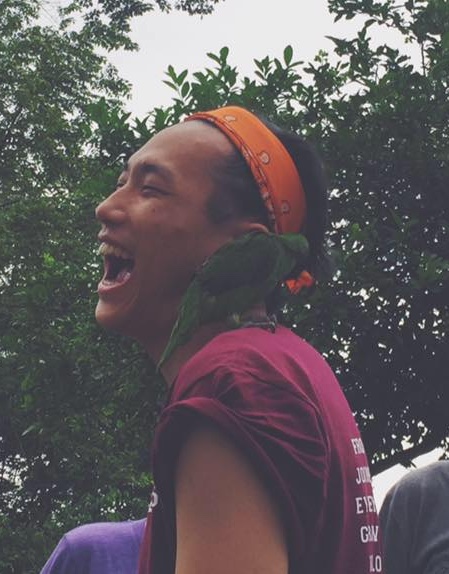
Parrot chomping on my ear

I finished college. Got dumped. Got my first car. Worked as a youth pastor. Got hit by a car. Dreamt of becoming a professor. 

For most of high school, I hated studying. I was a solid average student. My SAT score was neither stellar nor abysmal. My writing was clunky and uninspiring. Reading was a bore and a drag (the only book I remember I finished and enjoyed was Handmaid’s Tale). My parents weren’t the type to care too much, and I wasn’t self-motivated enough to care. None of the subjects interested me. 

But then college came around. It was just an intro class, but for some reason I poured myself into the readings. I dug through references at the library. I underlined, highlighted, and scribbled notes. I mulled over, drafted, edited, added, edited, and fine-tuned my arguments. I aced the class with flying colors. Then the next class and the next and the next. Even some Master’s courses, I aced them too.

What happened? I became obsessed. I would hole myself up at the library and read old, obscure, ancient texts. I’d forget to eat and run on liquid caffeine. I’d see words and smell old books whenever I closed my eyes to sleep. I fell in love with learning. I entered and embraced my nerd-stage. 

I once heard that ENFPs are notorious doctorate candidates. They just can’t pick a topic because they’re too interested in too many things. Surprise, surprise. I also had many iterations of research obsessions: Pentateuch (first five books of Old Testament), Job and Wisdom Literature, Johannine Studies, Athanasius, Augustine, Anselm, Martin Luther, Friedrich Schleiermacher, Søren Kierkegaard, Karl Barth, Eberhard Jüngel, Oliver Crisp, Katherine Sonderreger, Kathryn Tanner, trauma studies, post-colonial studies, and economics. (Okay, I’m name dropping, but the point is that I had many, many interests.) 

This was also around the time I first watched my favorite movie (and still is): Interstellar. (I would watch it at least ten more times over the next decade.) I became entranced. I love space shit. I fuckin’ love it. Ender’s GameDune, Foundations, C.S. Lewis’s masterful space trilogy, Ted Chiang’s fabulous short stories, Ken Liu’s mind-bending worlds and futurism, and Cixin Liu’s near-perfect Three Body Problem trilogy. I fuckin’ love it all. Sci-fi became for me an escape into a future possibility or an alternative universe that still wrestles with human longing for love, connection, hope. And whether learning or inhabiting a fictional world, I desperately needed an escape. 

I was 18, a week before spring break of freshman year, when I got a call from my sister. “Mom’s in the hospital. Get on the next flight home.” She collapsed in the middle of a parking lot and a nearby samaritan took her to the ER. I got on a flight, not knowing what happened. I landed, rushed to the hospital, and heard from the doctor’s lips: “Your mom has brain tumor.” 

My sister broke down wailing while I stared out the window absent minded. It was around 4 pm. The sun was still out and annoyingly beautiful. That iridescent Southern California afternoon. I saw a mom and a boy in the parking lot; the boy skipping along while holding her hand. “I’m never going to do that again,” I thought. 

After many months and years of painful memories (that I’ve written about elsewhere and don’t want to rehash here), my mom passed peacefully in 2018. While I didn’t skip, I got to hold her hand for the last time.


Now I’m 33.
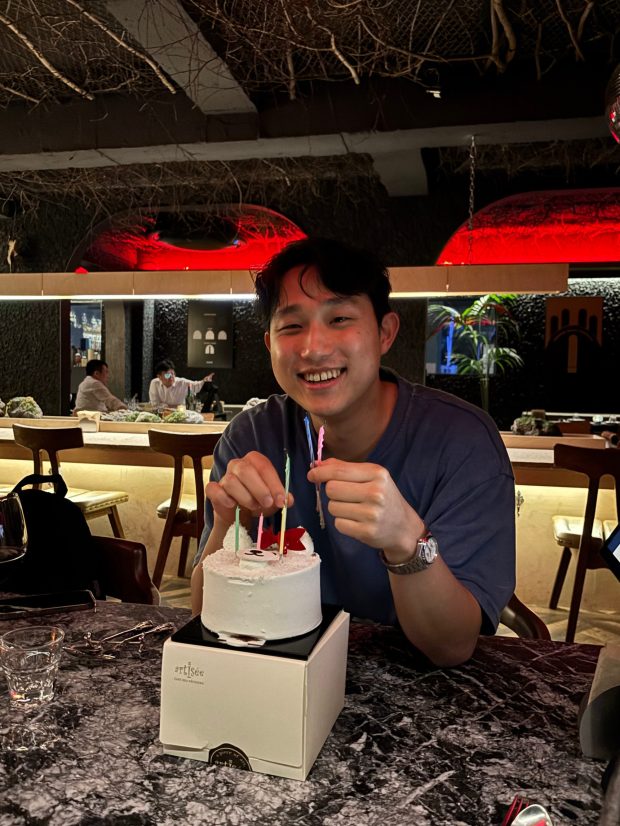
Turnin’ 33

The year Jesus died. He saved all of creation, and I can barely get myself out of bed at 10 am. 

Some say, 30s are the prime time of life: when the seeds you’ve sown in your 20s bud and come into fruition. When you begin to see the time you’ve put into work or your craft get recognition and accolades. The labor and sacrifice you’ve sweat and bled for start to pay dividends. The long hours of self-work, therapy, and nurturing friendships mold a model, healthy, and mature human being – confident and secure in who they are and their place in the world. When surviving finally turns the corner into thriving. 

I’m sorry, but did I miss the corner? Or is it coming soon? Is something wrong with my life’s GPS? When does it fucking turn from surviving to thriving? 

“Prime time of life.“ My ass. 

It’s much harder to lose weight. Got myself a little belly. Long gone are the days of eating and drinking whatever and whenever I want without consequences. Metabolism is now sluggish, so even if I eat less, I still gain and feel bloated. I probably should start running. I definitely need to start running. 

Getting over hangovers? Pure misery the following two days. It’s not simple recovery anymore; it’s always survival – live or die. I imagine my entire body like the ER after a night of drinking. My brain dealing with head trauma; my liver processing overtime to pump the alcohol; my stomach churning and screaming in confusion: “Why all this shit? Why isn’t he sleeping yet?” Pure chaos. 

I can’t remember a morning I didn’t wake up with some sort of lower back, neck, or shoulder pain. Sprinkle in chronic insomnia and undiagnosed ADHD and mild depression and you get a decent picture of my physical and mental wellbeing. 

I’ve suffered grief, isolation, loneliness, purposelessness. Wandering aimlessly. Drowning myself in cheap dopamine to dampen suffocating feelings. I’ve contemplated suicide, but who hasn’t in our day and age. (Tangent: Men loneliness and depression epidemic is real – be sure to check in on your homies.) 

“Prime time of life.“ My. Fucking. ASS.

But maybe I am getting what I deserve. If I’m really honest, I’m not the most hard working or go-getter or ambitious. I am lazy. I often dream big without follow up. I’d plan to work on stuff, but the moment I get to it I lose all motivation. I procrastinate because it’s so much goddamn easier. When I don’t want to, I just don’t. I don’t want to exercise, so I don’t. I don’t want to wake up on time, so I don’t. I don’t work on improving my craft or side-hustle or career, so I don’t. I tell myself to do things I hate, but I don’t. 

And it’s not funny or cute how easily I indulge in my foibles. It’s pathetic. I eat late and drink often. I binge entertainment. Doomscroll. Brainrot. And all this dopamine dampens the mind and heart. So, while I don’t complain much (“I’m doing alright”), I don’t really know how I feel or how to feel. I fear slipping into a downward spiral of self-hatred (“You fucking deserve every bad thing, you stupid piece of shit”) if I get too critical. But I also fear that another decade will fly by, and I’ll be the same or worse off. I have fire under my ass, but I’m so numb to it that I’m melting like molten metal. The house is on fire, and I say with a stupid face, “This is fine.” But it’s not. I know it’s not. 

I see my hands aged but not worn or weathered by hard labor. I look at the mirror (more often lately) and am not satisfied with what I see. My face shows signs of wrinkles from the constant pull of gravity but not from doing good and satisfying work. My eyes dull and my smile slight. “Is this how 30s are supposed to feel or look like?“ 

I’ve felt some real lows and continue to dip down time to time. But then again, if I’m really honest, I’ve also experienced and continue to experience real highs.

I’ve been madly in love. I’ve relished the scent and presence of another. I’ve been comforted by and delighted in another’s arms. I’ve laughed ‘til I cried and chortled so hard I fell off a chair. I’ve shed tears of relief and in response to beauty. I gleefully played in crisp ocean waves in unbearable heat. I savored umami flavors, stress-releasing spice, mind-boggling aromatics. I’d had blood course through my veins during the thrills of a damn fine show or movie. I’d had my heart thrashed and churned and stilled while reading. Rarely, very rarely, I’m proud of my writing. And I love deeply my friends and family and cherish them to the point of cathartic ache. 

This is how life feels. This is how life can feel. This is how I want life to feel. 


But it’s delusional to think I can go on like this: enjoying little things with little fires everywhere. So, I’m writing. I’m doing push-ups at home. I’m eating salad. I — well, I haven’t run yet, but I will. I’m putting myself out there while putting out these fires. I want to age well. I want to do things I hate so that I can love the little things more. 

Life’s both the highs and lows. The boring parts and the exciting ones. The depressive dips and the euphoric soars. When you’ve got to get your shit together and use that shit to grow. I’m still growing at 3, 13, 23, 33 and onward to 43 and beyond. 

It’s so sweet

Our breathing slows. Deeps breaths after deep breaths. He flips over and reaches for a cigarette. He lights it in bed and offers me one. I hesitate but he places an ashtray in front of me.

Don’t worry. We’ll crack the window open. The landlord already knows anyways, he says without worry.

After I take one, he gets out of bed to his LP collection. While I inhale noxious plumes, he studies each sleeve. He seems too engrossed to be scanning for a certain song. Instead, he’s weighing each album, whether side A or B as a whole would fit the vibe he’s looking for. A musical accompaniment to our silence, our smoke.

He doesn’t bother asking me if I want to hear something in particular. I’m not bothered. I don’t ask what he’s thinking about or give any suggestions. He’s not trying to impress me, I could tell. I’m not looking to be impressed. This is what he does for himself, not in an all self-absorbed and self-important manner. I mean, who doesn’t enjoy a good song after a good fuck?

I stub out my cigarette and put the ashtray back on his side table. I tire of waiting, so I turn and face the window – the window we were supposed to crack open but it was too cold or we’re too lazy to. I think about a second cigarette but stop.

It’s snowing, I turn towards him and say with quiet pleasure.

He looks from his collection and gaze out the window. He sees me and smiles. It’s the kind of smile that’s slight – amused – not fake nor belittling. His eye crinkle that sly, gorgeous eye-smile. He puts down his LP and crawls back into bed. He draws in close and holds me as I turn my back to him to face the window. I let him cover me, his arms just tight around my shoulders and chest. His heartbeat is steady on my shoulder. He breathes in deep as if to inhale me and savors that breath. I love when he does this even though I probably smell like sweat and smoke.

We can’t hear the snow, yet it fills the silence. Flurries cover the street with white purity, and the snow blankets our room with calm. Time slows as the snowflake listlessly fall, and the frost outside somehow warms us. It’s blissfully overwhelming.

I’m pulled into him. I turn and bury my face into his chest. His heartbeat now at my forehead. I had to face him. Like hot coals, this moment – us, smoking, the silence, the snow – burns within and I can barely hold it in. I had to share it with him by digging deeper into him, as if to enter him through his chest cavity. This time I breathe deep; I inhale and savor him.

He then kisses the top of my head. The coals cool. He understands that something was flaring within me. Or maybe not. Either way, I’ve shared with him the way I needed to, and he in his own way.

Our breathing synchronizes. It steadies. It slows. We drift back to sleep as the snow piles outside.


This short was written with Sweet by Cigarettes After Sex in mind.

It’s so sweet, knowing that you love me.
Though we don’t need to say it to each other, sweet
knowing that I love you, and
running my fingers through your hair.
It’s so sweet.

Ephemeral Ecstasy

The moment we make eye contact, even for a split second, I taste eternity. 

When our lips touch, I’m frozen in time with raging fire. 

She makes sense. I make sense. The world finally makes some fucking sense with brilliant clarity.

Everything is alive and burns like the dead stars we’re all made of. Everything matters because this moment matters. Yet nothing matters because only we matter. And in this paradox, we come alive as star dust. Rising from the ashes and the dirt, I see her and I am seen.

We stop kissing. She giggles. I can’t hear her because of the club music. But her crinkled nose and smiling eyes are more than enough to fill my ears. 

I can’t stop smiling. Please, don’t stop.

Don’t

She disappears. I don’t get her number or insta. I go out to find her, but she’s gone. 

Why did she leave? Was I not good enough? Did she not feel the same? Nothing makes sense. 

I touch my lips, trying to savor any last residue of our kiss. That too is gone. The memory of it is not good enough. Seconds turn into minutes and then into hours. I feel cold.

We made eye contact. I remember her crinkled nose and shimmering eyes. I taste that fleeting moment. That ephemeral ecstasy.

Summer Snapshots

A group of us during camp decided to canoe and kayak to the middle of the lake. It wasn’t my first time, but I fastened my life-vest extra tight. I was–am—pretty scared of any body of water teeming with marine life. I half-joked, “There might be a monster at the bottom of this lake.” I’d immediately regret mentioning it as I looked down the murky waters.

After a few minutes of kayaking, I forgot my previous apprehensions and so we started to fool around. One jumped into the lake and flipped the nearest kayak from underneath. It took surprising minimal effort. Sensing their boyish hunger for prank, I cranked my paddle to flee. The only time people coordinate flawlessly is when they want to mess with a common target. One kayak blocked my path and two boys sped to topple me. As soon as they reached, I screamed,

“Wait! Wait! I have my glasses!”

Too late. I didn’t even think to grab onto them because my arms were flailing wildly. After I resurfaced, my wet face felt bare. 

One friend felt bad so he dove and searched with his feet. After a few futile attempts, I told him to quit. It’s unfortunate but not the end of the world.

It’s still there. At the bottom of some random lake in Wisconsin. It’s amusing to think that there might be some sea creatures seeing the world with my prescription.

Well, old prescription since I got laser eye surgery. I don’t even see the world the same way. My glasses belong to the fishes now. 


It was my 10th or 11th birthday. Young enough that I didn’t know better but not young enough that I needed supervision at the beach. My friends and I would charge the ocean when the waves pulled back and stormed the beach when the waves came crashing in. We’d cackle with pure glee. Nothing was funnier than seeing your friend trip on nothing except his own excitement and have a wall of water slap his face. Your prepubescent friend would fumble whether to cry because he swallowed some sea water or learn that some embarrassment in good company are laugh worthy. 

Eventually, it was my turn to trip over. But it was a particularly strong wave that tossed and thrashed me. I got the wind knocked out of me. Losing my orientation, I couldn’t tell what’s up or down, where’s air or ground. I freaked. Primal fear of drowning flared in my genetic code. Eons ago, our ancestors made the irreversible decision to leave the oceans. We no longer belong in salty waters. 

I just started kicking, hoping to touch some ground and resurface. After a few somersaults underwater, I was successful. I heaved delicious, life-saving air into my lungs. “I’m alive!” I screamed internally. 

In reality, though, my life was not in any real danger. It was probably only a few seconds, and I was barreling towards land. 

I shuffled back and told my friends. Unsurprisingly, as kids with no real concept of death or mortality, they brushed it off. Not because they didn’t care that the birthday boy almost drowned but that they had no way to connect to death. My (barely) near-death also didn’t make me an expert, so I also didn’t know what to expect. Still, kids can say the most random-ass and comforting things:

“You should eat a hotdog. I’ll go get you one.” 


One summer I worked at this yuppie tapas restaurant in Wicker Park. So much shit happened.

I’ve never worked at a fast-paced restaurant before. On good nights, the restaurant runs as a well-oiled operation. The head chef as expo harks orders and garnishes the final touches; the line cooks sear, flip, fry, chop, sauce, and dish without respite; bartenders squeeze, blend, swirl, shake, and pour sensational drinks; the waiters break ice, joke, and ooze ambiance with breeze while the busboys (me) refresh plates and water. Like a symphony, our service sings in harmony with scrumptious delights. 

But if one thing goes wrong, someone screeches. I got my first earful when I left my post to refill water because waiters were stretched too thin. The sous-chef ripped me a new one: 

“Where the fuck were you? You don’t fucking leave your post until I fucking tell you, you stupid piece of fuck.” 

I was too shocked to feel guilty, ashamed, or bad.

Later the sous-chef joked with the head chef: “I think Sooho popped his virgin ears. Finally got his first yelling in the kitchen.” Head chef giggled and said, “Welcome to the family.” 

Was it verbal abuse? Sure. Was it toxic and manipulative that they brushed it off like that? 100%. Would I do the same? Maybe. Is it a funny memory now just like it was for them? Definitely. 


But that wasn’t the most traumatic thing that happened that summer. No. I got hit by a car cross-walking right in front of the restaurant. Green light for me and left-turn yield for the car. I have no fucking idea how she didn’t see me since I was wearing bright yellow shorts on a bright summer day. The tire ran over my foot (I was wearing Rainbow sandals), and I tumbled as the car slammed against my right leg. 

My coworker ran to the middle of the street, screaming, “Oh my god, Sooho just got hit by a car!”

Guess what the driver said. 

“Oh my god! Oh my god! Oh! I… I served you coffee! Earlier from the coffee shop!”

I stared at her in utter befuddlement. “Oh… so you are.” Then everything kind of blurred.

Ironically, it was the summer I bought my first car. A white Scion tC 2006. Banged up sides, but drove faithfully for 54,570 miles. I wrote a short ode here.


But there’s something even more traumatic that summer. The night I got sucker-punched by a rando in the middle of downtown Chicago. 

It was close to midnight and my friend and I were walking back to the train station to take the last train home. Before I got my car, I would commute by train from about 45 minutes outside of downtown. Usually, the walk from the Loop to the Amtrak station is safe with plenty of street lights and cops. But this one night, we missed our subway stop and had to walk the back-ish way. There was no one else on the street except this Asian woman – young, in her 20s — walking alone about 10 yards ahead of us. 

Then out of nowhere, this dude runs across from the other side of the street and stops in front of her. His wild eyes drilling into her. Even though from 10 yards behind, I could tell she was terrified. He kept blocking her when she tried to side-step him. He looked hungry. 

I didn’t know what to do. I didn’t want to do anything that could endanger me and my friend (another girl in her 20s). Without thinking, I just mad-dogged him. I locked eyes with him and didn’t break. 

His hunger flipped into rage. He let the woman go, and she ran off. He stomped towards me and I to him. We didn’t break our glare. He kept walking and passed my peripherals. I let out a breath I didn’t know I was holding. 

Everything went black. I heard my friend scream. My hand filled with blood as I covered my mouth instinctually. 

As soon as he was out of my sight, he spun and sucker-punched my front teeth. My friend later told me that he looked ready to attack again but decided against it and ran away. 

“I think I’m going to lose this tooth.”

My front tooth was inward about 45 degrees. 

I didn’t know what to do. I didn’t have money. I didn’t want to scare my sisters, so I didn’t tell them. I haven’t talked to my dad in years. My mom had brain cancer. So, I did what I thought was the most logical at the time: take a shot of cheap bourbon and shove the tooth back in. 

Fresh blood gushed out as I tried to force the tooth another centimeter. After nearly passing out from the pain, I finally broke down. I felt scared, ashamed, weak, pitiful. Not because I didn’t feel man enough, but I didn’t feel human. His violence stripped me naked of my humanity. I became a caged animal that a deranged man would abuse just because I dared to stare back. 

Miraculously, the dentist told me that the x-ray shows no immediate threat of losing the tooth. For the past five years, it’s been hanging on a thread of nerves.

Did I possibly saved a woman from rape or, worse, death? I don’t know, but I think it’s foolish to assume he would only mug her. Especially with those eyes. Would I do it again? Honest to god, I don’t know. Was it worth it? I, I don’t know. I don’t want to glamorize suffering. I gained nothing but trauma that night. I’m just glad no one else got hurt, and I didn’t lose my tooth. 


Plunge into the cold swimming pool to escape the heat. 

Lay on warm concrete like freshly baked loaf. 

Ham and cheese sandwich with potato chips, Capri-Sun, popsicles, Doritos and Goldfishes, cheesey fingers. 

Rinse and repeat.


The walk back to my apartment from campus was about 10-15 minutes. On the way home, though, we would frequent Total Wine & More, a warehouse with great staff and greater selection of alcoholic pleasures. My roommate and I were entering our “craft beers” phase. Hazy IPAs, Belgians, wheats, pales, sours, goses, farm house ales, whiskey-barrel aged brews, stouts, and more. Every other day or so, we’d carry a new six-pack home. 

Was it the most financially-sound (repeated) decision for us poor grad student and minimum-wage workers? 

No. I’m sure some months we spent more on beers than groceries. 

But there’s nothing like hearing your mate ask, “Want to try this one?” as he’s pouring you a glass. His girlfriend would join (I was the third roommate) with her choice of poison (often wine or cider and sometimes stout), and we’d move to his worn yet surprisingly sturdy IKEA table and just chat. Hours would go by. Sometimes we’d forget about dinner, so engrossed in talking about lore theories, what ridiculous things happened at work, what we’ve been reading and learning, that Sherlock game we obsessed about. These were the best of times. 


One time, my buddy was getting into mixology. So we expanded our shopping cart at Total Wine to some liquors, spirits, bitters, and seltzers. Our home drink menu started to boast sours, negroni, martinis, gimlets, sidecars, and so on. Not every drink was a banger. But some were absolutely delicious. This was when whiskey sours with egg whites became my go-to. 

After a few weeks, he wanted to host a group of our friends and just pound them with drinks. It was an excuse to get together, practice mixing, and get shit-faced. Well, we did all three spectacularly. He would make a drink, take a sip, pass it to us, and we’d do likewise. The last guy had the honor or burden to down the remains. There were only four of us, so the last guy was pretty much drowning half a cocktail in 5-minute increments. He got very drunk. Then all of us got giddy and a bit reckless. Someone recorded a video…

Sidebar: there was this professor who was a favorite among students, staff, and other faculty. Everybody fucking loved him. When our school had a lot of drama with racism, homophobia, politics, and drama, he stood out. Students confided in him; he finessed a number of uncomfortable conversations and situations and deescalated many potential disasters. In short, we all loved and looked up to him. 

Okay, back to the video:

“To the greatest fucking white academic anybody could aspire to be!”

My very drunk friend bellowed with drink in his hand. Shortly after which he crashed on the couch. It was a 20-second video of us slurring and yelling our affections and adorations. We sent it to him. 

He laughed and told us to be careful. 

And guess what? My very drunk friend finished his PhD with that professor. Passed with distinction. In other words, of the utmost superior quality and little to no correction needed. 


Summer magic means magical things can happen. But not all magic is good. Summer magic can also mean summer-what-the-fuck-just-happened.

You’ve just got to roll with the punches. Eventually, the good times will roll again. And when it does, hopefully you’ll cherish them more. 


Bojack Horseman: “Life’s a bitch and then you die, right?”

Diane Nyugen: “Sometimes. Sometimes life’s a bitch and then you keep living.”

Bojack: “Yeah.”

Diane: “But it’s a nice night, huh?”

Bojack: “Yeah. This is nice.”

Do Go Gentle into that Heinous Night

“Do not go gentle into that good night,
Old age should burn and rave at close of day;
Rage, rage against the dying of the light.“

I first heard this refrain in Christopher Nolan’s Interstellar from Professor Brand’s (Michael Caine) determined, grave, surreptitious voice. Taking the professor’s word, Cooper and his team leave an increasingly inhospitable earth in search for a new home among the stars. As the Endurance escapes earth’s orbit, the professor says,

“Do not go gentle into that good night,
Old age should burn and rave at close of day;
Rage, rage against the dying of the light.“

Like a mantra, this poem reverberates the stubborn perseverance humanity needs to survive. Whether to sustain a terrible lie for a false hope or to betray another for oneself, humanity should rage, rage against the dying of the light.

Some speculate Dylan Thomas wrote this for his ailing father, who passed 5 years after its publication. Thomas’s father suffered throat cancer. Initially, his father survived (beaten?) the cancer but eventually succumbed on the relapse. Did Thomas write this to celebrate his old man’s rage against the dying of the light? Or did he write this to spur his father to continue the fight, to not give in?

I recently came across Michael Sheen’s brilliant performance of this poem. It’s mournful yet resolute, powerful. 

The timing is uncanny, today being the death anniversary of my beloved mother, who also suffered cancer (of the brain). I think about this poem. Would I say this to her? Did I ever urge her to live while she quietly yet bravely fought these vile cells ravaging her brain and body? 

Do not go gentle into that good night, umma!
Old age should burn and rave at close of day;
Rage, rage against the dying of the light, umma!

Rage! Rage! Rage!

Rage against the cancer! Rage against the chemo! Rage against hair loss! Rage against organ failure! Rage against memory loss and brain damage. Rage against the pain. Rage against the painkiller. 

Rage, rage, rage.

She fought well. “One tough cookie,” as her doctor described her. She glowed peacefully. Her face mournful yet resolute, gentle almost. 

With the curtains drawn and alone with her, if given the chance, I would sit and hold her cold hand and say,

Do go gentle into that heinous night, umma.
Life should burn and rave at close of day; yet
Rest, rest at the dying of your light, umma.

To Jacob Carter,

It just takes one. One intentional act to blossom a beautiful relationship. A friendship filled with hilarious antics, warm embrace, and meaningful conversations. Jacob, you are that one—you always took that first step to grace people with your smile, wit, and creativity. 

We both worked at Sam’s (college campus coffee shop) but never together. You’ve heard of me, but I thought you were just one of many. After one random shift together, you came up to me and asked to grab brunch. I asked you what’s that. You told me it’s “yummy,” which then became one of my favorite words to describe food. 

The beginning

At Egglectic, you suggested eggs benedict. It became and still is my go-to brunch munchie. I don’t remember much of what we talked about, but it was a significant amount of time. The waiter refreshed our coffees twice. Even though it was our first real conversation, I think I told you about my mom—her cancer—and how my family have barely been staying afloat. You had the most gentle eyes, eyes that could swallow my tired attempts to stay positive. I felt seen. Thank you for brunch, eggs benedict, and for seeing me.


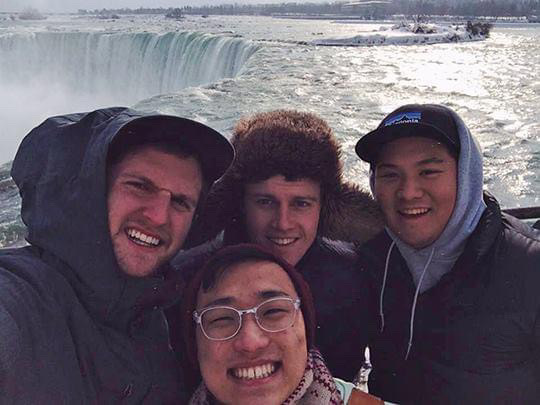
But you were a busy-bee and wildly popular. So, when I floated the idea to drive to Niagara Falls during winter break with Justin Lovett and Kevin Kim, I really didn’t expect you to say yes. (But also secretly hoping you would because you had the Prius.) The four of us never hung out. It was so poorly planned and dead middle of winter. Only our young 20-year-old brains convinced us that this trip was brilliant. 

Our one photo together from the trip.

12 hour drive from Chicago into Canada and then to Niagara Falls. But it took us 15+ hours. We took the first driving shift: you drove and I kept you company. We talked and talked and talked. Didn’t even noticed that we were going the wrong way for 3 hours. When we stopped by for gas, Justin came back and laughed: “Why are we in Grand Rapids?” You were so apologetic when you didn’t need to be. 

Niagara Falls was pretty, right? But we got done with it after 20 minutes. After a brief stop at Toronto, we stocked up on IPAs (what we called “Russian shit” because we didn’t know better) and drank through them while playing King’s Cup. First time I got drunk with friends was with you. 

We (almost) got into some mess. We drank way too many Jack and Cokes, tried to sneak into a club, got into a smaller one, dodged a fight with a drunkard, and crawled our way back to the 2.5 star motel. Best moment: you stopped me from drunk praying for a homeless handicap. Thank you for saying yes, for drinking with us, for possibly preventing one of us getting into a fight or jail.


That trip was a threshold moment for us. You pretty became the fifth roommate. Half the time you were drinking or already drunk. Sometimes after night class, I would walk in with you on the bathroom floor saying sorry while Justin was in the tub, hoping the warm water would wash away the alcohol infused into his bloodstream. I died. That picture will forever be seared into my memories, tilted “My two favorite white drunks.” 

The other half the time we were making silly videos (shout out #crescent5b on insta) or splattering ourselves with paint and taking studio photos. You were always so fun, so down for anything, so creative. These are just some of the reasons why people were drawn to you. The ways you find to fill the time together; they always seem to fly by. It was always good times with you. Thank you for the way you spend time with me and countless others around you.


On one of our adventures into Chicago, we talked about Saint Athanasius’s On the Incarnation. You were so fixated on the idea that Jesus saves because he became part of creation. That it is in being with us, eating with us, laughing and crying with us that we (not just humans) become redeemed, better, and more loving. I think the reason why you loved this idea so much was because you realized that the way you’ve tried to live—intentional, communal, creative—was validated by a saint. It was as if all the ways you’ve struggled to love others were seen and wholeheartedly approved. You are so loved, Jacob. Thank you for being so loving and so loved by others. 

This was, unsurprisingly, Jacob’s idea: “Let’s put this couch on top of the dumpster!”

We lost a lot of touch after graduation. You spent a year in the Middle East with Justin Lovett. I could’ve joined but decided against for personal reasons. I regret that time to time. It looks like you guys had fun. 

I had to move on and continue my education back in California. I also wanted to be near my mom  during her last years. You moved to Seattle. We would comment on each other’s stories or posts. But never a phone call or FaceTime. I regret that too. I wish I reached out more. It’s amazing how such a precious friendship can quickly fade to the background—still there but just not as relevant or bright.

Always supportive

Before I decided to move to Korea, I flew out to Seattle. I was seeing a different friend, but you made time for me. I told you about my experience of getting high for the first and how paranoid I felt. You laughed but didn’t judge. You finally told me you were gay. I wish, Jacob, of all the years you poured into me I reflected that same warm and gentle eyes at that moment. I was so happy you told me. I was so proud of who you were and were becoming. I loved you so much at that moment. Thank you for letting me be a part of your life. Thank you for being part of mine.


Life, in the end, seems to be about letting go. Nothing is permanent. Doors will close and some have already been shut. And as hard as it is, letting go is not the most difficult or painful part. The most painful is not saying good-bye.

I’m so sad that I’ll never see you again. I’ll miss you. I’ll always love and cherish you.

Good-bye and thank you, Jacob. 


To read more of the wonderful ways Jacob Carter has touched the lives of others, please visit jacobcarter.love to see a collection of letters, photos, and memories.

Mirror Guy.

So, this one night while getting my American fix for craft beers and fries we noticed a group of 4 dudes right outside this poppin’ pocha (포차). Original pochas are usually stationed outside along the street with these impossible-to-ignore red tarp coverings, dingy plastic tables and stools, usually an ajumma (아줌마, an older lady) serving anju (안주, food that accompanies alcohol), and generous wafts of soju (소주). This one, however, was indoors with mood lightning, sleek interior design, beautiful young people, and some fusion anju that definitely has cheese and is instagrammable. Still smells like soju, I guess. 

Back to the 4 dudes. Tall, handsome, built, paid some attention to their hair, smoking and looking at their phones. They were clearly together, most likely trying to hookup with some girls. They were on their phones a lot, maybe DMing someone they met before to come out—and to bring her friends. I don’t know. What’s—or who’s—important was Mirror Guy. 

Mirror Guy had slicked back hair; plain white, tight-fitted tee; basic denim jeans; and these god awfully loud, cowboy pointy boots. The way he stood and carried himself exuded self-confidence (or delusion). Chest-popping, shoulders wiggling to show his bulging muscles, leaning on one leg to show his triangle-figure. I think at one point he had his foot up on a step and elbows on his knees to showcase his blazing boots. 

The moment they stepped out together, they took a mirror selfie (groupie?). It was cute. 4 dudes taking a photo of their boyz night out. Then they took out cigarettes and phones. Except Mirror Guy. He kept his eyes on the mirror. He would turn his head side-to-side and graze his jawline with his finger. He fixes his postures and does that t-shirt pull that guys do (where you pinch the shirt right between your breasts and do a little pull or tug to “reset” your shirt fit). The other dudes don’t notice. They just used to Mirror Guy being Mirror Guy? They put out their cigarettes and walk back in. 

I order a second double IPA—pleasantly surprised by this one made in Korea—and continue chatting about Mirror Guy. I nurse my hoppy beer. Groups of girls, usually in pairs, take photos in front of the same mirror. They take a lot. 

Then Mirror Guy comes out alone. He sees the groups of girls, lights his cigarette, walks behind them, and, I swear to god, checks himself out while the girls were taking mirror selfies. He fixes his hair, touches his jawline, straightens his posture, and does another shirt pull. Oh my fucking god, I almost spit out my beer. He didn’t even try to talk to the girls. So absorbed and immersed into his reflection.

One of his buddies comes out to, I don’t know, maybe keep him company? But let’s be honest, Mirror Guy would never feel lonely as long as he has a mirror. The two chat, smoke, check their phones, laugh, and go back in. 

At this point, my night is already made. I’m enjoying beers with my fries and thanking God for Mirror Guy. 

Then this motherfucker comes out again. He lights his cigarette and enjoys himself in front of the mirror. And people walk in-between him and the mirror because, well, why wouldn’t they? He doesn’t have a phone out taking pictures, so they don’t assume anything. But as strangers pass by, he adjusts his position, swaying and leaning to the sides ever so slightly, to see himself better. God, this guy. You can’t make this shit up.

Eventually, the dudes leave—no girls tagging along. One of them points down the street, probably toward their next destination. They walk away but not without Mirror Guy getting one last look. He smiles and catches up with his buddies.

I’m smiling, too, buddy. I’m smiling, too.


Featured Photo: The Great Gatsby (2013, film).

Why is the sky blue?

Mmm, well what else could it be? Let’s say the sky was white, then what about the fluffy clouds? They wouldn’t stand out as much. If the sky was green, the proud trees with their greenery might seem less alive. If it was red, orange, yellow, then we might not enjoy the sunset and sunrise. If it was black, then what will happen to nighttime? And if it was purple… well, that’ll just be crazy.

But according to your logic, then the oceans and lakes don’t stand out. 

… true.

My teacher said that blue light is the particular lightwave frequency that’s produced when sunlight enters our atmospheres and interacts with the particles. If we had a different atmospheric make-up, then we would have a different sky color because light would scatter in a different way. For example, Venus has a constant yellow tint due to its high density of carbon dioxide. So, there’s nothing particularly special of a blue sky or the color blue.

Hah, look who’s a smart one. Glad you’re paying attention in class. But if you knew, why’d you ask?

Because she didn’t really answer my question. She only answered how it is blue, not why it is blue.

Aren’t they the same question? 

Not really. It’s like the difference between how you answer my questions—because I’m asking—vs why you answer them—because I’m your daughter. Or the difference between how birds migrate south during the winters and why; how caterpillars transform into butterflies and why.

But, dear, there’s a huge difference because those questions involve people or living beings. They have personal agency, collective behavior, DNA swaying tendencies, environment that pressure to do this or that. You know, things lightwave particles lack. They’re pure energy that zip through space and time.

But do they lack agency? How can we know for sure that every lightwave particle doesn’t choose to radiate towards us? What if, out of their own volition, they hit this and that particle in our atmosphere to scatter a certain blue hue for earthlings to enjoy? Every day, every moment, every single lightwave from the sun is working to accomplish this. Traveling millions of miles until they enter our eyes. And maybe that’s why the sky is blue: it’s because of them and for us.

He smiles, impressed but not shocked.

Sounds interesting. It would be nice if the universe is that generous to us, huh?

Isn’t it, though? It’s why you and I are sitting here, eating ice cream after school, and seeing our blue skies. If it’s not generous, it certainly feels like it.

Both attend to their ice cream before they completely melt.

It does, doesn’t it?

In 2021, Things Fell Apart.

This story has been delayed many times for many different reasons.

First, I didn’t want to make public such sensitive and vulnerable material.
Second, I halted writing multiple times because of overwhelming anger or grief.
Third, I became happier when I moved to Korea, so the bulk of the post felt distant.

But now, I post this for me. 2023 has not been an amazing year, so far. Rereading this draft a dozen time confirmed for me that life is shitty—often too many damn times—but it is also beautiful and precious. I think I need this reminder as I turn 31 soon.


Initially, this post was going to be an inflammatory harangue against Covid, the status of academia and religious studies, and my parents. I was hoping to garner pity by weaving a “the world is against me” story. And while many of the details are true to the best of my memory, the more I wrote the more I realized I was telling a different kind of story.

In my mind, I wanted to justify to friends and family why I fell apart during the pandemic. I wanted to be understood that I’m not a failure who was bested by Covid. Or to justify that my prolonged depression and inactivity were not due to laziness but to shock. But as the writing came to life under my fingers, a new horizon emerged and confronted these presumptions.

When I left San Diego and moved out of my dad’s for South Korea, I wept. I sobbed as I muttered: “Why is it so hard to love a parent?” The words slipped, and with it they released an anguish I’ve gnashed my teeth over for the past decade. Failed communications, colliding worldviews and priorities, tormenting expectations (from both sides), the guilt and regret that drive us to try again. It’s all so tiring and so exhausting.

I didn’t know how to love the two who made, birthed, and raised me in love: my parents.

2021 was a difficult year. Painful and dark. I started five or more drafts of this post. I couldn’t write beyond a few sentences. I would just close my laptop, not because of writer’s block but because of the tears.

It was an excruciating year.

I lost a significant part of myself in 2021. A key identity marker. A major cornerstone of my 20s; what drove and kept me stable and sane through some of my worst times. It all came crumbling down February 2021.


March 2011, my older sister calls me a week before my first spring break of college and mumbles through her sobbing, “Take the next flight home. Mom’s hospitalized and is taking a CAT scan. They suspect brain tumor.”

Two months before I even turned 20 that call forever changed the course of the next ten years: how I was to live, think, mature, make life decisions, see myself and my place within my family and the world. My 20s started with the person who delivered me to life on the brink of death.

Who can bear such life-crushing weight?


My first and main coping mechanism was to throw myself into other things. Long distance was of tremendous help: it’s much easier to enjoy friends and learning when your college is 2200 miles away from your sick mother.

In the beginning, I tried to think about my mom often, as I considered it my filial duty. But I would freeze. Who can enjoy friends and concentrate on turning in papers or deep philosophical quandaries when your own mother is literally losing her mind? I couldn’t, at least not without ignoring the thorn inching deeper into my subconscious. So, in college I severed the cord. I forged a new identity, and threw my all into nurturing it.

And I’m not going to lie: it was surprisingly easy to cut myself from her, especially since I’ve been cutting our bond for years.


2007, after the divorce mom disappears. She wins custody but leaves my sisters in charge of my well-being. The next time I see her is a year or so later.

Nobody explained that she tried to start a business in Korea. The first time she came back she handed me her business card with restrained glee and pride. I remembered only her English name, Grace, and nothing else on the card. (I wish I kept one of her cards.) I scoffed. I didn’t know much about business, but I had a feeling she wasn’t going to make it.

She didn’t. She came back pretty much penniless. We never talked about Korea, and I never saw those business cards again.

There are only losers in divorces. My dad lost custody of me, my mom the breadwinner and stability, my sisters their 20s, and I lost parents.

Nobody wins; nobody won.


The ground tilled. The seeds of anger and bitterness sown.

I begun to despise my parents.


June 2010, high school graduation, I saw dad for the first time in years. We shared a rare moment of exchanging a few words hindered by language barrier. I remember it with pain. I told him I decided to go to a Christian college, study bible and theology, and become a pastor.

Nothing can be hidden in the eyes. Even between strangers, the eyes are windows. We see because outside light comes in through the eyes, and our expressions are on display because inner light shines out through the eyes.

With subdued disappointment in his eyes, he says, “I wish you would study business and become a businessman like me.” I was furious. He disappears from my life, never asks what I want or how I was doing, and he comes for a hour or so during my graduation to tell me to do business—to live like him? I survived and thrived without him in my teens. I don’t need him to direct my adulthood. I wanted to tell him off.

Instead, with equally despondent eyes I said, “We’ll see.”


Initially, I thought those eyes were aimed at me, that he was disappointed in me, and that irritated me.

I now understand those eyes better. He was disappointed in himself. He knew how little time we spent together before and after the divorce, how little influence he’s had and has over me. I grew up without him. He could not suppress his regret, and I mistook his regret as disappointment in me.

In a fragile relationship, emotions are often misread. My dad’s disappointment in himself looked like disappointment in me.


Spring 2011, very quickly, in less than six months’ time, I swapped dreams of pastorate for academia. In my first year of college, I fell in love with research and writing; t’was as simple as that. My professors were inspiring, what I was studying was ground-breaking and world-building. I found wells of life in dead figures and their texts; I drank deeply with euphoric satisfaction. I consumed a proliferation of interpretations and disputes—a true smorgasbord. I loved the dissonance between texts and the harmony I had to forged. For years, theology was my sustenance.

I tasted life’s unfair bitterness when I heard news of my mom. But the crisis made theology even sweeter—more desired and needed. As my life’s family foundation was fissuring I decided, consciously or otherwise, to cement new ground. And on this rock, I built “Sooho as professor, as theologian” as a gaudy monument. I devoted my 20s to building this identity and dream. I guarded carefully it, and it prevented me from spiraling into utter despair.


In the early years, I blamed my mother for her brain tumor. I was being irrational and spiteful, but those first few years of the diagnosis were agonizing. During her seizures, she couldn’t recognize anybody, not even her children. Her medication made her berserk. Her spasms paralyzed her. When we took away her wallet, she threatened to run away by bus with the coins she scavenged around the house. Once she ran out the door, and I had to chase her. She screamed, “Stop chasing me! Help! Help! That man is chasing me!” She was scared. To her, nobody understood or knew her. She was utterly alone. To me, I lost my mom for the second time since the divorce. And I hated her for that.

I wish I was more emphatic, more loving, more understanding—more of anything else besides hate. She deserved none of my spite. When she ran away, I was so fed up and annoyed that I refused to emphasize with her. The rotten roots were too deep and entangled. It took years to unearth those seeds of anger and bitterness.


Nobody deserves cancer, much less brain tumor. It’s harrowing to see someone you love and has loved you without limits lose their mind. The field of mind and neurobiology is nebulous with new discoveries around every corner. But the simple fact is that if the mind is damaged so much more is lost than just neurons. For years, she lost her sense of selfhood. She was 51 when she was diagnosed, but her fairly young and healthy body deteriorated fast. She lost her independence and ability to choose: she could not leave, change diet, organize her day, decide what to do, or even use the bathroom without permission or assistance. She lost her future along with her present. And she almost lost her only son.

Seeing her suffer for so many years and at such young age shocked my outlook in life. Life could end instantly or slowly with much anguish. Cancer, most of all, makes no sense, so I likewise responded without much sense: with fury and spite.


January 2020, a fast-spreading respiratory virus named Covid-19 is slamming news headlines. I went to Europe the following month to continue my fellowship studies. How disruptive could a microscopic, nonliving entity be?

Very. Very, very.


July 2011, I was being selfish, but I lobbied hard to return to college. I didn’t want to be near mom and be bombarded with trauma, guilt, and anger. Unfairly, I wanted to dump the responsibility, again, on my sisters. But between full-time work and how unfeasible around-the-clock home care was, someone had to stay-home with mom.

I felt it slip through my fingers; I just started building this dream, this guiding lighthouse. Why must everything crumble together? I panicked—I didn’t want to let go.

I saw it in her eyes. My sister was exhausted. Lord knows she’ve done enough. She looked to me to see if I would lend a hand. I did not. She wasn’t too disappointed, however. She herself knew how taxing it is to care for an ailing parent, and she did not wish that upon me or anyone.


With unbelievable timing, the state came to cover many medical expenses. My mom was to receive her first of many chemotherapies, during which she would stay admitted at the hospital. That pernicious chemical coursing through her body left my mom weakened but more mentally recovered—she didn’t need constant care in the aftermath. She may have lost her hair, but she recognized her children.

But like some sinister cycle, the tumor relapsed, her mental capabilities began to fail again. She needed another round of that devastating treatment. But in the meantime, who will take care of her?

It was a perennial dilemma. In the course of three years, my mom suffered two relapses and three chemotherapies. I think I’ve heard the doctor say that my mom only has six months and that we should prepare for anything 6 or 7 times. Hearing that fucks with your mind. So, while away, I severed—I had to sever—myself from my mom. Far away, I was only Sooho the aspiring academic, not Sooho the son of a sick mother.


February 2020, it’s the ninth or tenth time dad called this month to tell me to come back to America. It’s the most he’s called in the past five years. Annoyed and stubbornly, I continue my European trek. Europe was still fine.


It’s the tenth time she’s called in the past hour. In the beginning, I would pick up almost every time and say, “Umma. Umma. Are you okay? Why did you call?” The line goes dead immediately. She calls again the next second. My sisters and I are the only ones on her contacts. Each of us would average 40-50 calls until her phone ran out of battery. Pretty soon, I started to screen most of her calls.

At some point, I realized she calls often because she forgets she called. My sisters and I were the only ones she had left. She probably wanted to hear our voices as she sat in that lonely nursing room, surrounded by elders way above her age, and constantly clouded with death. So, I started to pick up every time again. Sometimes we would actually talk, often repeated conversations: “Mmm, I’m still in away. Don’t worry I’ll be back”; “What do you want for lunch? Do you want 짜장면 (black bean noodles) again? Okay. Mmm, I’ll be there soon.”

But I never understood why she would hang up. I still don’t. Maybe the answer is too sad, and I shouldn’t try to make sense of it.


March 2020, Trump announces a deadline for US citizens residing in Europe wanting to return to American soil. A few days later, I board transatlantic flight from Vienna, Austria to Boston, Mass., USA with about 20 other people, effectively canceling my fellowship.


For years this was the routine: I would fly out for a weekend every other month to see her in the nursing home—a most depressing place. I would buy lunch, something the nursing home doesn’t cook, and feed her. We would spend a couple hours together. I turn on some Korean drama for us, or she naps while I read besides her. Time to time I would wheelchair her out to a nearby park or to some activity in the lobby. Some days were better than others. The worst were after spending hours with her, I would get in the car to leave, but she calls and asks when I was visiting that day.

I screamed and slammed against the wheel. Does any of this matter? Do any of these things add up to anything? What’s the point if she just forgets? Why try? I felt utterly helpless, so I just cried in the car. A few minutes later, I went to my sister’s for dinner. My first nephew was born then, so we spent most of the time talking about him, watching him, or entertaining him. I didn’t tell my sister anything. I slept and took a flight to Chicago the next day. I mentally left mom behind.

April 2020, I move to Montgomery, Alabama to help dad’s struggling business. Covid has been extremely unfriendly to the hospitality sector. For about six weeks, I worked side-by-side with my father who I haven’t spend more than five days since the divorce. I don’t want to repeat the details already written on my 28th birthday post. To keep it short: it was a miserable time. And, sadly, it wasn’t a one-time favor.


In wondrous irony, it was being far away that softened my heart of stone and fertilized my foul soil. As imperfect as my college was and still is, I can say with some confidence that I was “saved” during those formative years. The friends I’ve made, the mentors who’ve nurtured me, the studies I’ve absorbed, the ministries I’ve volunteered for; they all and more saved me from complete despair.

Little by little, stitch by stitch, I begun to reattach myself to my mom. Every call and every visit wasn’t horrible or horrifying. Holding my mom in my mind and heart didn’t burn like hot coals. Soon enough, I began to treasure her. I actually looked forward to flying back home.

I don’t know how else to describe that day besides a holy moment. The lunchtime sunlight was a bit brighter and warmer in that normally dull room, my mom’s face glowed, the outside world came to a hush as I fed my mom 순두부 (tofu stew). It was as if the world was witnessing a threshold moment of something that was in the works for years. I broke down in front of her. I’ve never cried in front of my mom in my teen and adult years, but this time I couldn’t hold back, and I didn’t. She wasn’t fully aware what was going on, but she looked peaceful—ready to receive whatever I was about to say. I held her hand and said through my sobs, “I forgive you. I finally, finally forgive you. Umma, please forgive me.”


July 2020, I start my PhD applications in earnest. I booked calls with previous and current PhD students under the supervisors I would love to work with. I’ve sent cold emails to professors asking if they could spare an hour for me to bombast them with questions. I signed up for GRE course (God, I hope standardized tests die). I planned the next few months for an uphill battle.


May 11, 2014, Commencement day, and freaking Mother’s Day. What are the odds. While I celebrate this landmark moment, my mother is still in her nursing home unaware of her son’s graduation.

For a long time, I did not appreciate Mother’s Day. Actually, I actively ignored it. Only after my sisters became mothers, did the day become special again. It’s amazing how bitter things can turn sweet.


December 2020, I’ve sent in my last PhD application. Months of revising my writing sample and personal statement, wrestling not only with the wording but also with myself—why would I want to do and pursue such a crazy, highly-competitive, and (frankly) least-lucrative career?

I’ve had some amazing conversations with friends, peers, and professors. My friends, many of them already in a doctoral program, cheered me on and reaffirmed my gifting and talent and creativity. My old professors (the ones I’ve asked for recommendations) likewise validated my tenacity inside and outside the classroom and vision. I even had a chance to converse with a potential supervisor, and he was thrilled for my ideas!

So, with determination and a shit-ton of nervous energy, I sent in my applications to Yale, University of Chicago, and Emory to study religious studies in conversation with economics, ecology, and ethics.


August 2016, I pack my tiny 2006 Scion tC with all my earthly belongings and drove west. Chicago to Los Angeles was about a 30-hour drive. There were times I almost got stranded in a cellphone dead-zone. (America is big. Always fill your gas tank at every gas station if you’re doing a roadtrip.) After two years of youth ministries, I was ready to take the next step toward fulfilling my academic goals: going to graduate school.

Now, I could list a sterling list of Fuller’s appeals and benefits and why it was such a good fit, but the real reason was because I wanted to be close to my mom. Attending a seminary and living in Pasadena gave me the opportunity to see my mom at least once a week for a few hours. It was probably one of the best decisions I’ve ever made. My only regret is that I didn’t move back sooner.


February 2021, “Thank you for your application. Unfortunately…”

The culmination of about a decade’s worth of planning, working, and dreaming fell apart after receiving three emails starting with those words.

I felt cold. And numb. I felt like I was drowning, but without the panic. Just sinking deeper with my lungs filling with anguish. I felt myself fold inward; I caved in and didn’t want to come out.
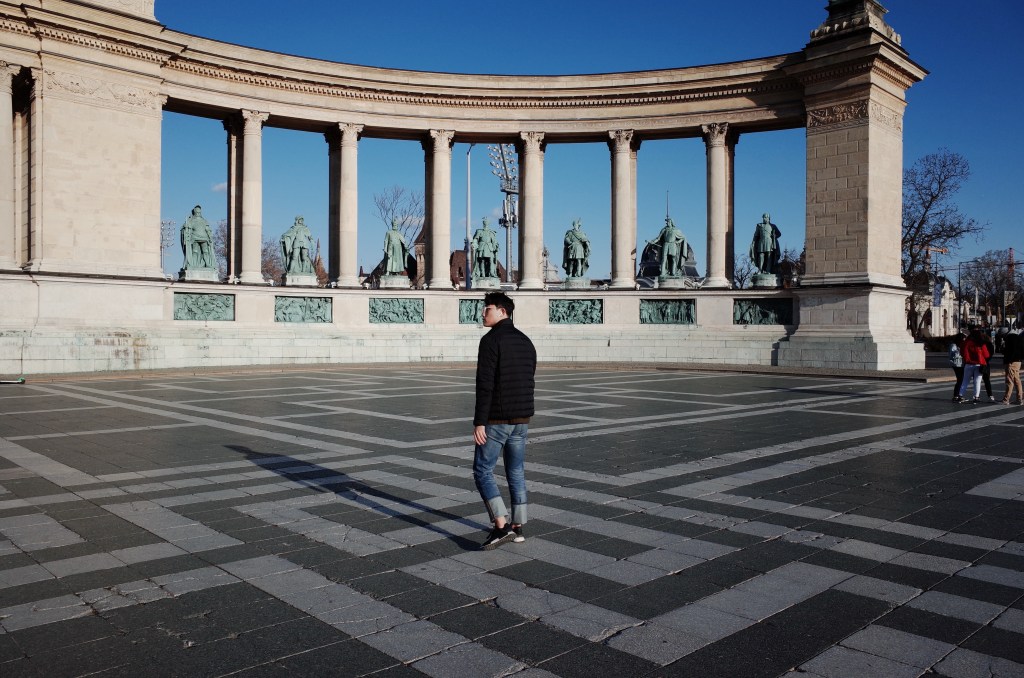
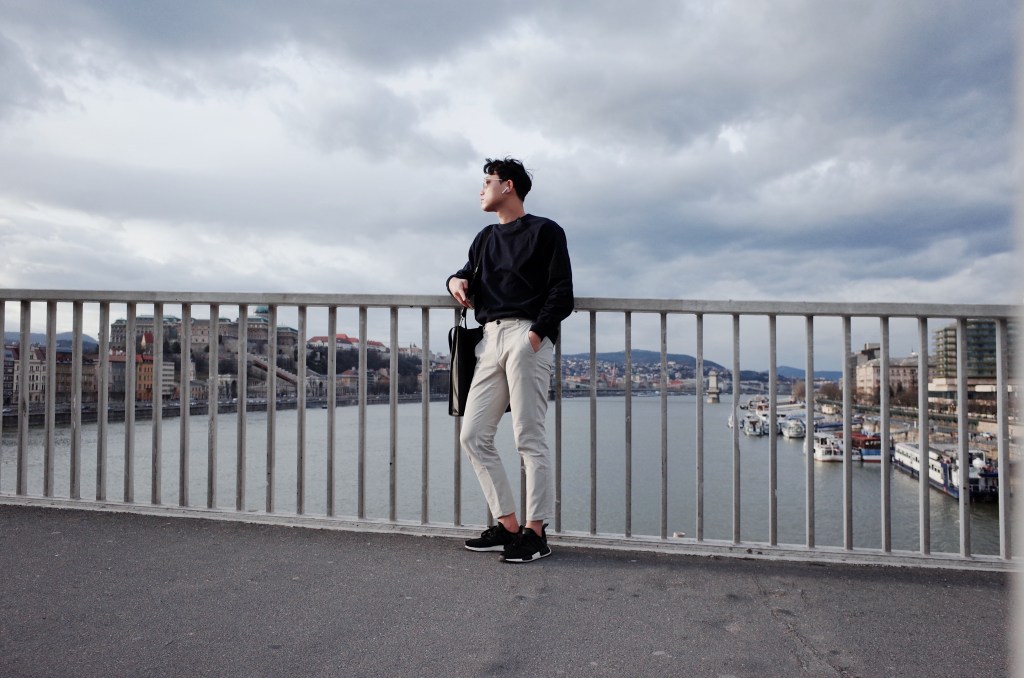
For weeks, I didn’t tell anybody. I felt so ashamed. A failure.

“Sooho as professor, as theologian” came crumbling down. The foundation, the very reason I kept going in my 20s, cracked under the immense weight of the tsunami.


April 2018, my older sister calls, “Go to mom’s nursing home. Now.”

It was Saturday and usually I see mom on Sunday, so I asked, “Why?”

“She’s gone, Sooho.”


There is no one way to process grief. Some throw themselves to new projects or activities, because life must go on. Others, like myself, shut down.

For about two weeks, I stayed in my room or my sister’s place and slept 14-16 hours a day. I would eat one meal, watch TV, ignore my phone’s notifications, and go back to sleep. I remember I would cry; cry until I had no more tears and my face felt hot. I cried because of shame and regret—I wish I could’ve done more. I cried because she was gone—and there’s nothing more I can do. I cried because she was so young, and I’m young. I cried because her suffering is finally over.

Death is cruel. But death of a parent, especially a mother, is earth-shattering. The very body that bore me unto life is no longer.


May 2021, I, once again, go back to Alabama to help my dad’s business. Covid and old age wore him down, and he decided to sell the business. The stress was unbearable, so he needed help to finalize everything, teach the new owner, pack-up, and move out.

It was not easy. My dad and I fought a lot. There were incompetent workers in abundance. I clocked-in nearly 16 hours (or more) a day, seven days a week for about 6-7 weeks. Things rarely went smoothly. Crisis after crisis.

I collapsed about half way through. I’ve felt it for a long time, but I finally told someone: “I cannot find a reason to continue, to go on. I want to end.”

Stuck in the middle of god-forsaken nowhere, alone, overworked, and stressed, I viscerally would scream on the inside: “There’s nothing about me, right now, that I like. I hate where my life has been, where it is, and how it seems to go nowhere. I enjoy none of this. I hate everything about me and my life. Why should I continue?”

Somehow, I did. And eventually, my dad found a buyer, packed his belongings, and cleaned the house. We all left Alabama, hopefully, for good.


April 2019, my sisters and I gather to honor my mom’s first death-anniversary. We ate at her favorite sushi restaurant, got on a boat to spread her ashes in the Pacific Ocean, and enjoyed a picnic under the beautiful San Diego sun.

Right before we got on the boat, I opened an email from the fellowship committee: “Congratulations.” My sisters cheered and embraced me: “Mom, must be looking out for you.”


The Parish Pulpit Fellowship is an exclusive research fellowship that awards one or two Master of Divinity graduates funds to travel outside of the U.S. and study homiletics (the art of preaching).

After my mom’s passing, I felt lost. I made one major life decision (moving back to California) based on mom. She was my North Star for a time. Now that she is at final rest, I realized I had freedom and independence to imagine new possibilities I never would’ve entertained—such as traveling the world.

Even though Covid interrupted my fellowship plans, I am still deeply grateful that the committee chose me.


August 2021, I’m back in San Diego. I moved in with my dad and step-mom, with all the awkwardness and stress thereof.

I felt lost and without motivation. My dad and I clashed whenever he brought up what I’m doing with my life, to stop wasting it, to find a business to pursue.

2021 was supposed to be a monumental year. Crawling out the pandemic, entering the last year of my 20s, hearing back PhD programs and finally moving forward in my career that I’ve dreamt about since 20.

2021 was anything but those things. The ramifications of covid still lingered. I entered my last year of my 20s rejected from PhD programs and utterly dejected about life and my 30s.

I felt like a failure and someone far behind everyone else. I would browse through LinkedIn and be impressed, proud of people I know and barely know. They’re switching jobs, getting promotions, posting that they’re hiring, sharing accomplishments and breakthroughs. Their professional smile beams as they continue to rack up months and years in experience.

I, on the other hand, played golf at my dad’s country club. I had it very good and the absolute minimal stress. So then why was I so unhappy? My depression loomed above despite all the ease I’ve had. Golf was an escape, and it never solved the deeper issue.


September 2019, I decided to go to South Korea first for my fellowship. Reconnecting with my roots should be good for my research, yeah? It also didn’t hurt that I’ve always wanted to spend a few years after college in Korea (but familial duties to my mother came first).

This was the projected timeline: 4 months in Korea (including visits to Japan, Taiwan, Malaysia, and Cambodia); 1 month in Budapest, Hungary; a few weeks in Vienna, Austria and Prague, Czech; 3 months in Scotland; 3 months in Germany; and capping it off with a month or so back in Seoul before America.

Then Covid gets its ugly little fingers everywhere fucks everything up.


December 2021, an English academy in Korea finally gets back to me and asks for an interview. We Zoomed, I mock taught a session, and he gave me an offer the next day but asked if I can start in two months.

I replied, yes.


Deciding to move to Korea was a quick but not an easy decision, especially at my age. It still feels like I’m going backward or escaping. Maybe it was an escape from my dad.

But it was my decision. I used what little agency I had to leave. To sow this worn soul back in the motherland. I’m still hoping it was the right decision. Nobody notices a seedling growing until sprouts appear. Only the farmer who’d sown the seed knows of its existence. I don’t know yet what my soul will bear—a luscious fruit, a resplendent flower, a mighty oak tree, or just some grass. For now, I’ll continue to wake up every morning, drink water, get some sun (after putting on sunscreen), work on short-term and long-term projects, enjoy the little things, feel the big things, and try to sleep 7-8 hours.


About a third of the time I’ve known my mom, she was sick. About a fourth she was away in Korea after the divorce.

About a half of the time I’ve known dad, he’s been away. The other half he was rarely home.

I blame them because they’ve done blameworthy things. But I no longer hate them. I’m learning to pull those rotten roots of bitterness. Learning to love them, however, requires time to let scarred ground heal. I want to plant new seeds soon—maybe there are some already.


January 2022, I wept on the plane. I felt ashamed not just because I didn’t love my dad enough, but of everything I bottled up inside for the past decade. Even then I had an inkling of desire for the plane to crash and end my fatigue. I let myself entertain the thought and quietly but firmly said, “No.”

And I will continue to say No as long as I can because those thoughts tend to come back.

Plans fail and life is often shitty. That’s just a fact of being human. And it sucks so much because so many times I just want what I’ve worked for and dreamed about to work out. When my plans failed (the year-long fellowship and the decade-long dream of academia), the scariest part was not depression and shame but the inability to dream again.

Somehow, I found the courage to dream and hope again. It’s such a precious gift. So, fruit or flower, tree or grass, I will water.

In 2021, things fell apart. In 2022 and onwards, I will dream and hope again.

Why Fish Don’t Exist // Lulu Miller.

I first heard of Lulu Miller on RadioLab years ago, back when podcasts were part of my daily regimen in Chicago. On my 30-45 minute drives to libraries and students’ houses for tutoring, I would pop the next RadioLab episode about some newfound mushroom, undiscovered murder stories, unimaginable futuristic technologies, the lightness and heaviness of passion and love. Miller came as guest reporter a few times before producing her own NPR branch: Invisibilia, a show about the hidden yet powerful forces that shape human behavior. One episode led to the next until I finish the first season in a week. “Wow,” I thought, “she’s a really good storyteller.”

Then I moved to California, stopped commuting, and stopped listening to podcasts.

Nearly six years later, I come across this strange title with a golden stenciled-fish at Kyobo (Korean version of Barnes and Noble). “Lulu Miller…” like some light coating on the tongue, her name sounds so familiar.

I thumb through the book and read this line:

Chaos will get them.

It’s not if, it’s when. Chaos is the only sure thing in this world.

What an opener. I’m completely hooked.

Chaos and the Great Temptation

Chaos. Entropy. Order. Second law of thermodynamics.

These are vogue words. Every sci-fi fan and their moms know or have heard of these.

“Heat moves from hot to cold, from excited to cool.”
“Disorder or entropy in the universe increases over time.”
“Everything moves from low to high entropy, from highly ordered to highly chaotic. There’s no stopping it.”

Or, according to Statistical Physics for Babies, chaos or high entropy is statistically more likely to happen. It is far more likely that your room and closet will be messy over time than organized—that is until someone (like yourself) empties “that chair” stacked high with clothes and hangs them.

That someone in Lulu Miller’s book is David Starr Jordan: groundbreaking ichthyologist (fish taxonomist, or someone who gives fish fancy latin names), world explorer, prolific author, first president of Stanford University, and so much more.

The gall Jordan had against chaos was admirable, even attractive. Two chaotic events almost eviscerated his life’s work—once by a freak-lightning strike and another by the 1906 San Francisco earthquake. Decades of exploring and studying, thousands of unique fish meticulously labeled and carefully preserved burned to a crisp or shattered—many forever lost, never to be known again. Jordan knelt before the ashes and rubble and stuck his middle finger to Chaos. He grabbed his needle and stitched the fish’s bestowed name—a slice of order—onto the scales. In utter defiance to chaos, to randomness and disorder, he relentlessly claims order.

At her lowest, Miller found Jordan a shining example of persistence and grit. She wanted—needed—to get to the bottom of his undying fire and dedication to purpose and passion. When the Great Temptation, the gun or pill, crept up—like it does for so many of us—she dug into Jordan’s life. Alone, lost, heartbroken, and depressed, Jordan became her North Star that would guide her next years. In her quest to uncover the man, she discovers unsavory truths about him and herself. Her biography of Jordan mashes with her autobiography.

Just like her podcasts, the writing is gripping. I finished in a day of commuting between tutoring.

“You Matter.”

The Great Temptation is so real. Statistically, I’m not sure how many have had thought about it. But for those who have taken the Great Temptation seriously, all reality melts into it. Nothing matters. Numbness—the bodily equivalent to mental nothingness—slowly paralyzes the body and things slow down. Life’s neat categories starts to dissolve: time becomes an ocean, where morning, day, night becomes one unidentifiable wave after another; space around you becomes suffocating or infinitely distant; food tastes like sand and feels like gravel; one’s own body becomes foreign and one’s mind a menace. The Great Temptation offers an escape—not a solution—from nothingness, from chaos and disorder.

Lulu Miller’s greatest service in the book is not the biography of David Starr Jordan (who becomes a foil to her own life), but her serious acceptance of the chaotic, scientific perspective and honesty of the existential dread thereof. Her journey begins when her seven-year-old self asks her hard, scientific dad the meaning of life. He responds coldly without skipping a beat: Nothing; there is no meaning to life. He drops this bomb on his daughter’s lap while enjoying an intimate father-daughter moment watching birds. Your life, my life, your mom’s and sisters’, your friends’ and every stranger who have lived and will live do not matter. Chaos will not only kill them but it will also erase any memory of them. So, don’t look for meaning. Probably not the best thing a parent to tell their young child. Untimely or not, she accepts chaos and entropy as eternal king and queen of the universe—they will have their way.

It’s one thing to know nothing matters and that everything will eventually unwind into chaos; it’s another to feel it deep inside your bones. In fact, the dread of nothingness is what solidifies true knowledge that nothing matters. The dread becomes a sickness that plagues your thought and imagination. Everything in your purview is clouded with destruction: ecological and environmental doom, economic collapse, nuclear fear, nationalism and totalitarianism, A.I. superiority, a maniac with a gun. There is no order, only chaos. In response, some live only for themselves, pleasure, or short-term gains. Others, like David Starr Jordan, are driven by some heavenly purpose to bring silvers of order. Many move on because they have mouths to feed and bills to pay. Few are privileged or punished to sit and deal with the existential dread. Lulu Miller is one of the few who bravely braced the challenge.

Nothing matters, her dad once said and that chaos continually repeats. But you do, not because you are orderly or perfect. Not because I can neatly fit you in a box or categorize the world that makes divine or logical sense. No, you matter because you mean something—are meaningful—to someone. And to feel that is the most powerful antidote to the dread of nothingness and the Great Temptation.

The greatest defiance to chaos is not order or grit or blind perseverance. It’s the small gestures of belonging, homeliness, and communal affection. It’s passion for something bigger and smaller than you. Even though it is statistically more likely (or unstoppable) that the universe will be scattered in a disorderly and chaotic manner, only our ability to embrace and behold one another is and will be what delays such powerful inevitability. And that matters.

That’s Life.

“Did you hear about Hank?”

“What ‘bout him?”

“He’s back at it again…”

Hank was sober for what felt like only a few minutes. His friends and family begged him not to go back. They did the whole thing. Buzzing around him, telling him to stay away from the stuff. I can’t blame the guy, though. That sweet nectar, that unbelievable explosion of happy juice in the brain the moment it touches your lips. One wants to just drown in it. And sadly, many more than one actually do.

We all know someone—close or not—who never really escaped that nectar’s allure. Kids hide the fact that they’ve took a hit of Honey (is that what they are calling it these days?). Parents would freak and lecture endlessly about how only real losers who’ve given up on life return to the stuff. As if they weren’t kids before and didn’t try a lick.

“Damn. That sucks for Beth. How she holding up?”

“She’s distracted. Or trying to stay distracted. But you know, their marriage became so fickle after the incident with their kid.”

“Oh shit, I totally forgot about that. He was—“

“He was there that day when the building collapsed. It’s nuts because the rubble in the aftermath killed more.”

“How does that work?”

“I don’t know! Who really knows how the Secret Hand works!”

“Dude. It was an earthquake.”

“That’s what the news say. But I don’t buy it. How did those who were no where near the site die too?”

He has a point. The news say an earthquake or some natural disaster out of our hands cause erratic deaths, but they say that all the time. ‘A hurricane leveled 5 bodies in 3 different locations.’ What? How?

The Secret Hand is this really stupid conspiracy theory that some menacingly huge being is out to get us. Some even say that this being owns the whole world we live in. It’s so stupid that I don’t even want to talk about it.

“So, how is Beth trying to stay distracted?”

“The Light Above.”

“You gotta be fucking kidding me.”

“Dead serious.”

“That cult? Com’ on. Everybody knows it’s a cult. A death cult, that’s what it is.”

“Well, she’s—we’ve—been surrounded by death so much these days… I’m not too surprised. And their message is kind of encouraging, you know? ‘Aspire for great things and you’ll blaze in glory.’ That’s some inspiring shit.”

“Or just shit.”

The Burning Glory. The Iron Furnace. The Light Above. Cults like these constantly pop-up and disappear. But they always manage to gather eccentric followers: desperate dreamers for The Burning Glory, chauvinist dicks for The Iron Furnace, beaten and downtrodden (like Beth) for The Light Above. And they all promise the same thing. Become your best self, shut out the haters, do the hard work to soar high until you blaze in glory.

Damn… am I just hating because I’m so… so mediocre? Yes, mom, I won’t hit Honey, but sorry, dad, I can’t “reach for the stars.” I just want to live out my time by spending it with good friends, talking about shit and life. Just stay in my line but enjoy the little things. Maybe get married and do my species a favor, yell at my own kids, grow old and flop dead. Or…

I could leave.

The world is so big. The wind, the blue skies, the sunshine, the freedom. Away from Honey, The Secret Hand, The Light Above—away from it all! It’ll just be me and nature.

That’s it. I’m leaving. There must be more to this life.


On its way out, the fly got stuck on the window net. The human swatted it, picked the dead body with some tissue, and threw it in the trash can outside. That’s a fly’s life.


Inspirations for this short could be far and wide. I remember hearing Aesop’s fable about the Fly and the Moth. Once, a greedy Fly sucked up delicious honey until it was too close and got stuck. A passing-by Moth shamed the Fly for his greed before lighting up in flames by flying too close to a candle. While fables are meant for moral rearing, I was more intrigued by the idea of bugs being greedy, judge-y, and ashamed.

Another source could be Pixar’s Bug’s Life. The bugs have such wonderful array of personalities, aspirations, and conflicts. They’re just like humans. Some bugs are trailblazers and outside-thinkers, others are servile and survival-focused. Some do whatever to become more, others are happy with the status quo.

But, to be honest, I got the idea while I was swatting away and leaving sugar traps to kill fruit flies in the kitchen. As I was fuming with anger, I noticed that different flies died differently. I then imagined that they might have their own rich lives with dreams, successes, and regrets. Too bad I wanted them all dead.

I’m awake.

I’m awake.

Damn, that was a long nap. It’s dark out. We only planned for a quick 30-minute power nap before heading out again.

Minky is up playing with herself. Maybe she woke me up? I told my girlfriend I didn’t want a cat or any pet. She insisted: it’s her place, her responsibility, her rules. I couldn’t really argue with that.

I turn on the desktop across the bedroom. Minky is flipping her shit right by my chair—her favorite spot happens to be just by wherever I want to be. I pull the chair ever so slightly and slip in. Still, she’s cute. Reminds me of my previous roommate’s cat, but much quieter. I turn around and drop my hand towards her so she can lick or bite it—she’s still in that phase.

“Hey, Moo-m—“

She’s a black-and-white cat. I wanted to name her moo-moo, because she had cow-like patterns. My girlfriend absolutely refused, though she later admits that it’s kind of cute.

This thing by my chair, however, doesn’t look like a cow or a cat. It’s a blurry, black-and-white mess. It’s in constant flux yet in slow motion, as if a photo taken at night with the shutter speed too low. You can’t make out what it is just by looking at it unless you know what it is.

Wait a minute.

Sooyeun doesn’t have a cat. She also doesn’t use a desktop. Why did I say it was my chair?

Oh shit. I’m in a dream.

I… I don’t know why, but I feel like I need to wake up.

This isn’t her place. I feel locked up or someone is trying to get me. Someone is looking at me.

I need to get out.


I’m awake.

I quickly get up and look across the bedroom. Oh good. No cat, no desktop. Sooyeun is still sleeping. Well, I’m wide awake now, might as well get dressed.

Her bedroom isn’t really a separate room. There’s a glass partition that sections off her bed and the living room/kitchen area. Most Korean apartments are designed this way to save building material and create an open and spacious sense. But really, it’s just a way to deny the reality that it’s a small space.

But right across her “bedroom” is a concrete wall with speckled design. I never noticed it before, but at night it looks like a star-filled night. Even half-asleep, my space-obsession shows. This one looks like one of the recent photos from James Webb Space Telescope.

In fact, this wall looks too much like the photo. It’s still dark out, hence dark inside the apartment, so why is the wall shining?

Fuck. I’m still dreaming. Shit! I need to wak—


I’m awake.

I don’t get up this time. I just turn my head. No shining walls. Sooyeon is still asleep. I look up and stare at the ceiling. Surely third time’s a charm? I close my eyes; I’m exhausted. Since she’s still sleeping, might as well sleep some more and figure out din…

My eyes shot open. Chills.

“You need to get up.”

Icy, airy. A voice from outside pierced the window and into my heart. Since it skipped my ears, it sounded muffled, but I knew the words clearly.

“You need to get up now.”

I KNOW. I WANT TO WAKE UP.


I’m awa—

What the? I feel like I’m melting—no, more like dissolving. I lift my sloshing arms, head, and torso. Everything feels like it’s being pulled down but without my bone integrity. My arms stretch down; my bones are elastic, my skin slips down.

It’s not painful; I feel no pain. But I’m horrified. Frightened. I can’t wake up. I scream Sooyeon’s name, but nothing comes out. I only hear my shrill voice in my head

HELP. HELP. SOOYEON. SOOYEON. I WANT TO WAKE UP. I DON’T LIKE THIS. SOMEBODY.

Why is this happening? Who are you? Why are you doing this to me? What do you want from me?

“You need to wake up.”


I’m awake.

I jump up. I slap around my arms and body—bones and ribs all there. I quickly survey the area: no cat, no desktop, no shining walls. No freaky voices, either. I grab my phone—something that wasn’t in my dreams. 9:13 pm. I slept barely over an hour. I turn and see Sooyeon. Still sound asleep. It’s incredible how peaceful she looks despite my nightmares.

Even though I didn’t really scream, my throat feels dry. I get out of bed and drink some water. Nothing like cold water to splash some reality on you. The coolness slips down my throat and reactivates my spine. I’m really awake.

I click open maps and start searching places to eat. It’s late, but it’s also Seoul—things never close. Maybe some meat and soju? I should wake her up and ask what she wants or doesn’t want.

I turn toward the bed.

ding-da-ding

I… kicked something?

I haven’t turned on the lights, but I stare down in horror.

A toy mouse.


This is based on a recent dream/nightmare. Name changed.

We have lift off…again

I’m back, baby.

It’s been about two years since my last post (my harangue against life on my 28th birthday). The first wave of the pandemic shook my core, and I froze all writing and creative ventures. Everything felt so meaningless. And futile. Who the fuck cares about what I write? I certainly didn’t. So, naturally I stopped. I took down my website and put it in the back-burner.

Until I woke up to an email saying WordPress auto-charged me for two more years. Well, shit.

That was a year ago, a few months after I got rejected from PhD programs (I’ll get to it later. But that’s the gist: I got rejected, and I was depressed). I did revamp the site, shift the focus, and then once again left it in the back-burner.

Now, I’m drafting this (re)launch post in my local coffee shop in 잠실 (Jamsil), my neighborhood in 서울 (Seoul), which is where I live. Yes, I’m a Seoulite. A lot has happened.

This time I want to do more than just log the ins-and-outs, the wants-and-dones of life. I want to write because I want creative life to juice my brain again. I want to savor clarity and cadence, a well-written sentence, a suggestive or rambunctious semi-colon or em-dash—you know, nerdy shit.

It’s not just I want to feel alive again; I want to care again. I’ve done “nothing-matters” and “world-is-going-to-burn-anyways” nihilism. Fun stuff but too exhausting. Not caring is more draining than caring. At least when you care you can feel fed and full. Not caring can feel “refreshing,” but anything is annoying when it overstays its initial welcome. All fresh things can rot.

So,
I will type words; I will put words down.
I will plaster the online space once again; I will care again.

Happy 28th, Sooho.

Two years ago on April 21, 2018, a month before my 26th birthday, my mother passed away. A year ago, my sisters and I celebrated her first death anniversary by boarding a small yacht and spreading her ashes in open Pacific Ocean waters. It was a particularly marvelous, San Diego spring day. Also on that day, I was notified by Fuller’s Preaching Department that I was awarded the Parish Pulpit Fellowship—a research fellowship that affords the recipient generous liberty to chart the course, place, and pace of study. It made both the death anniversary and the award special: remembering and thanking mother for her life and looking forward to mine.

This year on April 21, 2020, I spent the morning firing one of my dad’s employee, golfing 18-holes late afternoon, and working front desk until midnight. It was a bizarre day. I didn’t do much reminiscing.

Today, I turn 28. I’ve extended my stay in Montgomery, Alabama a month and half longer to help my dad’s business. It’s been a bizarre couple months.

_

Yes, on March 19, 2020, I left Vienna, Austria on a nearly empty transatlantic flight to Boston, cancelling all future Parish Fellowship plans and starting the mandatory 14-day self-quarantine at my sister’s place.

The fellowship was one of the highlights of the past ten years. I had unprecedented freedom to live, read, study, relax, and travel. I was free from stringent financial stress, thanks to the fellowship’s grant and my fairly low-budget life. I was free from academic hustle: I read whatever I thought relevant or interesting; I also watched K-Dramas without feeling guilty. I was free from sleep depravation. I was free from most familial pressures (mostly self-produced), such as constantly preparing for future success. It felt strange and even unnerving to have had such freedom for a year. For nearly ten years I based major life decisions with my mom’s health in mind. At times, I silently rejected such burden by staying away in Chicago, but still carrying a lump in deep recess. Other times, I readily accepted the load with tears and laughter every Sunday at her nursing home. After her passing and the fellowship grant at hand the year 2019-2020 looked like a blank canvas for what unprecedented freedom might look like for Sooho.

_

One of the best and most difficult decisions in my life was to move back to California in 2016. I finished my second year serving as a youth pastor at NKFPC, and thriving at it. I loved the kids, the parents, and the staff. It’s rare for someone to love their first job out of college—even rarer for aspiring pastors in an immigrant setting. Despite the low-pay, hustling three jobs, and long weekends—only possible by relentless energy fresh out of college but no means sustainable in the long-run, in my opinion—I loved what I was doing and who I was becoming. But I had an itch, a lump in deep recess that put me on pause time to time: I wonder how mom’s doing.

The conviction settled quietly—deep convictions are rarely raucous and so quick. I was not to move to California for Fuller or furthering my academic pursuits. Seminary was secondary. More strongly and clearly, I was to move to California to be near my ailing mother. I had “to learn how to be a son to my mom”—this is word-for-word four years ago. Who said these words? Me, but not just me: the idea and the courage to mouth them came from God.

At the time and until recently, I thought the precious two years I visited my mom in the nursing home every week was for us. To heal past wounds. For me to forgive her for abandoning me after the divorce and burdening me and my sisters with her sickness. For me to ask for forgiveness for harboring such bitterness (though my mom’s mind was not all there due to the brain tumor). To catch up on loss time. I would feed her, watch K-dramas together, or read quietly as she napped. To mend harsh memories into more full-bodied ones: she did not abandon me, she tried to find a job in Korea; she did not burden us, she fought to live for us.

What I didn’t realize is how it prepared me for living with my dad (in Montgomery, Alabama of all places). Situation with my dad could not be more opposite than with my mom, however. My dad is workaholic par excellence: often he forgets what day of the week it is because he works relentlessly every day. And every day is different with ten new things to learn and a hundred tasks to do. My mom was in a nursing home where the slow pace is intended for caution (unless of an emergency). Every day of the week felt the same. Spending time together by working at a hotel vs spending time together by doing what I like for about two hours every Sunday (putting lotion on mom’s hands and face, attempting to read aloud the Korean bible to my mom, watching K-drama). Despite the obvious vast differences, the goal stayed relatively the same: to heal past wounds, to forgive and be forgiven, to mend memories.

Also to learn golf, I guess.

My dad is a golf fanatic, and he’s quite good. I, on the other hand, quit at a young age: I was 11, and I wanted to spend time with friends rather than lugging a golf bag under the sun for 4-5 hours. I decided to pick golf back up while here. I can spend time with dad, and I get some vitamin-D during these strange times of Covid-19 and stay-at-home. For someone who hasn’t touched a golf club in 15 years, I think I’m decent. And tightening my hands around the grip felt extra special after my dad whispered, “These clubs are old, but they used to be your mother’s.”

_

I fought with my dad more times in the past six weeks than in the 27 years before. One Sunday, at around the 14th hole, I’ve had enough of dad’s flood of coaching and said, “Dad, for this hole, don’t say anything anymore.” On a different day I shouted after my dad told me I overshot: “Can’t you just say ‘Ah, that’s okay! Next time!’ I know when I make a bad shot, dad.” One morning I picked up the phone with a groggy voice to an angry voice: “Are you still sleeping!?” His words pierced through my groggy haze. I hung up, stormed into his office, and said firmly: “Do not call me like that ever again. I worked until 2 am, woke up at 4 and 6 am because guests called, and I ran to the front desk. You didn’t even ask how I slept.”

To my dad’s credit he takes my words, despite how roughly or poorly I say it in Korean. He doesn’t barge into my room to tell me that too much sleep makes a lazy and useless person (to which I slowly sat up and responded, “Am I just a worker to you?”). He slightly eased up on his flurry of comments. And rare moments he quietly acknowledged that he was wrong with reformed actions.

One night my dad was in a good mood: though business is slow, he got to golf 18-holes (both of us played well that day), so we decided to grill some meat and drink soju. I was grilling the meats while my dad after 2-3 shots of soju blabbered about life, work, and golf, and how happy he is these days. He then grabbed a raw potato, peeled, chopped, and brought it to the grill. I cautioned him: “Dad, one at a time, one at… ONE AT A TIME.” He dumped the entire load on the pan and said stubbornly: “This is how you’re supposed to grill potatoes.” I gave up and tried to organize the potatoes and meats on the pan. A few minutes later dad asked, “What’s taking you so long with the meat?” “IT’S BECAUSE OF YOUR (DAMN) POTATOES. LOOK AT THE PAN, DAD. THE PAN IS 80% POTATOES. THERE’S NO SPACE FOR MEAT BECAUSE THE POTATOES COOK SO SLOW.” He sat back quietly with a smirk.

The next time we grilled, he put 4 potato slices at a time.

I also laughed with my dad so much more in the past weeks than before. “Your oldest sister is most like me, your middle sister most like mom; you’re a mix.” He took a shot of soju, “Maybe that’s why I can never get you to do business with me!” I chuckled and said as I poured another shot, “Dad, after these past weeks, I don’t think I’ll ever do business with you.” We took our shots: “You work too hard.”

We cackled about misbehaving employees working a bit straighter after realizing that my dad has a son who came out of nowhere and is fluent in English. We chuckled about companies who’ve given him past grievances speaking more politely after I took the phone and said in perfect parlance, “Hello, this is Mr. Lee’s son. As you can tell, my father’s English is a bit weak. Could you repeat what you said?”

Originally, my dad was going to sell his business and retire this year, but Covid-19 delayed his plans for about three years.
“It’s just three more years. The value of the business will get back up, and I’ll be able to retire with peace of mind.”
“You’ll be 70 then.”
“I know, but I’ll try to move to San Diego before and fly to Montgomery time-to-time.”
“You’ll need a house with a pool for Aidan and Asher, you know.”
“I know. I will.”

_

I didn’t want to come to help my dad for numerous reasons. One, I knew U.S. had to shut down, and Montgomery did not seem like a top choice for stay-at-home life. Two, I have not spent longer than five days with my dad at a time since the divorce nearly 13 years ago. Three, and most importantly, I did not want to betray—or what felt like betraying—mom and the precious two years we shared. But again the conviction settled quietly whilst in Vienna, Austria, before my sisters or dad suggested the idea. I knew I had to go and help him in Montgomery, Alabama. Underneath the “go help dad” resolve laid the deeper “learn how to be a son to dad” conviction.

Still I resisted. I cried that night. Why should I help him? I don’t want to; I just don’t want to. But, I know I have to. It’s not I should, as if I’m returning some favor, but the firmer I have to.

I first felt the same way when I realized I had to move back to California. It felt like swallowing a rock: choking on how I couldn’t for some reason fuss or cuss. Accepting that conviction took its sweet time passing down the esophagus.

That night in Vienna kind of boiled down to this, I think: Why should I be near my dad when he had not for me? Like I said, he is and always has been a workaholic, so he was rarely home.

But learning how to be a son is not contingent on model parents. Despite the grievances I can list from both my mom and dad, I wanted and needed to learn how to be a son. And, in my experience, learning how to be one involves understanding and forgiving major and minor shortcomings. These are riches that cannot be rushed nor so easily attained. They come surely, however, through the gift of presence.

_

The stress of running a hotel with (unbelievably) unreliable employees and during a pandemic is bottomless. Still, my dad says he’s doing better and can sleep with peace in mind. He attributes his well-being to teaching me golf, sharing soju and meals, watching and guiding me how to run a hotel. All the things he wanted to do but didn’t. I, on the other hand, attribute to prolonged presence. Even though numerous times I wanted to rip my own hair out because I spent 12-14 hours straight with my dad. But looking back, we’ve both grown. He is saying things I’ve always wanted to hear more: I’m proud of you, you live your own life, and you’re different from me. I’m saying things I held back on: don’t talk like that, I can take care of it, and I love you, dad.

_

I’m a jobless, a bit directionless, an unmarried 28-year-old son of Korean immigrants. Probably not the stellar son my dad had hoped for when I was born, but I’m the only he’s got.

What I do have I first reluctantly gave but found later is more precious than any accolade: presence.

_

Friends, I hope these strange times we live in will not strain but widen, deepen, and lengthen what shared presence does to humans, namely, to teach them to love.

Cheers,

The Sabbath // Abraham Joshua Heschel.

With relentless energy Abraham Joshua Heschel seizes the soul and announces the beauty and grandeur of Sabbath: Here comes the queen and bride of humankind! She “is a bride, and its celebration is like a wedding” (54). But Sabbath is also a queen: she commands attention and graces presence. The legal and spiritual weights of Sabbath are melded; we observe with solemnity and exuberance (62). Thus Heschel distills the wisdom of Sabbath into such arresting analogy. 

Sabbath comes weekly as “a moment of resurrection” and “an example of the world to come” (66, 73). Regularly and briefly, humanity glimpses and tastes the Holy—life infused with “the spirit of the Messiah” (68). Sabbath marks and makes time holy; she blankets the seventh day as “a day of harmony and peace, peace between man and man, peace within man, and peace with all things…. All that is divine in the world is brought into union with God. This is Sabbath, and the true happiness of the universe” (31-2). She is bride, yes, but she is also “a sign of the covenant” between God and humanity (54). Deeper and more scandalous, she is “an illustration of God’s need for human love” (60). The Sabbath is God’s gift of rest to humanity—a sliver of eternity in a day, or as Heschel poets, “eternity utters a day”—but she is also humanity’s gift to God, not of equal value but one with infinite expectation. The Sabbath glimmers the truth that God desires us. 

Humanity returns to fulfill divine desire in blending the Sabbath command and the covet command: Thou shalt not covet things of space (property and things), but only covet things of time, namely the eternal Sabbath (90-1). One has to learn “how to relish the taste of Sabbath while still in this world,” and if not “one will be unable to enjoy the taste of eternity in the world to come” (74). To covet Sabbath is to desire and relish life with God. 

Sabbath is a day of maximal delight, and it is a sin to be angry, sad, and even to repent and worry on such a day (29-31). It is “a delight to the soul and a delight to the body,” resting both from work (18). The Sabbath does not spite work, as if the other six days are unimportant; nor does Sabbath exist because of work, as if it is the week’s pitstop. Sabbath is not the interlude but “the climax of living” (14). To delight in Sabbath, to enjoy “perfect rest is an art… the art of painting on the canvas of time the mysterious grandeur of the climax of creation” (14, 16). It is the art of keeping Sabbath holy, to sanctify “with all thy heart, with all thy soul and with all thy senses.” God sheds light on how to sanctify Sabbath: “by choice meals, by beautitful garments; delight your soul with pleasure and I will reward you for this very pleasure” (18-9). Sabbath keeping is, therefore, both law and pleasure, both a queen to obey and a bride to delight. 

The Sabbath is a short, accessible work. Heschel reserves more philosophical lines to a minimum. Instead, within such tight economy of words, Heschel devotes nearly a third to Rabbinic parables and metaphors, especially Sabbath as queen and bride. This speaks to the nature of Sabbath: it is beyond philosophical comprehension and abstraction by being so elusive yet near. The Sabbath can only be gestured with words; instead, it is meant to be tasted with bodies in time. 

The bulk is devoted to the elevation of time above space. Humanity gained control of the world of space, Heschel claims, but at the expense of time (3). Humanity has more than ever before, but we have lost the ability to exist well in time. We sit uncomfortably with idle time—we rather have things to occupy our hands. We’re so uncomfortable with time that we make it subservient to the conquest of space; time becomes money (5). But we’re fooled: space is temporary and passing, but time is eternal (96-8). Thus the phrase “running out of time” means something profoundly different: time is not slipping through our fingers like gold coins, but rather space is running outside the realm of time. The higher goal of life is not to amass things of space, but “to face sacred moments”—to be seared and forged by them (6). Time is where humanity encounters God (100). So, the conquest of space must be subservient to sacred moments, labor and work subservient to rest. 


Heschel’s insistence on the greater importance of time over space is intriguing, betraying more mysticism than vague gnosticism. Heschel abandons neither space nor labor; both only have their place in right relation to time and eternity. Ordering time over space in importance resolves modern humanity’s vexing problem of materialism by “attaining some degree of independence” from the world of space (28). Again, Heschel makes conquest of space in service to holy moments. 

Willie James Jennings, on the other hand, glories in the beauty and power of place. Where we stand in the dirt tells us who we are and forms who we will be. This is not space in exclusion to time, however. How long we spend on this or that dirt is just as important and revealing as where this or that dirt is. For example, how many blue-collar jobs are overworking outside during this Covid-19 pandemic vs white-collar jobs safely quarantined within homes. Jennings would challenge Heschel’s notion of conquest of space, I believe. Instead of conquest, humanity’s cultivation of space. Holy moments burn our souls, but earthy roots grounds our bodies—both are essential to live well with God and others here and now unto forever. 

Brave New World // Aldous Huxley.

Summer 2005, after finishing seventh grade I spent long hours at ELITE Pre-SAT bootcamp. I don’t remember a lick of any of their thousand-dollar tips or whether they helped. But I do remember this: hating Brave New World by Aldous Huxley. I don’t think I even finished it.

Why ELITE thought it was a good idea to have a bunch of middle schoolers read a dystopian about a utopian society with endless sex and enough drug trips to literally soothe large swaths of humanity into social-prison is beyond me. All I wanted then was to play StarCraft (and I still do).

Spring 2020, I finished Brave New World (thanks, Audible and, I guess, Covid-19, since after the tenth hour of TV my eyes starts to throb). I must have not even tried back in 2005: I don’t remember anything. But I’m glad I read now. It’s a classic and a model for dystopians.


What’s freakiest about the brave new world is not its predetermined, genetically-modified, socially-engineered classes nor the indoctrination fortifying the distinctions but “a gram of soma.” Soma is a happiness-producing drug. It soothes away all forms of pain. Taking soma is also called going on holiday—slipping from one utopian to another. One can emulate effects of soma with mezcal but with an awful hangover the following day. Soma, however, does not have any side-effects, just bliss. It’s the perfect reward. No, more than that, it’s the perfect means to stabilize utopia. Without it, no amount of genetic modification or indoctrination can quell humanity into such happy subservience.

Mustapha Mond, one of the World Controllers leading the brave new world was a promising scientist when he was younger. But as he aged, he sacrificed truth, scientific freedom, and personal happiness for “Community, Identity, and Stability”—the brave new world’s utilitarian motto. Everyone belongs to everybody for universal happiness. Mond states:

“Universal happiness keeps the wheel turning; truth and beauty can’t…. What’s the point of truth or beauty or knowledge when the anthrax bombs are popping all around you? That was when science first began to be controlled–after the Nine Years’ War. People were ready to have even their appetites controlled then. Anything for a quiet life. We’ve gone on controlling ever since. It hasn’t been very good for truth, of course. But it’s been very good for happiness.”

Happiness at the cost of truth and beauty is the bedrock of this brave new world. The pursuit of happiness is an unalienable right of every human being, so says the United States Declaration of Independence. Mond rather says that it is the unalienable right of collective humanity, and every human being must sacrifice to guard and fulfill it.

The pursuit of happiness is also found in religious circles. But happiness according to, say, Augustine or Aquinas looks acutely different from Mond. For Augustine, the source of all happiness is found in God, not in stability. Happiness is lived in virtue formed and virtue enjoyed. Sacrificial charity softens hardened hearts to experience a kind of love that would not be otherwise. These virtue-forming sacrifices are not genetically-modified and socially-engineered like in Mond’s world: Deltas and Epsilons have to play their lower parts and Alphas and Betas their greater parts. Most of all, happiness is not automatic of the output of some formula: one sacrifice does not give a trip like a gram of soma does. In fact, the most substantial difference between religious happiness and Mond’s is how the former relinquishes control of happiness. Truly, if God is the source of happiness, then happiness cannot be formulated, engineered, and administered. Therefore, it is a pursuit, not a dose.


The brilliance of Brave New World is how at face-value such utopian society is terrifying, but reasons why are not so apparent. When John invoked his right to be unhappy and isolated from the happy, collective society, it eventually led him hanging. The chilling last words betray how unfamiliar suicide is to such happy society:

Slowly, very slowly, like two unhurried compass needles, the feet turned towards the right; north, north-east, east, south-east, south, south-south-west; then paused, and, after a few seconds, turned as unhurriedly back towards the left. South-south-west, south, south-east, east. …

And isn’t that a grand sign of society—where suicide is wholly alien? Then why be so afraid of “Community, Identity, and Stability”? I won’t deny it: as freaky as this brave new world is I found myself thinking: “Damn, life would be so easy: no aging, no aliments, no pain. Everyone is beautiful, and all is stable.” Then I would quickly add: “But only as long as I’m an Alpha.” Brave New World is repulsive because we think like Alphas. We know instinctively that not all will be Alphas; some will have to be Deltas and Epsilons—though they’ll gladly be because of their genetic modifications and daily dosage of soma. Hence, it is called brave new world: it involves such high risk. So, we hate the brave new world: we would rather live in chaos and instability than risk losing our Alpha-like status.

Such is our right to be unhappy, which demonstrates that unhappiness is not an enemy of life. Unhappiness is life’s unhappy companion. It’s not necessarily a problem to be solved but to be faced and integrated into life’s larger whole. This process invokes a different kind of bravery: the bravery to risk some unhappiness for a grander happiness yet to come.

The Hero of Ages (Mistborn 3) // Brandon Sanderson.

What an ending of the first Mistborn trilogy. Bravo, Sanderson! Bravo! Cheers to you too, Michael Kramer and your captivating Audible.

The Final Empire (book one) is a hero’s journey with the underdogs (Kelsier, Vin, and the crew) facing some overpowered tyrant (the Lord Ruler). The Well of Ascension (book two) is the unfettered teasing out of the political and military aftermath of toppling an empire. The Hero of Ages (book three) is the cosmic expansion, a war between gods and mortals. The first book can stand on its own, but the second blew wide open the epic that it needs the third book for closure. But what felt like ages, the third book dangled me in suspense until the very end. It’s an ending I neither expected nor wanted, but it’s one I’m satisfied with it—a sure sign of a good book, eh?

The Lord Ruler is dead, the Final Empire dismantled, and some fiendish and insidious power released from the Well of Ascension. The mist now come aggressively during daylight, and the ash fall more vigorously, blocking sunlight and blanketing crops. Some unlucky number of people fall ill when coming in contact with the mist—16% to be precise. The crops are failing and people everywhere are starving. Mayhem and complete annihilation seem imminent. Elend and Vin’s last glimmer of hope rest with the Lord Ruler’s five caches hidden throughout the land, each packed with enough food and resources to feed thousands for a year or two. It’s odd: a tyrant prepared emergency supplies for the people he oppressed? It seems he foresaw his fall and also the release of some greater evil. His chilling words to Vin—“You don’t know what I do for humanity… By killing me, you have doomed yourselves”—start to sound less arrogant and more sympathetic. What is the greater evil, and just how malicious is it?

Its name is Ruin, an intelligent force with a ravenous lust for destruction. Its counterpart is Preservation, an equally powerful force, and with whom Ruin had been locked in balance of struggle. Both are equally patience, waiting eons to bring their plans to fruition, but Ruin is more cunning and direct while Preservation more cautious and indirect. Ruin would infect and seize minds, drawing them towards a love for destruction. Ruin can rewrite and twist prophecies of old about the Hero of Ages (in such fashion Ruin tricked Vin to unleash it at the Well of Ascension). Preservation, on the other hand, seems to do nothing. The end is nigh: Ruin and Preservation, gods of unimaginable power, will unfold each of their plans—who will prevail? And will the Hero of Ages fall prey to Ruin or aid Preservation?


A feature I would not have picked up in reading but had in hearing is the voice for the excerpts at the head of each chapter. It is a unique voice, unmistakable for those who’ve heard Kramer narrate the previous two books. So, my advice is to hear the audiobooks with Kramer!

Sapiens // Yuval Noah Harari.

Sapiens, the book that took Yuval Noah Harari from an eccentric history professor at Hebrew University of Jerusalem to a superstar scholar with worldwide fandom and movement called “Sapienship.”

I’ve seen Sapiens on bestsellers and friend’s recommended reads, but I never picked it up. Actually, I rarely pick up new bestsellers or top reads of the year—I tend to privilege dead authors, or maybe I have some complex against new bestsellers. It wasn’t until I read this New Yorker Profiles on Yuval Noah Harari that more than piqued my interest. Harari is a fascinating and very particular person—like most scholars. What caught my eye, though, was not his superstar status (I would rather dine with Saint Anselm than, say, Justin Bieber or Beyoncé) but his insistent need to research carefully (Harari welcomes corrections to his ongoing list of mistakes on Sapiens in his site) and to nuance discussions. So, I picked it up, opened the Kindle file, and read. I was hooked.

Yuvah Noah Harari, picture from the New Yorker

Originally scripted as college lectures for his introduction to world history, Harari focuses on “an animal of no significance”: Homo Sapiens (henceforth Sapiens). He breaks down Sapiens history into three revolutions with an imminent fourth on the horizon: the Cognitive Revolution 70,000 years ago, the Agricultural Revolution 12,000 years ago, the Scientific Revolution 500 years, and possibly some deification revolution in the next century or so. Each revolution wrought tremendous change within Sapiens and their surroundings. The Cognitive Revolution separated Sapiens from other species in the homo genus such as Neanderthal and Erectus. This is not to say that Neanderthal (predominate in Europe) and Erectus (predominate in Asia) were thick-headed, stupid creatures; they were survival experts (nearly 2 million years), a record that Sapiens might not beat. The novelty of these Sapiens is their cognitive ability to use imagination or fiction (Harari’s choice word) to create communal meaning of the world. Instead of bland description, “Careful! A lion!” Sapiens might say, “that lion is our guardian spirit.” Arguably the most popular and enduring collective fiction today is the US Dollar, which backs the world’s stock exchange. With these collective fictions Sapiens cooperated, planned, and dominated their environment leaving very little for those outside their species.

For nearly 60,000 years Sapiens ran with the wild, foraged berries, and hunted game. Their diet was rich and varied; they exercised regularly; after 3-4 hours of foraging they had plenty of time for leisure, playing with kids and telling stories, real or fictional. They also faced danger: hordes of large animals, raiders, or unknown poisonous berries, mushrooms, or plants. Then came the Agricultural Revolution that probably looked awfully silly to hunters and gatherers: Why are you digging tiny holes and dropping seeds you can eat? Why stay in one place when the mammals are migrating? But farmers eventually triumphed: a moderately reliable source of food, save famine, floods, locust, or vengeful neighbors with a torch. And their triumph paved the way to civilization. With a surplus of food, tribes coalesced and organized social order and military protection. But Harari labels such big step forward as “History’s Biggest Fraud.” Sapiens became dependent on a few crops like wheat, severely limiting their previously rich diet; they work much longer hours; they became especially prone to famine and raids; societies created oppressive class-structure to bring order (rulers over soldiers over peasants). More evils and unhappiness came because of the Agricultural Revolution, so claims Harari, but there’s nothing we can do to go back.

One of the richest things that flowered from the Agricultural Revolution was religion. Since religions are imagined realities, or fictions tied to material things such as the goddess of fertility, the animism of hunters and gathers (lion as guardian spirit) grew into something more grand and earthy of farmers and civilizations (just think of all the harvest festivals). These more expansive religions localized and signified a people: Ra of Egypt, Marduk of Babylon, Baal and Asherah of Canaan, Yhwh of Israel. These religions led people to morals, compassion, and war. They are messy, but they are one of the strongest imagined forces to form people together or divided.

Even after the advent of agriculture, Sapiens were woefully dependent on favorable conditions and limited man-power. A full harvest needed months of suitable rain and shine, many hands and feet, and back-breaking labor. Then came machines that replaced hundreds of thousands of hand and feet. The Scientific Revolution has and continues to break through what were once thought impervious barriers: mountains are leveled for trains; raging waves rock but cannot topple large shipping boats; gravity itself cannot contain airplanes to Seoul and rockets to the moon. Our foraging and farming ancestors would drool in our supermarkets, gawk at our unashamed exploitation of nature, and quiver at our weapons of unimaginable destruction: nuclear warheads. Indeed, this most recent revolution might be Sapiens undoing—or remaking.

While Harari suspects Sapiens might blow themselves back to the Middle Ages with nuclear force, he’s more convinced Sapiens will be replaced, or more specifically remade, into a new species. Current science is at the cusp of breaking the chemical and biological law of the past 6.5 billion years: natural selection. For the first time in earth’s history, one species is capable of being their own intelligent designers by changing genetic code, integrating with bionics (organic + robotics), or engineering inorganic material. Humanity might become their own gods. And Harari wonders: will these gods be benevolent, wrathful, or petty? One thing he is sure about is that once these gods come, Sapiens won’t last.


Harari seems part-unimpressed and part-anxious by Sapiens. Yes, we’ve done some wonderful things—beauty in song, story, and acts of compassion. But we’ve also done some horrible things, to which Harari offers frank explanations: we kill because we feel scared or think much less of others. Some might perceive Harari as anti-Sapiens, but I don’t think that’s quite on the mark. In my opinion, Harari just thinks Sapiens as the species who won nature’s lottery ticket: the Cognitive Revolution and dexterous hands gave Sapiens an edge to oust others in the homo genus and gradually every other species in the world. Sapiens are not God’s image; they merely think and act as such.

I wouldn’t say Harari’s attitude is refreshing, as if it’s unheard of, but it certainly is interesting. As a Christian theologian, who believes that humans are created in God’s image, I’m fascinated by the human story told from a perspective quite different from mine. Instead of divine providence, Harari explores how luck and opportunity led Sapiens through the ages (his chapters on empire, capitalism, and industrialism were some of my favorites). But Harari takes a step further by claiming that some of Sapiens’ most ground-breaking moments were frauds. Take the Agricultural Revolution: Harari is not convinced it made Sapiens happier, though it did pave the way civilizations and scientific advances. Harari is also not convinced Sapiens gradually progressed upward since the Cognitive Revolution or the Scientific Revolution. Sapiens, like its history, is a very mixed bag, full of up-downs and forward-backwards. Sapiens avoids easy labels such as “best species” or “progressive” or “happiest” or “most successful.”

Is Harari too polemical? Perhaps, but I think that shows more of his urgency than his anger. In his New Yorker interview he shared how he fears ecological doom, nuclear annihilation, and technological disruption more than terrorism, migration, inequality, and poverty (which he says, to my dismay, are distractions). The former three have the potential to undo Sapiens that the latter four cannot—I figure because Sapiens always had these problems. Also with the imminent fourth revolution—humans becoming their own intelligent designers—Harari fears the future will more Huxleyan than Orwellian, more Brave New World than 1984.

This is the budding theologian in me, but I get excited about books that tell compelling stories that I never or would have thought to entertain. It’s challenging, but also so fun.

The Writer’s Diet // Helen Sword.

Lately I’ve been feeling my writing sluggish; it reads like thick moss. I’ve hit writer’s block and slumps before, and most of the time they smooth out with time and grit. But I decided to try my hands on something quicker—a diet of sorts.

True to the title, The Writer’s Diet dishes out the minimum, just enough to kick-start some slimming and trimming exercises. I’ll be honest, though: I’m not sure you need to read the book to glean from it. I’ll do you a favor and list her guidelines (excuse the BritE or British English):


1. Verbal verve
  • Favour strong, specific, robust action verbs (scrutinise, dissect) over weak, vague, lazy ones (have, do, show).
  • Limit your use of be-verbs (is, am, are, was, were, be, being, been).
2. Noun density
  • Anchor abstract ideas in concrete language and images.
  • Illustrate abstract concepts using real-life examples.
  • Limit your use of abstract nouns, especially nominalisation or “zombie nouns” (nouns that have been formed from verbs, adjectives, or other nouns; they usually end in -tion or –ment)
3. Prepositional podge
  • Avoid using more than three prepositional phrases in a row unless you do so to achieve a specific rhetorical effect.
  • Vary your prepositions.
  • As a general rule, do not allow a noun and its accompanying verb to become separated by more than about twelve words.
4. Ad-diction
  • Let concrete nouns and active verbs do most of your descriptive work.
  • Employ adjectives and adverbs only when they contribute new information to a sentence.
  • Avoid overuse of ‘academic ad-words’, especially those with the following suffixes: able, ac, al, ant, ary, ent, ful, ible, ic, ive, less, ous
5. Waste words
  • Use it and this only when you can state exactly which noun each word refers to.
  • As a general rule, avoid using that more than once in a single sentence or three times in a paragraph, except to achieve a specific stylistic effect.
  • Beware of sweeping generalisations that begin with ‘There‘.

These are good guidelines, and I like them. Couple with the Writer’s Diet Test, one can see if his or her prose is lean, fit & trim, needs toning, flabby, or heart attack. I was not surprised my more academic writing came out “needs toning” (though to be fair The Courage to Be has “be” and “being” a lot).

I was surprised to see my monthly blog to be fit and trim.


I share with Helen Sword’s disenchantment with academic writing: they tend to be blunted and boorish. She seems convinced, however, that academic writing can flare with crisp brilliance; indeed, I’ve read some who exemplify just that (Willie James Jennings and Katherine Sonderegger come to mind). But she often points to Shakespeare as the shining example. Last I checked, no academic work reads or even tries to read like Shakespeare.

There are always exceptions to the rules (just like this sentence by starting with “There are”). And Sword acknowledges that; she even lists stellar exceptions. Thus, these guidelines are optional, and following them does not guarantee writing will come easier. In fact, writing will most definitely get harder because you’ll be more mindful: Should I use this verb? Is there a better noun? How many times did I say “of”? What the hell does this “it” refer to? Do I need this adjective, does it add something essential to the sentence?

But fixing one’s word-choice is not always the better option. Simplicity is its own beauty, and flowery or imaginative word-choice might confuse the purpose of academic prose, which is to inform and persuade readers. Yes, all forms of writing should grip readers but don’t compromise content for form. I’m all for conscious and taut word-choice—less is more—but pillaging the thesaurus won’t always make better prose.

The Courage to Be // Paul Tillich.

Selected as one of the Books of the Century by New York Public Library, there’s something profound and particularly piercing about The Courage to Be that sized thousands. Paul Tillich touched a nerve by diagnosing modern humanity’s central problem as anxiety, particularly the anxiety of doubt and meaninglessness.

Apparently spin-off titles are more popular than the original. Or maybe this says something about my search algorithm…

Paul Tillich stands as one of the theological giants of the 20th century (a contentious list). Like many of his contemporaries, the ravages of WWI marred Tillich, forcing him to reconstruct his theology and philosophy from the rubble. After serving as military chaplain, he found clarity and solace from Heidegger and adopted 20th century existentialism. Eventually, the rise of Hitler forced him jobless, but he joined Union Theological Seminary in New York upon Reinhold Niebuhr’s invitation. Tillich’s American years were his most productive years, publishing his magnus opus three-volume Systematic Theology.

The Courage to Be is an ambitious work. But I feel most lecture series, like this one from the Terry Lectures at Yale, are ambitious in scope (think of any Gifford Lectures). But ambition does not always indicate foolishness. The only ambitious projects that fail to provide any deliverables prove foolish. In The Courage to Be, Tillich narrows down humanity’s vexing problem as anxiety and offers a systematic account of courage as the solution. Tillich is accurate enough that his vision stimulates hope needed today: there is light at the end of the anxiety tunnel. “Courage is,” Tillich claims, “the key to being-itself,” or the key to life (181).

The chapters divide neatly. In the first chapter Tillich provides a genealogy of courage starting from Plato to Nietzsche, from bravery to do what one thinks is right to the will to live. Tillich seems to follow Spinoza and Nietzsche and say that courage is self-affirmation in spite of what prevents self-affirmation, which are anxiety and nonbeing (32). In the second chapter, Tillich unpacks anxiety by unpacking nonbeing. Nonbeing is a nonexistent thing that parasites on being—it sucks life to reduce to nonexistence. Nonbeing is a constant threat to being because nonbeing resides eternally inside being until it is conquered by divine life (34). This constant threat pumps anxiety’s paralyzing power. Nonbeing manifests in the anxiety of fate and death, of guilt and condemnation, and of emptiness and meaninglessness, where the latter pair is modernity’s most prevalent form (42-54). Surprisingly, courage does not ignore anxiety or its sister fear; instead, the courage to be is self-affirmation in spite of nonbeing. To be in spite of something means to hold that thing in view, spite it, but not be reduced to spiting it.

In chapters four and five Tillich elaborates how the courage to be has two sides: the courage to be as a part (participation) and as oneself (individualization). They are distinct but not wholly separate: “the self is self only because it has a world” (87). The self unwittingly participates in the world she inhabits and is therefore never completely isolated. The self and the world are interdependent. Tillich denies that the courage to be a part is a weakness: there’s great power and significance from being part of some larger whole, say, family, nation, movement, and religious circles. The courage to be as oneself is, however, tightly bound to existentialism in all its form. Both kinds of courage need to be in balance. Extremes of each can eradicate something essential to the individual: extreme courage to be as a part can lead to loss of oneself in the collective; extreme courage to be as oneself can lead to loss of the world in Radical Existentialism.

There is still a greater kind of courage: the courage to accept transcendent acceptance. The courage to face anxiety always includes a risk of being overwhelmed by it and thereby fall into despair (55). Therefore, courage needs insurance: a power “greater than the power of oneself and the power of one’s world” (155)—the power of being-itself. Such confidence, such courage does not, indeed cannot, come from either oneself or the world: it comes from a transcendent being who eternally affirms the individual. In Christian terms, Jesus accepts sinners in spite of their sin. Faith is the means by which the individual experiences such acceptance and self-affirmation: “Faith accepts ‘in spite of’; and out of the ‘in spite of’ of faith the ‘in spite of’ of courage is born” (172). Thus the courage to accept transcendent acceptance is formed.

Chapter three is a sliver that speaks on the pastor’s and therapist’s place in dealing with anxiety and neurotic or chronic anxiety. It’s more for clarification and a call to help one another by not overstepping one’s profession or field of expertise. In short, the pastor should not play the therapist, and vice versa.


This is my first work by Paul Tillich. I’ve read about him in primers and surveys, but never straight from the horse’s mouth. My theological upbringing (since Wheaton College) was pretty evangelical. Therefore, Tillich was scrutinized as an existentialist with a theologian’s garb—a very thin one. Instead of “God” he uses “Ground of Being”—a title I never understood until I read some more existentialism and The Courage to Be. His Method of Correlation was criticized for reducing theology as attempted answers to philosophy’s questions: man asks why, and theology answers. In such method or system, theology is merely the cupbearer to Pharaoh Philosophy. So, according to some it’s possible to be Tillichian and not Christian, and Christians who are Tillichian are just Tillichian. It’s an odd set-up, really.

I, for one, like Tillich, though he’s a mess of a human being (his multiple affairs and unreserved defense of them are quite revolting) and the ending of The Courage to Be felt amiss. Nevertheless, he has some important things to say, and he says it with grit. This line, for instance, is goldmine:

“The human mind is not only, as Calvin has said, a permanent factory of idols, it is also a permanent factory of fears—the first in order to escape God, the second in order to escape anxiety; and there is a relation between the two. For facing the God who is really God means facing also the absolute threat of nonbeing” (39).

Tillich draws from tradition (Calvin) and expands it to address today’s needs (factory of fears). This is good theology, I’d say.

Fifth Moon, in Taipei, Seoul, and Budapest

Two weeks in Taipei, one in Seoul, and one in Budapest, never have I felt so displaced in one month’s time. Whereas December and January felt like they flew by, February felt sluggish—isn’t it the shortest month even during leap year? Maybe because it was a rich month with new experiences and reflections. One particular new experience is surviving the growing epidemic of Covid-19:

Taipei, Taiwan

There’s so much I loved and enjoyed about Taipei: the people are lovely; the food is tasty (and super affordable); the coffee and tea scene is on-point; and boba. Special thanks to Jennifer Fu and Andrew Wang for showing me around. Spending time with them was definitely the highlight. We’ve all changed since college: grown a bit hardened, softened on some things, and accepted parts of us—in short, we’ve matured. Are we at the place we hoped back in college? Not really. But we’re living on, and we’ll continue to do so.

yummy street baos
So tempted to buy this bucket hat.. but I already have too many.
Loopy’s store in Zhongshan, Taipei, Taiwan is a gem!

Most of the time I explored on my own. I’ve grown more bold (or self-absorbed) to take photos of myself in cafes or when I find some cool background. It’s still more comfortable than asking some stranger. I’m actually super awkward when a stranger takes a photo—you’ll see an example below from Budapest.

unintended cool effect: rushing when a stranger sees you taking photos of yourself

I’ve grown to enjoy tours. I guess I’m already a 60-year-old: I chuckle at the tour guide’s awkward jokes; I take so many photos; I enjoy learning about the sites; I walk with my hands behind my back; and I’m exhausted at the end and just want to nap. (See more photos from the tour here)

Walking among mushrooms

The tour ended with lighting sky lanterns in Shifen, Taiwan, where they apparently originated. Different colors represent different wishes. Popular colors are red, yellow, and orange representing health, wealth, and love, respectively. Though you can mix and match, I opted for all white, which represents future and brightness. I really chose it because I thought it most aesthetic.

Some victories come in small packages. This one might seem particularly small or silly, but I’m quite proud. This month, I saw, tracked with, and laughed at 이상준X이국주의 ‘오지라퍼’ 코미디빅리그 (Lee Sang Joon and Lee Gook Joo’s ‘Nosy People’ sketch in Comedy Big League, see playlist on YouTube). I understood, say, 70-80%, at least enough to burst out laughing late at night or at restaurants. After being inundated with Korean in Seoul, I felt a dearth in Taiwan. I missed hearing Korean, though I don’t fully understand.

Taipei is a gem of a city, and I would be happy, nay, thrilled to visit again. (See more photos from Taipei here)

Seoul, South Korea

My short week in Seoul between Taiwan and Hungary was more hectic than I had hoped. I repacked my suitcases at least five different times, unsure how to survive six months over two and a half seasons and six different countries. I’m afraid I’ll constantly feel betwixt and between too cold and too hot.

In the frenzy of packing, I managed to squeeze in time to see treasured people—people who made Seoul feel like home. Some are old roommates from college, so we share formative memories—more formative than with my extended relatives, with whom I only have faint memories from the distant past (15+ years) or new ones from these past months. This is not to say I don’t cherish my relatives, nor they me. I’m extremely happy—blessed even—to reconnect with them.

Saying goodbye this time felt uneasy, not sure how to describe it except by a silent, slight frown. I’m hoping to return to Seoul once more before heading back to the States (if Covid-19 lets up), so any goodbyes now are very temporary—less than a year’s time. But, I guess, growing older and having said enough “see you later” that turned into “I don’t remember the last time we’ve met” have made me a bit less optimistic. Or is it more realistic? Relationships change: some die out and others adapt to be much less frequent and intimate. Though these changes feel odious, not all are caused by ill-feelings. Rather, being physically distant shifts the relational ground underneath us more often than ill-feeling and ill-will; sharing common space affects more than we give credit. This is because I think physical distance balloons another kind of distance: indifference. Much like undetectable dark energy that pushes the universe apart, indifference balloons and pushes apart once-intimate relationships. Sometimes indifference arises intentionally but more often, I think, unintentionally—hence indifference.

Am I scared I’ll be indifferent to these treasured people in Seoul? Do I need to be scared if it’s so common and quite inevitable in some form? No, I’m not scared: I have a mental “I don’t care” box that’s ever-growing. I just think this is part of life and of having a finite mind and heart. I’m more afraid of what too much indifference will make of me instead of the other way around. Too much indifference for too long makes the whole person indifferent—shrinking the person’s capacity and availability to care. But being indifferent shouldn’t initially shrink space; in fact, it should free up more space. Space for what? Perhaps narcissism or nihilism but hopefully more compassion. What tips the scale towards compassion is gratitude drawn from the past. Gratitude can make lasting impressions that don’t count on the details being retained. I’m grateful for relationships I don’t even remember, and such gratitude moves me towards compassion. I can’t name all the people that have made positive and lasting impact—unintended indifference had taken its toll—but I’m grateful for them nonetheless.

I’ve left Seoul, and it sucks. But I’m grateful for my time in the motherland.

More parting thoughts are in my farewell.

Budapest, Hungary

Budapest, no Europe, is starkly different than East Asia. Old buildings have sagacious charm; there are no skyscrapers, barely any pollution; even the smells are different (more concrete). This is my first time in Budapest, Hungary. How would I describe it? Think of Paris, but cheaper. Cheaper to get around and cheaper to eat and drink but not cheaper in taste and delight.

Kelet: a cafe with coffee, tea, wine, beer, food, and a wall filled with books.

Budapest is actually two cities in one (Buda and Pest) split by the Danube River. Buda (west) is more hilly; Pest (east) is mostly flat and has the eateries and cafes and tourist sights.

When on a bridge
Budapest Parliament

In northern Budapest there’s Margaret Island in between Buda and Pest. It’s a great walking around part of town. Plus, there are these old ruins to take photos with:

Like I said, Europe rarely boasts skyscrapers. Instead, they have beautiful cathedrals. Apparently, St. Stephen’s Basilica in Budapest is “one of the most Instagrammable Cathedrals”—didn’t know that was a thing. Also, this is the photo where a stranger took a photo of me. As I said above, I look so awkward.

I think even the person taking the photo felt awkward…

I don’t know what to say about the public transit in Budapest. There are only five subway lines but makes up the gap with buses and trams. They’re mostly clean and on-time (no where Seoul-level, but then again few cities are). What’s most odd is how often they don’t check for tickets. Still, best to get the monthly pass (the equivalent of 20 single-use tickets). Or just walk around and find pretty doors like I did.


I think March will just as chaotic and enriching as February. Indeed, as I finish this post (early March) I’m feeling the weight of newness. Next: Vienna and Prague.

Contact // Carl Sagan.

Interstellar is by far the best sci-fi movie,” said Sooho.
With an amused look, “No, you need to watch Contact,” replied the professor.

And so he did. He understood why the professor said “need” but not “no.”

Contact’s literary life is a bit unusual. Initially, it was drafted as screenplay in 1979 and had contracted with Warner Bros., but production stalled. Carl Sagan then expanded the script into a novel in 1985, which then became an instant bestseller. Production picked up again in 1989, and after some mild firing and hiring, Contact premiered in 1997 with Jodie Foster and Matthew McConaughey and won the Hugo Award for Best Dramatic Presentation. (Hugo is a big name in the sci-fi world.) Such an unusual beginning might make Contact one of the few movies where it is appropriate to watch before reading its base novel—actually, is Contact properly the base novel if it was written after its screenplay? Contact is some literary-cinematic wormhole.

The movie is modest in comparison to its novel counterpart. There’s just much more room to explore and pack things into novels where movies cannot afford (money- and time-wise). For example, in the movie only Ellie Arroway (Jodie Foster) rides the Machine, whereas the novel takes four others, which allows space to include international politics and to deepen what first contact with extraterrestrial life means for humanity as a species.

Another thing the book went much more in-depth than the movie is religion and belief. Throughout reading, a question a professor posed kept returning: What makes beliefs believable? Ellie is an agnostic empiricist (or someone skeptical without observable evidence but also acknowledges that all the relevant facts might not be readily available or yet discovered). She dismisses subjective experience as universally relevant to scientifically unproven notions, such as the existence of god(s). According to Ellie, subjective experience only makes belief believable for that person but not others. Palmer Joss (Matthew McConaughey) has profound religious experiences of God’s existence, but Ellie thinks them insignificant to her own beliefs. Then she rides the Machine. She enters a sphere cockpit and encloses herself in, warps through what might be an Einstein-Rosen wormhole, travels as far as 30,000 light-years away, spends a night in some beach shore simulation, meets an alien in her dead father’s body, learns of the immense vastness of the universe, but returns to find herself without any proof of her experience. Those who monitored the Machine outside counted only 20 minutes with the five spheres and bodies in place, whereas Ellie and the four felt what was a full day away at the center of the Milky Way. Nearly everyone who was involved with decrypting the Message from space and building the Machine end up baffled by the five’s tales of light-year travel and beach fun.

Ellie now finds herself in some religious person’s predicament: profound subjective experience with no objective evidence for universal belief. Palmer Joss, however, believes her. Why and how does Palmer Joss believe her when Ellie didn’t believe him? I think it has to each’s framework for belief. Palmer’s belief in God allows him room to entertain, accept, and reinterpret others’ beliefs. It’s not that Palmer has a lower or weaker threshold to believe obscure things. He’s just as skeptical about Christian fundamentalism’s scientific claims as he is about quantum physics. And it’s not because Palmer is a Christian that he believes Ellie. Instead, Palmer is more open or sympathetic to unproven or unexplained phenomena than Ellie and other hard empiricists. Ellie once faulted Palmer’s and other Christian apologists’ openness as abusing the “God of the gaps” argument, or the argument that if there’s no explanation of some explanatory gap, then it must be God. The most famous example would be the origin of the universe: Big Bang Theory might explain what happened at the beginning, but it can’t explain how or why the massive explosion happened—there’s a gap; therefore, it must be God. I partially agree with Ellie, the God of the gaps argument is not really an argument but a claim or, better, a confession. Therefore, it should not be used in apologetics but in worship. But this openness is not a fault, I don’t think. Better to be open-minded with discernment than all the way closed, I’d say. To be fair, Ellie is not fully closed-mind, and certainly her contact with extraterrestrials blown open her meter of what’s believable.

Apparently, Contact is hard sci-fi, which basically means that it’s still sci-fi but with a heavier load on realistic science. It’s a fascinating take on what happen if humanity made contact with extraterrestrials. Would it unite humanity? Would it end arms race? Would humanity freak out? Possibly, possibly, and mostly likely yes.


There’s this fascinating video by one of my favorite YouTube creatives, Kurzgesagt, called “Optimistic Nihilism.” After creating and compiling some anxiety-inducing videos in a list (affectionately called Existential Playlist), the creators posted their philosophy in a nutshell in “Optimistic Nihilism” as some sugar-coated, Nietzschean will to hope. In short, there’s a lot to be nihilistic about but don’t let that stop you from living life responsibly with joy. I think it’s a fine philosophy of life, though I fundamentally disagree—I’m more realist or nihilistic optimist. In this existential struggle between the vastness of space and smallness of human life, Sagan writes this: “For small creatures such as we the vastness is bearable only through love.” There’s a lot to be nihilistic about (not limited to universe stuff) but don’t stop love from carrying you on.

Cheers to our smallness, to cosmic vastness, and to the grandeur of love.

Remember Unto Life (Deut 1-4)

Deuteronomic theology in a nutshell is remember, remember, remember!

Memories are tricky things. It comes as no surprise that memories often change: they twist and produce ill-feelings; they blossom and touch tenderly; they recede into “I forgot” or “I don’t care” mental boxes; or they glue themselves at the forefront of our minds.

Memories play an integral part on relationships. Often how we remember a person affects (to cause, think more internally) and effects (to produce, think more externally) how we feel and treat said person. Other irrelevant memories can impinge on the relationship too. Almost without permission a thousand related and unrelated incidents come to fore as we see the other person’s face: “He said he was busy that day,” “she was late again,” “ah… I left my charger at home.” For the health of the relationship, memories have to be nurtured and pruned. Not all memories are equal, however. Remembering that the charger is left plugged by the couch is of less relational weight than that this person have hurt you in the past.

The same can be said about our self-perception. “Identity is formed when memory is aroused” (Johann Metz). Memory bits are building blocks of who we think we are, what we have done and do, and why we we are the way we are.

Nurturing and pruning memories is what Moses does for Israel in the first four chapters of Deuteronomy. He lists what to remember, but he also house-checks the memories. Surprisingly, accuracy, though important, is not the golden standard. Memories are notoriously subjective: different minds and the same event produce a Venn diagram of memories. An accurate memory from one vantage point might differ in detail and sometimes in substance than another accurate memory from a different vantage point. Israelites and Moses might agree on what happened (e.g., Israelites wandering in the desert) but disagree on how and why: Israelites thought God left them for dead, and Moses thought it as God’s severe discipline but also unyielding care. Nurturing and pruning memories is a theological act that brings the what, how, and why to produce the twin-prong effect of love of God and neighbor.

Martin Luther agrees: “For the best preparation of all for hearing the Law and for moving the hearer is that which takes place through the evangelical praise of the mercy and the wrath of God” (LW 9:16). Memory that raises praise is a theological one. Such pruned memory becomes then good soil for good works. Thus, memories refined by grace regulate relationships, form identity, lift praise, and prepare for good works.

Left unchecked, doubt can dimorph memories into blasphemy that says the most untrue thing: the Lord hates us (LW 9:22). These four words can tear down what grace works so hard to build up. Blasphemy obscures relationships, unravels identity, stifles praise, and locks us in self-loathe and self-preservation.

When this happens there’s no golden key that magically unlocks us. There’s no executive elevator to cloud nine. Deep and long-lasting relationship with God and people just doesn’t work like that. I’m sure Deuteronomy 1-4 is not the first time Moses retold Israelites their story, and it shouldn’t be the last. Theological memory keeps some blasphemies at bay and chips away at others. Sometimes there’s breakthrough, but most times it’s mundane. But day-by-day solace is reassured near the end of Moses’ first speech:

“Because the LORD your God is a merciful God, he will neither abandon you nor destroy you; he will not forget the covenant with your ancestors that he swore to them” (4:31).

Tucked away in long list of memories, Moses includes this small reminder. Just as a small seed of doubt can grow into cancerous blasphemy, a small seed of grace can eradicate the most ungodly growth and produce life abundant. Therefore, let us remember unto life.


Read an introduction to the Luctor. series here.
Read an introduction to Deuteronomy here.

Photo: “The Train Crossed the Red Sea from Exodus,” Marc Chagall, 1966.
Crossing the Red Sea is the definitive, people-forming memory of Israel.

Death of a Salesman // Arthur Miller.

It must’ve been sometime early high school when I saw my sister finish the last moments of Death of a Salesman (1985) starring Dustin Hoffman. After all these years the ending still lingers in my memory like impressions on soft clay: he grabs his fedora, mumbles to himself, quietly blows a kiss goodbye to his wife, closes the door behind, and stands his famous silhouette. I didn’t know the context, but the scene felt hopeless and tragic but not completely defeated. I thought to myself: what a sad movie—why watch it?

After having finally read Death of a Salesman, now I kind of want to watch it.


William “Willy” Loman is a born salesman. In his prime he was bringing hundreds of dollars a week (a substantial sum during the late 1940s). He had buyers in the palm of his hand in New England. He bought a mid-sized home with satisfactory mortgage for his tirelessly loyal wife Linda and two boys, Biff and Happy. He was a valuable asset to his company and was adored by his family. He had it all.

Twenty, thirty years later, he was on the brink of losing it all. After working relentlessly for 40 odd years, he is still on the road and on commission barely making it. His sons are estranged or aloof to him. His wife worries for him constantly—just the other day he dazed while driving and nearly hit a youngster. He’s schizophrenic: he loses himself between talking in the present and in his memories, and he takes advice from his dead brother.

Eventually, he loses it all and ends up dead. Linda sums up the vanity of it all when she says before his tombstone that on the day he died she made their last mortgage payment.

Willy is a troubled man, and his delusion in old age has roots in his young adulthood. He thought all one needs to be successful is to be well-liked: that’s how you land a job or make a sale. And well-liked people don’t receive help or pity; instead, they’re the ones who pity and help others. He droned this life-principle to his sons, particularly Biff. Don’t worry about grades, don’t let that smarty-pants Bernard and his nosy father Charles who live across the street bother or help you—they’re not popular. Make a good impression: smile and be forward. And remember: you’re Willy’s son. But such a life-principle makes for shaky relationships.

Willy’s estrangement with Biff was years in the making. A bloated sense of self-importance and a lack of responsibility built Biff’s house of cards. All it needed was one fatal mistake or event to bring it tumbling down. And refusing to admit fault, Willy nor Biff acknowledges each’s mistakes to the other’s face. Instead they strongly voice disappointments and frustrations. Eventually, visiting home becomes tiresome, and it’s easier to stay away.

I just love this cover.

Alongside the often painful dynamics of parental expectations and the child’s individuality, Death of a Salesman touches on working and living in America. All his life, Willy is hustling, then suddenly the roof needs fixing, the refrigerator’s fan is broken, the pipes are busted, the insurance’s premium is due. All the money earned is money spent, and the bill paid is replaced with new ones. Though set in late 1940s, the despair of making ends meet is just as alive and tormenting today.


I don’t read plays much. Actually, this might be my third (I never finished a Shakespearean play; maybe I should). Besides stage directions and the barest setting description, plays are dominated by dialogue, which makes reading more interesting than seeing and hearing the play. Often I reread lines in different tones to sense if the feel of the play becomes more natural or forced. It’s hard to imagine Willy not yelling at every point besides his mumbles. His boisterous attitude reinforces his defensive and unstable nature. But what if some lines are calm, collected statements? How does that change the flow of the play? I feel as if I’m a director trying to capture the best reenactment. Plays feel like undiscovered tastes: I can’t wait to feast on more.

As Kingfishers Catch Fire // Eugene H. Peterson.

During this extended season of constant movement, Eugene Peterson and his sermons have been faithful companions. When I need a word, when I don’t want a word, he finds a way to touch with surprising accuracy. Drawing from the whole counsel of Scripture, these select 49 sermons from 29 years of faithful preaching to Christ Our King Presbyterian Church in Bel Air, Maryland, have found their way to Seoul, Taipei, and Budapest—breathing and speaking life to this oft-lost wanderer.

I first thought this collection would be a quick read—I never read any of Eugene Peterson’s works, but I assumed from his Message translation that anything else he wrote would be of the same caliber. Well, I wasn’t wrong: it is an easy read. Much like the Message, Peterson writes with such simplicity and lightness that any reader would delight with just 10-15 minutes in his words. I was wrong, however, in a different sense: it was not a quick read; it took me nearly 5 months to finish. I bought the kindle version, so I didn’t know it was nearly 400 pages in print. But more than the length it was the depth that slowed me. By the second sermon I realized that I’m reading someone entrenched in and enchanted by Holy Writ; a pastor whose prose is world-renown but was crafted for his local parish; a grand person in love with God and people; a companion who walks all the way down into valleys and hikes all the way up to peaks.

As Kingfishers Catch Fire excavates and treasures Scripture cover-to-cover. 49 sermons are divided into seven blocks of seven sermons. Each block is tied to a prominent biblical character associated with a cluster of Scriptural texts: Moses and the Pentateuch, David and the Psalter, Isaiah and the prophetic, Solomon and wisdom literature, Peter and the Synoptic Gospels, Paul and his epistles, and John and his gospel, letters, and apocalyptic poem (Revelation). At the head of each block Peterson writes an introduction—do not skip these; they are well worth their time. Though not as exhaustive or in-depth as some commentary, these sermons illuminate differently. Peterson is not exclusively concerned to inform his congregation or detail the complexity of biblical truth; Peterson wants his congregation to—as his favorite metaphor goes—“eat the book.” He wants his listeners to feast on Scripture, digest and convert it to energy, let it course through their veins, and output it as love.

Not every sermon is a banger. Some are boring, or maybe I was bored and unappreciative. But every sermon has a word if not for the present crisis then a future one.

I’m glad this is the first Eugene Peterson book I’ve read (I’ve only thumbed through the Message). I got to hear him as a pastor of Christ Our King Presbyterian Church, not Evangelicalism’s superstar.