Cambodia (2019)

Paul, or PSK, invited me to join his Cambodian travels. As someone who loves religious studies, I jumped at the opportunity to visit the jaw-dropping, astounding Angkor Wat–the world’s largest temple complex and religious center. But first, a quick stop by Cambodia’s capital, Phnom Penh.


first time on a tuk-tuk.
possibly the best meal during the trip, but Cambodia does not have great cuisine…
rooftop pool
travel buddy Paul on the left; Phnom Penh resident and old friend Paul on the right

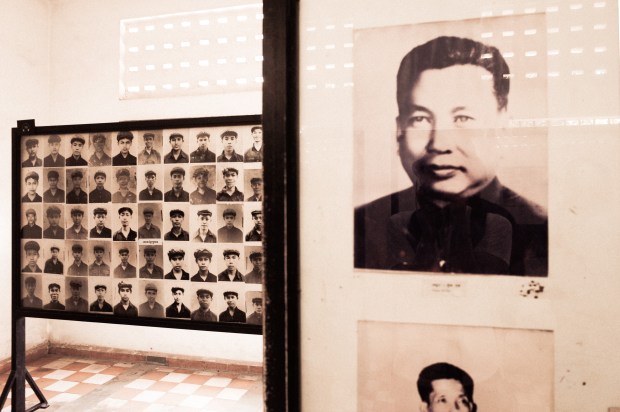
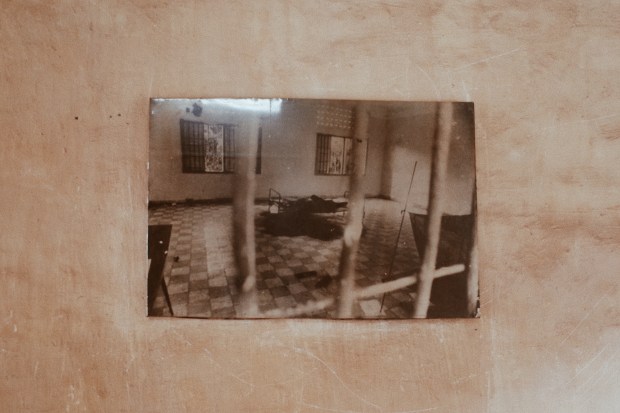
Below are some photos of Toul Sleng: a high school turned concentration camp during Khmer Rouge’s brutal regime from 1976-79. View at your own risk.


A smiling Khmer Rouge leader and a few of the 20,000 tortured, nameless individuals behind.

an old photo of one victim left to rot after meaningless torture.
no proper doors, no privacy.
living quarters
unspeakable things

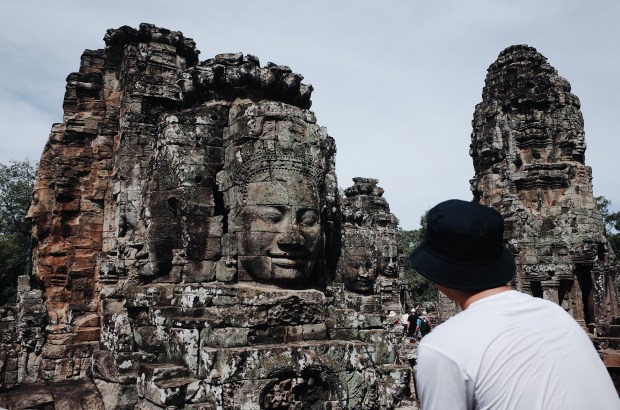
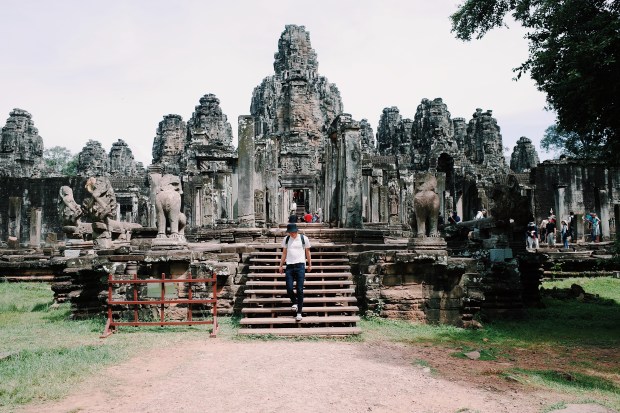
Over 100F and constant 100% humidity, Siem Reap was relentless. Yet these sacral grounds and monuments welcome sages and fools alike to marvel at their stunning beauty.


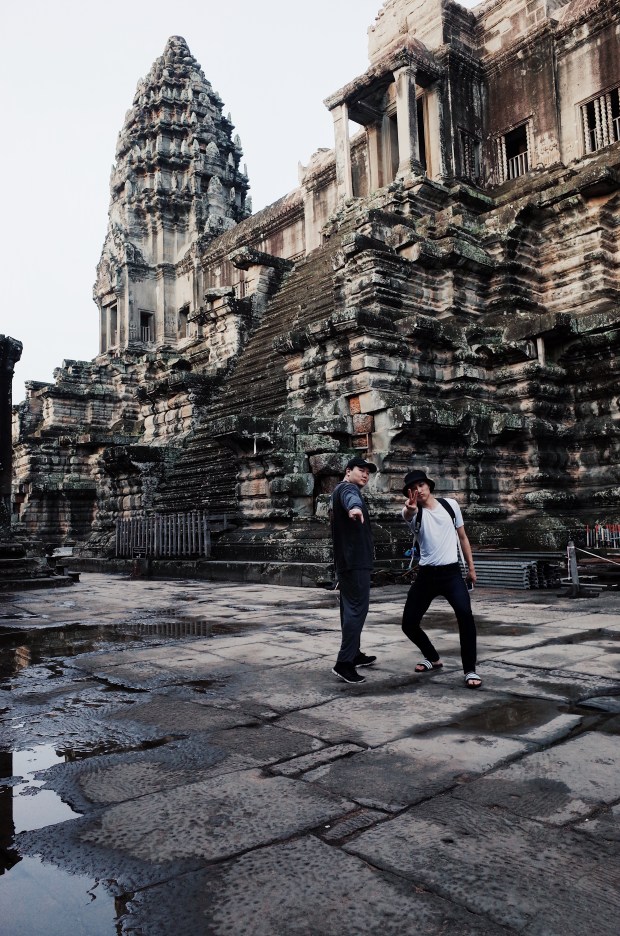
Typical photo of us
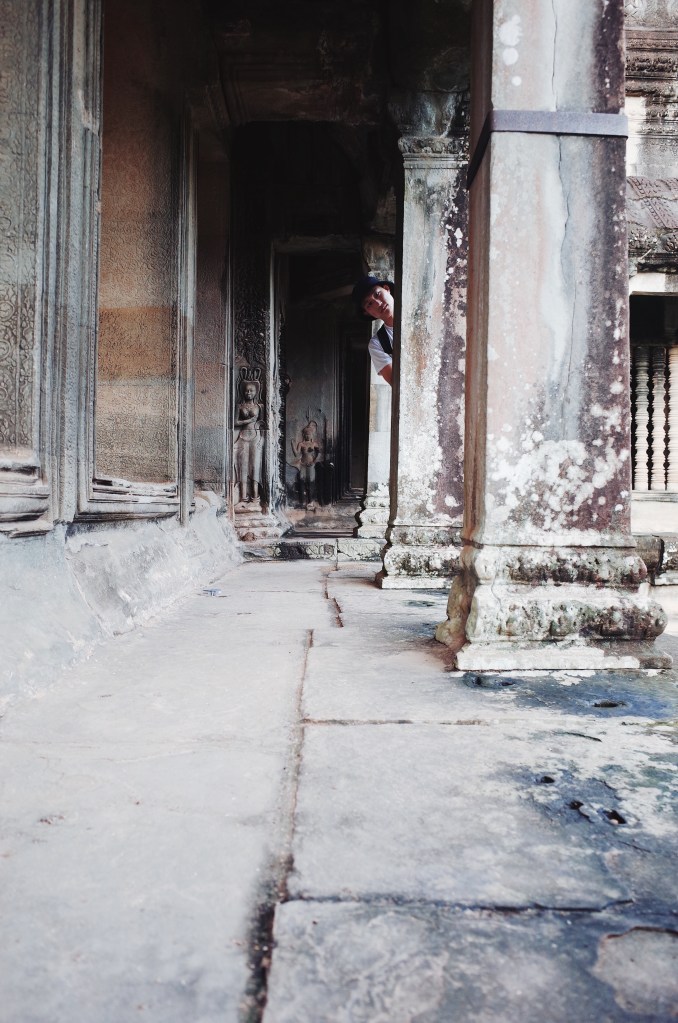
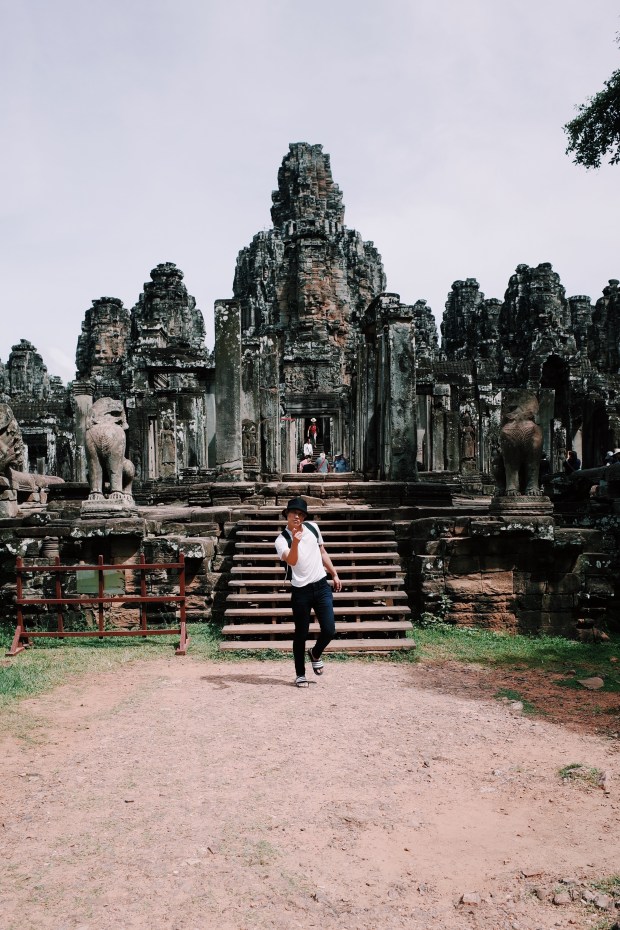
Normal photo of us
I had a blast taking selfies
These faces, if I remember correctly, are the many faces of kings and gods bestowing blessings
PSK and I attempting to bless you with our faces

These magnificent trees grew and became an integral part of the temple structure. It is now impossible to remove the trunks without doing some structural damage to the temple walls. But why would anyone want to hack these beauties? Nature has organically imbedded itself to these sacral ruins, breathing life again.

Close-up of just how imbedded these trees are.
Apparently some Tomb Raider was here…

Acts (Belief Series) // Willie James Jennings.

What prophetic roar, what fiery witness! This, Willie James Jennings’s commentary on Acts, is without a moment’s hesitation one of the best theological works I have ever read.

“The revolution of the intimate is here!”

Jennings heralds. And how profound is this unseemly way of flipping the world right-side. It is not one of violence, forcing the Kingdom of God like the Roman Empire (or any other empires). It is also not one of cowardice, succumbing to the fears—real fears, nevertheless—of diaspora. No, the revolution of the intimate is just that: intimate yet powerful, gentle yet assuring. Intimacy settles and unsettles, comforts and discomforts. Ultimately, it is the way of the Spirit, poured out on all flesh to join what humanity has disjoined. The Spirit of God is Intimacy herself because she is the power of Jesus—God and humanity in eternal, unbroken intimacy.

The Book of Acts is really the acts of the Spirit, not of the apostles—though their bodies and agencies are undeniable and irreplaceable, lest we feign anti-semitism. We must, therefore, always keep these Jewish apostles—Jewish bodies—in mind as we read Acts or any portion of Scripture. We must also keep in mind Jewish diasporic fears, for they are real and infect bodies in many ways that go unsaid. Diasporic fears are like but also unlike many refugee fears: on the brink of extinction, surrounded by a strange world, desperate to hold one’s composition in tact. It is through these kinds of bodies—fearful, broken, yet particular—that the Spirit always works in and through. The Spirit uses people to reestablish proper intimacy. Not the kind of intimacy we foolishly relegate to couples, but a deeper intimacy than that: an intimacy of spirit, tuned to divine frequencies graciously placed in us all.

It is an intimacy that cannot wait for the right place, the right time, or the right spark. It is hurried, a kind of rushed and reckless intimacy—the kind that puts itself on the cross. It is hurried, however, not because it is thoughtless or tactless but because intimacy of that stature frightens us. Who would dare to love us that much? Left on our own, we would never dare to love one another or even ourselves that much. But God makes ways out of no way. More specifically, God joins without destruction, except what humility sheds.

That is why critical junctures in Acts testify of the Spirit moving in and through bodies towards a joining. The Spirit-filled Stephen joined Hellenistic Jewish widows; the Spirit-struck Saul joins with Spirit-led Ananias and becomes Spirit-infatuated Paul; the Spirit-induced Peter dreams of joining clean and unclean things; the Spirit-shocked Cornelius and his Roman family joins the baptism of the Spirit; the Spirit-inspired council at Jerusalem joins Jewish and Gentile flesh (though imperfectly); the Spirit-beckoned Paul joins Jerusalem under persecution. The Spirit moves to join!

Often when two or more parties joins, they are negotiations, compromises, and, not surprisingly, subjugations. Usually, one is always dominant, and he does not allow other joining members to forget. But a joining of love, an intimate joining, not only submits unconditionally but also accepts unconditionally. And a joining must be continuous—it must progress as divine humility sheds both parties of sin, pride, and selfishness. A joining that does not blossom unto abundant life for all will deteriorate—and eventually to a disjoining.

See how profound this revolution of the intimate is! It alone can dismantle the powers of hatred and disunity, while assuaging the fears of diaspora. The powers of fears must be addressed with the same seriously as with the powers of death. The Jews in diaspora in Acts operated differently than, say, “assimilated” Jews in Rome. They feared genocide, cultural eradication, religious extinction, and ethnic cleansing. To these people, a joining with the Gentiles is blasphemous and dangerous. It’s not just because they rejected the gospel of Jesus; it’s also because accepting such a gospel will cost them dearly. Some knew the cost and resisted—like the religious leaders; others braved the cost—like the nameless thousands who received the Spirit.

Acts concludes with Paul en route to Rome. A lone prisoner of the Roman Empire, Paul received unexpected warmth and hospitality from unlikely sources: Julius the centurion and Publius the chief official of Malta. Two Gentiles, one a Roman soldier who heard of Paul’s “revolutionary” activity and another who most likely never heard of Paul, leave listeners stunned. The Spirit moves, often unnoticed, towards a joining. Will we also join the revolution?


Jennings’s Acts exemplifies what great theologies always exemplify: it is lucid; it is eloquent; it lingers in the mind; and it is generative. Jennings’s characteristic prose thunders and soothes in all the right places. If one has heard him speak, then one can hear his voice with all its vivid clarity. And if my humble review shows anything, it is that Jennings has left me both speechless and enflamed. Acts lingers in the mind, mixing with and fertilizing my own theology. It makes me want to sit in silence and write my half-baked thoughts. That’s good theology.
Read this book, please.

I’m off, and I’m here!

It’s been a little over a week since I left the States. My time-orientation is tangled, probably because of jet-lag, probably because of the emotional toll from leaving. I’m stuck between saying “already a week?” and “only a week?” Much has happened, which makes my short week feel longer. Time feels faster when one is in rhythm or marching with the mundane; time feels slower when one is surprised with the new or firsts. New experience always takes longer to process, whether done consciously or otherwise. This is why, I’ve read once, time feels faster the older you get—there are less surprises when settled in one’s own ways or stuck with a 9-5 job. On the other, time feels sluggish, even threatening, when one is unemployed, no matter what age. This past week felt akin to unemployment. Thankfully, many good things happened.

first selfie in my room

I reconnected with my cousin. He knows very little English, and I have a laughable grasp of Korean. Yet we still found a way to communicate and share laughs. I mean isn’t it impressive that we were able to wait four hours in line for T-Express at Everland without getting too bored? But, good Lord, there were a ton of people that day—it was kind of disgusting.

Food, food, and food. I absolutely love 한식 (Korean style food). I will never get sick of it. And food is so affordable, I think. Enjoy a hearty meal for 7-9 USD? Yes, please. But, oh Lord, will I survive Europe for six months without a ready source of 한식?

neighborhood views

I remember I felt the same way last time I was in Korea: it’s always disorienting to be inundated with a language one is not competent. This forces me to slow way down. Whereas a native can get from point A to B with breeze, I have to factor in at least 10 minutes of “Uh-oh, I’m lost” time. Seoul transit is, though, absolutely fantastic. Thank you, Kakao Map and Naver Map.

on some subway exit

This language barrier can easily become a wall for me to go out. And once I figured out how to 배달, or order delivery from an app (I don’t even have to call!), staying home became much more convenient. Staying home gives me an excuse not to embarrass or challenge myself when I go out. Looks-wise, I fit in a hundred percent, but once I open my mouth I’m oust. It’s funny, because even in the States everyone assumes I speak fluent Korean.

Oh, people don’t smile in Seoul. It’s not frowned upon, I don’t think, but it is definitely weird.

I have a lot of time. Actually, it’s overwhelming how much time I have. I’m drowning in it, and it’s both invigorating and lax. For the most part, I make my own schedule and rhythm. I set my own bedtime, wake-up, meal-times, and study blocks. In fact, because I have so much time I have for the first pressure-free time to read, write, or study. I don’t have to worry about doing enough. When I don’t meet my daily quota, say 100 pages or 3-4 hours of concentrated work, I causally let go: “There’s always tomorrow!” It seems small, but as someone who wants to be an academic this mentality is rare and sometimes shamed. So, I’m grateful that this thinking flows during this privileged season.

Currently, my studies have consisted of:

  • Sarah Coakley, God, Sexuality, and the Self. A highly recommended book at Fuller, but I never took the classes that assigned it! Now I get to venture through this tour de force.
  • German, French, Latin, and Korean. I always had a hard time with languages. It’s much easier and less demanding to read theology than learn a language. Languages require a different kind of struggle than dense reading. The first three languages are for academic reasons and the last for personal.
  • Eugene Peterson, As Kingfishers Catch Fire. Not dense at all, but certainly deep. This is my first Eugene Peterson reading, and I’m glad for it. What a gentle spirit, even in his writing.
  • Deuteronomy. I’m hoping to do some sort of theological commentary on the Book of Deuteronomy on my site.

Thank you for 54,570 miles

On my last day before I left for Parish Pulpit Fellowship (read this post of what that means), I sold my car. I was sad. You were my first car—white Scion tC 2006.

I bought you used nearly 5 years ago, and I drove 54,570 miles with you. A great many good and wonderful memories were made during those miles.

I bought the car mainly for ministry; when I was a youth pastor at Naperville Korean First Presbyterian Church. All those early Sunday mornings to set up the youth room, and all those late nights after some fellowship, church function, or meeting. The many times I drove Wheaton students, some of whom became youth leaders and my most trusted friends. The other times I stuffed five to seven youth kids to go to McDonalds. Thinking about it now, I’m surprised the suspension didn’t give way. And the two years I had you in Chicagoland, I never slid out of control on snow or ice. You were such a faithful ministry partner.

You also survived the cross-country move from Chicago to Los Angeles. Never once were you broken into (perhaps because the sides of the body were already beaten up). Even when filled to the brim with stuff—mainly, books—you comfortably handled 90-95 mph. It was even more fun driving when it was just me. You were zippy, and I loved driving you.

All the singing and dancing sessions in the car. Blasting the music so loud that the side mirrors were vibrating. Often I would belt alone, then glance that the car next to me was entertained by my overly passionate singing. Sometimes, waiting in front of a long freight train in Chicagoland, I would open the doors and dance right outside the car with friends.

You took me to see mom every week during her last two years. It would be a long hour commute. Thank God your audio system never failed—podcasts, audiobooks, K-pop. And you safely drove me to see mom after her last hour. I cried a lot in the car, too. Lots of tears I never showed others.

I met a lot of new friends and reconnected with old ones because of you. People I thought I would not get along with and people I dearly missed. I’ve had deep, meaningful conversations and awkward small-talks. Hilarious stories I can’t remember now but can still hear the laughter. I’ve ministered people and been ministered to.

I think what I’ll miss most is that when I was alone in the car, I was truly by myself. I would have the most bitter complaints and throat-thinning worries spilled. I would laugh at myself and embarrassed of what I remembered I did. I had revelations and solemn moments of prayer. This kind of space that allows such things does not come easy. Often, that kind of space has to be cultivated, and you made it easy.

Goodbye, faithful friend. Though I wish your resale value was a bit higher, you’ll always be my first car.

Z.I.P. (zip in peace).

Till We Have Faces // C.S. Lewis.

Personally, I think C.S. Lewis is at his best when he writes fiction. (I was underwhelmed by Mere Christianity, perhaps because I recognized his theological influences, such as Augustine and Aquinas, and thought them more magisterial than he. Exceptions are A Grief Observed and The Weight of Glory.) Not just his celebrated Narnia Chronicles—a literary delight for all ages—but also his remarkably (and unjustly) un-celebrated Space Trilogy: Out of the Silent Planet, Perelandra, and That Hideous Strength. And Till We Have Faces is no exception; it is a chef d’oeuvre, a masterstroke of captivating narrative. Lewis grabs and pulls on heart-strings. Here is love, obsession, jealously, regret, betrayal, remorse, bitterness, loneliness, companionship, happy memories, misguided memories, painful memories, religious rituals, noble rituals, violence, and cryptic divine messages all wrapped in one.


I saw well why the gods do not speak to us openly, nor let us answer…. why should they hear the babble that we think we mean? How can they meet us face to face till we have faces? (294)

Finally, the reveal of the book’s title nestled at the last two percent. It is a powerful, powerful reveal. I remember how I thought similarly the first time, but re-reading dwarfed previous experience. And I have a feeling that the third time will prove the same. This is the brilliance of Till We Have Faces: it’s dark luminance blinds us as it absorbs us into the lull of the story. One forgets the future reveal because one is swallowed in the now.

The book is really two books: the first and much longer portion is Orual’s complaint against the gods, and the much shorter second is Orual’s revelation. It is the latter that is the pièce de résistance of the whole, but not without the former. It’s not enough to say that the first portion is the stage or backdrop of the second; the first has its own brilliance. But the second really does outshine in a way that does not diminish the first. It is how Psyche, Orual’s little half-sister, compares mortality and immortality by means of dreams and reality:

It’s the being mortal—being, how shall I say it? … insufficient. Don’t you think a dream would feel shy if it were seen walking about in the waking world? (114-5)

Likewise, Orual’s complaint—as bitter as it is—is mortal, dream-like in its sufficiency compared to Orual’s revelation.

I’ve heard this before but didn’t realize it for myself until this time: Till We Have Faces parallels the Book of Job. Like Job, Orual makes a complaint—really, a case—against the gods: how their unjust acts and ways terrorized and ruined her life. Like Yhwh to Job, the gods speak shockingly little to Orual. And like Job, Orual silences herself when she finally hears divine speech. But what really cemented the connection is this:

The complaint was the answer. To have heard myself making it was to be answered. (294)

Just listen to these words, heavy with relieved restlessness. Her unbearable complaint was the release she wanted and needed. The gods did not answer so that she could raise her voice, charge a case, and nearly break under the weight of it—for who can ever last so long with a case against the gods? But right before she breaks, the judge stops her and concludes the trial with a question, “Are you answered?,” nothing more and nothing less. To which she feebly but with full assurance responds, “Yes.”

I ended my first book with the words no answer. I know now, Lord, why you utter no answer. You are yourself the answer. Before your face questions die away. What other answer would suffice? Only words, words; to be led out to battle against other words. Long did I hate you, long did I fear you. I might— (308)

And just like that, Queen Orual ends mid-sentence but not in mid-thought. She has been answered.

Oh, there’s so much more to this book, like how I think Ungit and the Fox (a Greek eunuch) represent Lewis’s fascination with myths and how they shape us and with classical philosophy, respectively. How a woman’s physical beauty (or lack thereof) can plague a her and fellow women’s lives. How those who most love us can be our most dangerous enemies. But I’ll stop—for now.


It is argued that a good portion of Till We Have Faces was co-authored with Joy Davidman, wife of C.S. Lewis. All the better, I say. Perhaps it is why Till We Have Faces narrates so well from a woman’s perspective (as much as a feeble, heterosexual male can understand); this is a comment or praise echoed by a female friend.

Dune // Frank Herbert.

Perhaps it was the production crew comprised of stellar voice actors and sound engineers that made L.A. traffic somewhat enjoyable. Or it was Dune itself, a masterpiece by Frank Herbert, that captivated me so thoroughly that I would take one-to-two hour walks—an unlikely and unusual exercise for those who know me—just to hear a bit more about the adventures of Paul Atreides.


Paul Atreides, son of Duke Leto, is a boy of exceptional and extraordinary capacities. He is trained both as Mentat and Bene Gesserit; the former mimics supercomputer rationality, and the latter subjugates the body and the mind for superhuman perceptibility and composure. In other words, Paul is hyper-rational yet also hyper-aware of both his own and other’s emotions, bodily movements, and intentions—he is a god-like being.

Duke Leto Atreides of House Atreides is but one planet ruler in the Guild. He ruled the ocean planet Caladan but was then assigned by Padishah Emperor Shaddam IV to supervise melange harvest on desert planet Arrakis. Melange is a spice, an addictive drug that opens and amplifies the mind’s observational capacities to the point of seeing into the future; it is Arrakis’s—no, the empire’s—most valuable commodity. The one who rules spices rules space.

But life on Arrakis is harsh and relentless. Water is scarce, more precious than precious stones. Frequent sandstorms can tear through powerful electric shields. But shields are not a good idea on Arrakis, anyways, because its harmonic hum can attract the most destructive force on this desert planet: sandworms. Sandworms larger than houses and spice factories can swallow large structures in one bite. If one senses a slow but powerful tremble in the sand, then one must better run—nothing can stop a sandworm.

And it is on Arrakis, a most merciless planet, where the engrossing events of Dune unfold. How House Harkonnen plans their revenge on House Atreides. How Paul Atreides rises not only as the next Duke but also as Muadi’Dib. How the Fremen, natives on Arrakis, plays in the mix between the two houses. How messianic prophecies and religious fervor operate and demand amongst desperate people. How the slightest gestures or facial shifts can betray a most insidious motive. Dune is just arresting and spellbinding work—a must, must read.


Published in 1965, Dune quickly and consistently remained as a classic and stable in the Sci-Fi realm. Frank Herbert then expanded the saga with five sequels (all of which are on Audible…!). By 2003, Dune was heralded as the world’s best selling sci-fi novel, and it is a title I gladly place my vote of affirmation.

So, what’s next for me?

In a previous post, What does graduating from Fuller…, I shared about closing a chapter—learning how to say goodbye with some finality. In this post, I will share some exciting—and nerve-wrecking(!)—news!

I’m going to be abroad for a year!

About 5 months ago, during one sleepless night, I was going through the usual anxiety of graduating—What am I going to do? Where am I going to live? What kind of job should I apply?—I then remembered the Parish Pulpit Fellowship, an incredible partnership between The Pioneer Foundation and Fuller Theological Seminary. And so in about a month I take my leave!

The Parish Pulpit Fellowship awards an applicant funds to study abroad for up to a year, if budgeted responsibly. It aims that the recent MDiv holder will experience and learn about church life and preaching outside of the U.S. The awardee can study formally in a university or informally by self-formulated curriculum. I will be doing the latter.

As of right now, I will be in three locations with varying duration: South Korea, Cambodia, and Europe.

My research and study focus is threefold:

  • How do preachers and congregations of international communities understand the role of preaching?
  • How do the dynamics of globalization affect the content and form of preaching?
  • How does Christology, or the study of Christ, and preaching fit together?

I target international communities for three reasons: First, they are most likely English-speaking, so I can communicate with them; second, they are a community within a community, much like but also unlike minority communities in America; and third, they are formed because of globalization—how else would they be an international community?

Globalization is a fascinating and overwhelming topic. One can approach it through technology, economics, cultural exports/imports, migration, and ecology. The dynamics of globalization are real and already in our churches, whether visible or invisible. So how is preaching responding to it? How are churches interacting with it?

Lastly, Christology is my favorite theological topic. I just can’t get enough of Christology—theological delectables, 냠냠냠! (“yum, yum yum!”)

While all these and more are exciting, there’s also the great fear of being alone. I’ve never traveled this long and to so many different places by myself. But I’ve recently been encouraged by a dear friend: Do not be afraid of the terrifying but remarkable gift of yourself! Face yourself with courage and grace—much like how God braces us. This is so much more than “finding yourself” in Eat, Pray, Love fashion. This is facing yourself with all the demons, angels, and forgottens—buried over the many years. Perhaps, this will be another anfechtung (the struggle and wrestle with God that Martin Luther claims as a stable for all Christians)—how terrifying yet remarkable.

Nearly all my updates for the year abroad—musings and photos—will be on this website. (Also, if interested, there are book reviews and possibly something new, say, devotionals.) Feel free to join the email list, connect with me, or leave comments or questions on any post…!

Cheers to this new chapter!

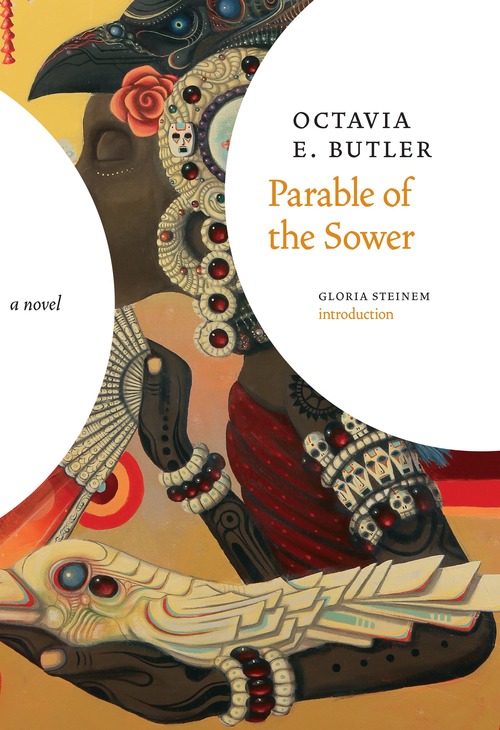
Parable of the Sower // Octavia E. Butler.

Gripping, absolutely gripping.

In post-apocalyptic California, not too far in the future, 2020s, climate change has taken its destructive toll: ravaging “the most powerful nation” and making ravenous people—cannibalist, rapists, scavangers, and druggies who love to see things on fire. Parable of the Sower follows the black heroine, Lauren Olamina, who grew up somewhat protected but is becoming increasingly disillusioned by her cul-de-sac’s longevity. The world is going—already—crazy; it is only a matter of time before her cul-de-sac’s walls crumble. Perhaps it was savviness or paranoia; nevertheless, at the age of 15 she starts to prepare her grab-and-go emergency pack. She reads anything and everything about surviving “out there”—where there are no walls, and where anybody or anything can kill you. In the midst of her preparation, she, the daughter of a baptist minister, quietly abandons Christianity and unravels, finds, and discovers the truth of Earthseed: God is Change. Her newfound belief motivates and sustains her, especially when everything hits the fan.

Octavia E. Butler is a master storyteller. While I briefly thought the novel started slow—only to set the stage well—it really picks up. The few times I had to put the book down was either because I had prior plans or because what I just read was too grisly. It’s not the most pleasant read, but it is one of the best dystopian or sci-fi I’ve read.

What does graduating from Fuller mean for me?

A lot.

It means my knowledge suffices to receive the Master of Divinity from one of the leading seminaries in the world.

It means I’m the first in my immediate family—a bunch of immigrants—to receive a Master’s.

It also means my move from Chicago to Pasadena has come to fruition.

But it mostly means the end of a long and painful chapter in my life.

The journey west

Last year, my mother passed away (April 21, 2018) after battling brain tumor for seven long years. But it wasn’t just her battle: it was our family’s—it was mine. For seven years I was the son of an ailing mother.

So, three years ago, I moved back to California, leaving some of my most cherished friends. I masked my motive by saying, “I’m starting my MDiv at Fuller.” But the real reason was to be closer to my mother.

Nursing homes

She was in her nursing home for about four years then. Nursing homes have an odd aura, and my mother’s wasn’t different. It feels sterile for good medical and health reasons, but the feeling looms in the air. It’s not frightening—not always. But it is always there: it forebodes.

The staff made valiant effort to lighten the mood. To me, their efforts never came across fake or insensitive, just a bit futile. But how could it not be? Nursing homes are thick with the thought of death. When the room is thick with that, how could it not thin out one’s energy?

So, I was never fond of seeing her there: it’s depressing.

Night-tremors

Often late at night, when sleep didn’t come easy, I would have abrupt and unwanted images of my lonely mother—bedridden, isolated, and depressed. I would cry those many nights. I felt her intense loneliness in my bones—my inner voice screamed—but felt utterly useless about it. I hated those night-tremors.

What could I do? She doesn’t know how to use her phone. Sometimes, she would forget I visited. Other times, she wouldn’t even notice me there. So, what could I ever possibly do at 2 a.m. in the morning?

Eventually, exhaustion would win, and I would fall asleep.

These night-tremors only started when I moved back. I’m not entirely sure why it started then, but I have a hunch. Back in Illinois, I visited my mom once every three or four months for about three to four days. I had at least four hours to prepare myself to see an ailing mother. And on my way back, I had at least four hours to decompress, lay those thoughts aside, and live as Sooho.

Things drastically changed when I moved back. I saw her nearly every Sunday for a couple of hours. At first, it was good, very good to see her. But within a couple of months, I wearied. I even dreaded at the thought of seeing her Sunday morning—what kind of son was I? The guilt made it no better, of course. I was tired, beaten by a cancer that wasn’t even mine—but it was.

This went on for about two years until her death.

A mother gone, a son lost

I wanted to drop everything. Forget Fuller. Forget MDiv. Forget academics and my dream of becoming a systematic theologian. Forget life goals, plans, and hopes. All things die, or so I justified.

But I obviously didn’t forget these things since I’m graduating—on time, I might add.

It was the combination of many things that carried me through:

  • Sitting down with a professor and hearing about losing his mother 18 years ago.
  • Feeling understood.
  • My old and current roommates.
  • Receiving many emails and messages.
  • Friends who forgot about my mother and treated me normal.
  • Friends who didn’t forget about my mother but treated me normal.
  • Therapy.
  • Watching Running Man.
  • Reading fiction.
  • Reading theology.
  • Sleeping.
  • Wailing.

A time to die and a time to be born.

I reversed Ecclesiastes 3:2 because it seems like the only irreversible one. Maybe it is irreversible because being born and dying are not things you do; they are things that happen to you. Well, you can die by suicide—that’s something you can do. So, being born is the only thing listed in Ecclesiastes 3 that you cannot do to yourself.

So, it makes sense why it’s frightening and difficult to say goodbye, end, or put to death a chapter in your life. Will there be a new beginning?

I have to say goodbye to this chapter. This doesn’t mean that I can’t go back and re-read the chapter. But it does mean that I have to stop writing this chapter. It’s time this chapter dies, and it’s also time for a new chapter to be born.

To mother

You weren’t perfect, but neither was I, and I have to accept both. It’s good to accept both.

I moved to California and thereby started and finished Fuller because of you. It’s a good thing that I did these things.

I saw you every week for two years. Some weeks were intimate; others were painful. It’s a very good thing that I saw you.

You died. We mourned—still mourn—your death. And it’s a gift to cry.

Crying was my first words to you when I came out of your womb, and it’ll continue to be my words when I think about your death.

My Master of Divinity is dedicated to 김영자 (Kim Young Ja), 1960-2018.

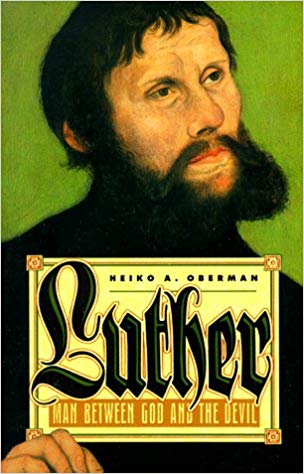
Luther: Man Between God and the Devil // Heiko A. Oberman (trans. by Eileen Walliser-Schwarzbart)

We are beggars before God!

Martin Luther

Martin Luther: Who was this man?

He was, by all accounts, one of the most influential figures of Christian history — perhaps of world history. He is attributed to be the pioneer of the Protestant Reformation — something he failed to see the fruition of. Even at his deathbed, Luther was on trial: Will he stand by what he wrote and taught since 1517? “Yes,” Luther replied. He was just as clear as he was bold at the end of Diet of Worms: “My conscience is captive to the Word of God. Thus I cannot and will not recant, for going against my conscience is neither safe nor salutary. I can do no other, here I stand, God help me. Amen.” These are words thick with revolutionary power, but a revolution was the last thing Luther wanted. Instead, Luther wanted true repentance and reconciliation through reformation within the Catholic Church — not excommunication from them. Indeed, he was caught between the Pope, the Crown, and the Intellectual elites. Or, from Luther’s perspective, he was caught between God and the devil.

One of Luther’s core convictions is that everyone is a beggar before God. All that we are and hope to be depend on God, and on our own, we are nothing. But God is lavishly generous. We might be beggars before God, but God is most certainly gracious towards us.

Calling the pope, or anyone, the Anti-Christ or Devil’s bastard is not proper etiquette. Luther’s language was vulgar and virulent. When he attacked, he attacked fiercely, sometimes too far and too wrong, especially his anti-semitic rhetoric towards the end of his life. His volatile language and behavior have had some scholars diagnosis Luther with psychosis and schizophrenia. And Oberman goes to great length to undo this caricature. Luther was not psychotic, but he was certainly expressive and zealous. Luther’s colorful German, however, was also a gift: he painstakingly translated the inaccessible Latin Bible — the Vulgate — into vernacular German.

Luther was astoundingly prolific. Luther’s Works is a massive 55-volume set, with the index being 462 pages long! Approaching this towering figure can be — should be — intimidating. But thank God for Heiko A. Oberman and translator Eileen Walliser-Schwarzbart. The translation is just fantastic: not only was this biography accessible but also captivating. Oberman’s biography of Luther is superb, though I wish for more of Luther’s theological development.

The Cross and the Lynching Tree // James H. Cone.

There were many theological giants in the 20th century. But no list is complete without James H. Cone — the father of Black Liberation Theology. For decades, Cone, with Barth-like audacity, fought against (white) theological academia, denouncing their racist theological-red-lining — which is declaring what is or isn’t acceptable. Cone instead advocates for different sources and methodologies for theology: black experience and religious experiences, especially the blues and the gospels. Drawing from these, Cone does not have, in my opinion, starkly different theological conclusions: God loves justice, and Jesus is the savior of humanity from injustice, sin, and corruption. What’s remarkable about critics is that they overlook these foundational similarities.

The Cross and the Lynching Tree is the culmination of Cone’s life-long tenure. It is also his boldest attempt to face his greatest fear, and America’s worst form of racism: the lynching tree. Cone has intentionally avoided the lynching tree, precisely because of its horror. How can any American theologian make sense of it? Indeed, many have avoided it, like Reinhold Niebuhr. But for Cone, as a black theologian and an American Christian, the lynching tree is unavoidable and unremovable, just like the horrors of Jesus’ crucifixion.

The Cross and the Lynching Tree is not a work of atonement — if atonement is about how Jesus saves humanity from injustice, sin, and corruption. Instead, Cone connects what should have been connected for any socially-aware American theologian pre-1980s: how the lynching tree bears unmistakable resemblance to the cross. Cone brings the horrors of the forgotten lynching tree to the fore, rebukes Reinhold Niebuhr for his negligence, honors Martin Luther King Jr. and the brave African American women who bore justice forward, and celebrates Black literature and arts that testify against the lynching tree.

Cone is a beautiful writer; he writes with such passion and clarity, which are rare marks of modern academic theologians. I, along with many others, grieve the loss of such a giant. Indeed, he has made another way to speak about God and man.

Do Androids Dream of Electric Sheep? // Philip K. Dick.

For good or for ill, A.I.’s are shaping the future — indeed, they are shaping the present. But what are the costs? The benefits? Is this the end of humanity as we know it, or the rise of the next, inevitable step? These might be pertinent questions now, but decades before A.I. became a tangible reality, Philip K. Dick, legendary Sci-Fi author, dreamed of its possibility in Do Androids Dream of Electric Sheep? (1968). Dick’s tick was this: If humanity develops a near-indistinguishable android, then how and where do humans draw the line between humanity and android? Empathy: biology can be synthetic, intelligence coded, but empathy cannot be programed — at best, it can be imitated but not fool-proof. In fact, their coldness signals something offstandish. Even “specials” (an awful name for someone with a lower IQ), sense something missing — a warmth.

After the war, Earth became a ghetto planet and Mars a luxury. Andys, or androids, were made for Mars residents. But once in a while, andys will turn rouge — escaping and in the process killing their owners. Rouge andys will immigrate to Earth unnoticed, hoping to live out their short lives — 4-5 years — in relative peace. But killing a human violates Mercerism — the official religion of humanity. So, bounty hunters like Rick Deckard “retires” andys. But since andys continue to develop and improve, like Rosen Association’s newest Nexus-6 software, tests like Voight-Kampff are necessary to distinguish humans from andys. The Voight-Kampff specifically measures the timing of empathic responses: the shorter, the more natural it is. The test subject will be asked hypothetic scenarios, mostly dealing with animals such as abuse, mutilation, and hunting. In the aftermath of nuclear warfare, species extinction became a horrifying norm, thus animals became highly prized — for instance, a rabbit can cost a couple thousand dollars! No human on earth can bear the thought of mutilating an animal — even cutting the legs off spiders send unnerving chills down one’s spine. Andys can imitate empathetic responses in the face of these hypothetic scenarios, but it is their timing and lack of enough heat that makes them fail the Voight-Kampff test. 

What happens, however, when a bounty hunter empathizes with rouge andys? Are killing near-indistinguishable humans the same thing as killing humans? Even if it is similar, what do bounty hunters lose? 

Personally, I was absorbed and enamored by Do Androids Dream of Electric Sheep? I’ve read Dick’s other iconic work: The Man in the High Castle but was sorely disappointed — now, I’m reconsidering rereading it! 

Revisioning Christology // Oliver D. Crisp.

Reformed theologians are known for being Christocentrists — or Christ-obsessors — in their systematic theology, and Revisioning Christology is no exception! Oliver D. Crisp puts his analytic theology to task as he tackles six pillars of christology with six divines of the Reformed tradition. They are as follows: (1) the paradox of incarnation with Donald Baillie, (2) the motivation for the incarnation with John Calvin, (3) Jonathan Edwards’s unique blend of idealism and christology, (4) William Shedd’s intriguing take on the God-man, (5) spirit christology with John Owen, and (6) incarnation as atonement with Kathryn Tanner. 

As usual, Crisp clarifies, critiques, and constructs new proposals. Let’s take the first chapter as an example. What did Baillie mean that the incarnation is inherently paradoxical? To cement Baillie’s position, Crisp canvases Baillie’s God Was in Christ. This process includes clarifying some past critiques against Baillie; for example, some say Baillie is an adoptionist and a Nestorian, but Crisp thinks otherwise. Crisp then evaluates Baillie’s position: Does it align with tradition and logic? Is it sound? Is it helpful? Crisp disagrees with Baillie: paradox is almost always unhelpful and is, with regards to the incarnation, “apparent but not real.” In other words, the incarnation is mysterious but not incoherent or illogical. 

Along with the Baillie and paradox chapter, I enjoyed the chapters on Calvin’s motivation for the incarnation and Tanner’s incarnation as atonement — especially this chapter: my two favorite Reformed theologians duking it out. Nonetheless, I learned something about Reformed christology and a bit about theological logic — conditioned by philosophical logic and the tradition — in each chapter. Reformed theologians might be unified in their obsession about Christ but not always so in christology!

Trauma and Recovery // Judith Herman.

I dare say that this is one of the most important books I’ve read this year – maybe ever. The matriarch of trauma theory and studies, Judith Herman is incredible – simply incredible – in her clarity, depth, and empathy. She is one of those rare writers that presents ideas so concisely yet with so much – indeed, it’s hard enough to find such skill amongst seasoned writers, much less amongst psychologists! This makes Trauma and Recovery extremely accessible, which is great news: this is an absolute must-read. 

Because I consider this such an important read, I have gone into greater depth than usual. Trauma and Recovery was a tremendous help for me to process and mourn the loss of my mother. I can’t deny that the two overlapping makes me bias. But is that so terrible? I don’t think so. 

Trauma studies is fairly new, but it has been burgeoning, really, since Herman’s publication (for example, some biblical scholars and theologians are using the methodologies and fruits of trauma studies with their respective fields, which have produced some interesting and exciting works). This is not say that trauma is new. No, trauma is almost as old as humanity. In fact, before trauma was named and identified as “trauma,” Jean-Martin Charcot (Sigmund Freud’s colleague) called it “hysteria” among beggars, prostitutes, and the insane (10). Freud later expanded his sample to domestically abused women, who featured identical symptoms. On the one hand, Charcot and Freud should be lauded for giving such acute attention to a severe problem among forgotten groups of people. On the other, how they treated hysteria (and its name gives some hint) was, at times, unhelpful: hysteria is an atypical symptom of mental illness or some inherent weakness. Herman tries to undo (and successfully, I might add) some common misconception about trauma: it is, instead, a life-threatening event that violates bodily integrity. Trauma includes but is not limited to war, rape, child abuse (sexual or physical), and captivity. Trauma also produces complex symptoms, which can fall into three main categories: hyperarousal, intrusion, and constriction. Herman defines these as follows: “Hyperarousal reflects the persistent expectation of danger; intrusion reflects the indelible imprint of the traumatic moment; constriction reflects the numbing response of surrender” (35). Collectively, these symptoms disconnect the survivor from his- or herself and from his or her reality: trapped in a body they are unfamiliar or disgusted with and suspended in a tormented memory. 

Traumatic events overwhelm the ordinary systems of care that give people a sense of control, connection, and meaning.

p. 33

Traumatic events can break one’s safety and identity, yet humans are resilient – indeed, more resilient than we give credit. While traumatic events can be as short as a few minutes, the process of recovery can take months, years, and even a lifetime – but survivors can and have recovered! The second half of Trauma and Recovery shares practical steps towards recovery with some successful and some unsuccessful testimonies. Recovery comes in three stages: establishing safety, remembering and mourning, and reconnecting. The first goes beyond reassuring the survivor that the listener will not physically harm him or her: establishing safety also demands that the listener will not deny, not show visible disgust or disbelief, and not further isolate the survivor as he or she shares. Unfortunately, ill-prepared listeners can re-traumatize survivors by dismissing their story as silly or too shameful to discuss – this is especially true in cases of incest. 

Mourning is the only way to give due honor to loss; there is no adequate compensation

p. 190

The second stage also goes beyond mere re-telling the event and moving on from it. Most likely, the survivor will never leave the event – or the event will never leave her. Traumatic memories are “wordless and static” (175). But remembering and mourning disarms the memories by giving them words so that they can be integrated into survivor’s life. This process empowers the survivor: yes, these memories are horrifying, but integrating them reminds her that they can become parts of her life and not the whole. What’s more, “mourning is the only way to give due honor to loss; there is no adequate compensation” (190). To mourn is to accept and to integrate. 

Trauma disconnects the survivor from his- or herself and from his or her community. In this final stage, the survivor restores loss connections through reconnection. She must not only reintegrate memories but also herself into her community. At times, her symptoms are what dissolves relationships, other times her community rejects or is ill-prepared to care for her. Nevertheless, she must reconnect. Reconnection does not have to be with the same persons – sometimes, completely cutting oneself from toxic relationships is required – but it does have to be with persons. Often times, moving from one stage to another will force the survivor to go backwards or in circles, and this stage is no exception. Reconnection will re-trigger the need for safety and mourning. So, let it be: recovery is rarely linear but is always, always possible. 

Trauma and Recovery reveals insurmountable pains in the world. Rape and incest are shockingly common: it is possible that there are more rape or incest survivors than there are left-handed people (this stat is, albeit, hard to be precise because so many rape and incest cases go secret). The numbers jump when we count war-torn or war-stricken countries. We live in a traumatic world, especially for women and young children. Yet, Herman does not leave us at that. She offers the good but demanding work of recovery – there is hope. Not everyone can be a therapist nor should anyone jump into it without serious discernment, but everyone can learn to assist, witness, empathize, and love does who ache and long for healing and wholeness. This is, I think, Herman’s intention of exposing such horrors in the modern world: there are also bright spots waiting to shine. 

The survivor who has achieved commonality with others can rest from her labors. Her recovery is accomplished; all that remains before her is her life.

p. 236

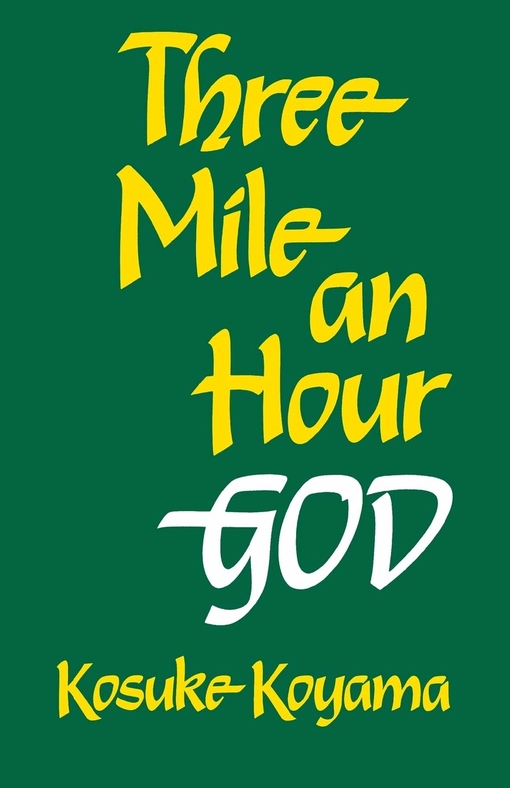
Three Mile An Hour God // Kosuke Koyama.

Whimsical, witty, and down-right just good, Kosuke Koyama is truly a one-of-a-kind theologian. Koyama is, along with Jung Young Lee and C.S. Song, a trail-blazer and an inspiration to young, aspiring theologians like me — an Asian American. Though Western trained (Princeton and Union Theological Seminary), Koyama is unapologetic of use of Buddhism, Japanese heritage and history, Southeastern folk wisdom, and more. This unique blend of sources makes him a creative theologian and always, always fun to read — he even draws pictures!

Three Mile An Hour God is a collection of biblical-theological reflections that loosely centers around the theme of the slow, Christian God. In short, God is slow, so slow to the point of a ‘full stop’ — ‘nailed down’ — at the cross! Koyama claims the fastest God goes is three miles an hour, or the average walking speed. Indeed, God walks with us, not ahead of us. 

Three Mile An Hour God is broken up into four parts: personal spirituality, global reflections, national-level reflections, and call to social justice. Again, each centers around the slow God: how does the slow God meet us in our most present needs, concerns, and aliments? 

Koyama confronts both the West and the East of their obsession with technology — especially its convenience and the idol of efficiency at the expense of others. He is both moral and spiritual in his call to action. He names the evil within our idolatrous thinking and lifestyles — like a good Lutheran! He is sharp yet not inaccessible — in fact, his writing is surprisingly accessible for English as his second language. 

Kosuke Koyama has quickly grown to be one of my favorite theologians — certainly one of the most formative theologians. He takes the best and most malleable parts, or makes them malleable, of Western theology — mostly Lutheran — and blends them with his context: Thailand, Buddhism, folk wisdom, and more. This, again, makes him a creative theologian, but not syncretic, at least I don’t think. He is undoubtedly Christocentric: Jesus Christ is Lord over all. Christ is the judging standard of Koyama’s theology, but Christ is, according to Koyama, more gracious than we might have expected him to be. I look forward to reading more of his work and, perhaps, writing a longer post on him, his works, and his influence. 

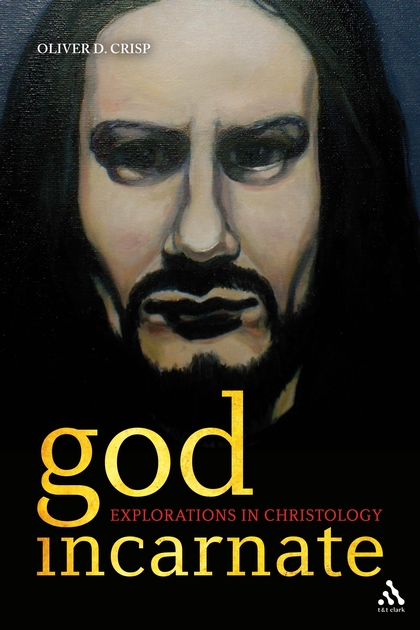
God Incarnate // Oliver D. Crisp

I’ve grown to appreciate analytic theology, especially in the hands of someone like Oliver D. Crisp. Or, perhaps, I like God Incarnate just because it is a volume of Christological topics — and I very much like Christology. Either way, Crisp sharpens his analytic clarity (and charity) to explore, refute, and defend various Christological positions.  Crisp’s Christological standard, so to speak, is classical orthodoxy — as defined in the great symbol of Chalcedon (451 AD). In addition, Crisp is very Reformed (though, at times, a little “Deviant”), and he knows that. 

Few chapters stood out more than others: “The ‘Fittingness’ of the Virgin Birth,” “Christ and the Embryo,” and “Materialist Christology.” A couple reasons why I liked these in particular: (1) Despite being pegged as “logical positivists,” some analytic theologians, like Crisp, would use ‘fittingness’ language to push one position as better than another. For example, in the case of “The ‘Fittingness’ of the Virgin Birth,” Crisp affirms that the virgin birth is not a theological necessity (i.e., Christ did not have to be born this way), but that it was more fitting of the Christ to born of a virgin (cf. Anselm of Canterbury). (2) Any kind of theology can be esoteric, and that’s what I first thought of “Christ and Embryo,” but I quickly found this chapter to be one of the most fascinating Christological contributions to bio-ethics. (3) Sometimes, analytic theology exposes certain positions as half-baked thoughts — which can become problems. “Materialist Christology” takes various human constitutions to task: how one thinks about souls in humans affects how one thinks about Christ’s person, and vice versa. Finally, (4) Crisp is conscientious about not saying things like “this is the only way of seeing things.” Indeed, all he offers is just one way — of a Reformed bend — to defend traditional Christological positions. There is room in analytic theology, it seems, for various kinds arguments for various kinds of positions. 

26th Year and 1st Month of This New Life

It’s my 26th birthday.

It’s also been a month since my mom passed away.

Birthdays celebrate the life that’s been given, and in partnership with my mom God gave me my life. But the timing of this birthday is both cruel and eerie. If she had died any sooner, or any later, then my 26th birthday would not have aligned with the end of my first month of mourning. So, though I want to celebrate this gift of life, I can’t help but think about the one who carried me in her womb — and also her absence. And this is cruel: today, I feel the unnerving tension between the gift of life and the loss of life.

26 years ago, she gave me life. But one month ago, her departure forced upon me a new life to live — a life without a mom.


Immediately after I got the call, I sat in my chair, trying to come to grips with what I had just heard. Then, like a deep cry welling up inside, I felt a gaping chasm:

She’s gone. She’s really gone.

On my way down to the nursing home, I realized I would not need to take these familiar roads again. On my Google Maps, I have a pin named “Mom’s Nursing Home” saved. But I will no longer need it. Though she was just one body, losing her also meant losing certain spaces and rituals, like seeing her every Sunday morning.

I was the first blood relative to see my mom’s body. To be honest, she looked scary: I saw the full terror of cancer and how it deteriorates the body. Cancer is insidious: how could cells that refuse to die be so deadly?

The room was silent; I was silent; she was silent. I broke the silence with my meager words: “I’m sorry, mom. I wish I came sooner.” I then became silent again. The silence felt more comforting. Silence is, I think, not the opposite of speaking but rather non-verbal speaking. In other words, silence still speaks, and in times of grief, silence should speak the most. So, strangely, my mom was speaking silence — the language of grief — to me, even after her death.

One of the first things I noticed after I lost her was losing my sense of space-time and reality. I kept forgetting what day of the week and time of the day it was, or even where I was. This threw off my eating and sleeping schedules. Relatedly, I kept doubting the reality of my mom’s death — Did it really happen? Did she really die?. It’s as if doubting the reality of my mom’s death — a concrete space-time event — made me lose my grip on reality. Often times, I would wake up and feel as if everything was a dream, or a nightmare. Her death was a disorienting event: whatever orientation I had of life before is gone and, ultimately, irretrievable.

I also slept a lot. There’s a misconception — I think — that grieving and mourning are purely or mostly emotional affairs, but we are embodied beings: emotions of the heart are never severed from the physicality of the body. Staying awake was exhausting enough because I would wrestle between losing a mother and accepting that it happened, and that struggle would take a physical toll on me. So, I napped a lot.

I lost some meaning-making capabilities in relation to my body. I made sense of some bodily reactions and no sense of others. For example, at random times of the day I would gag or feel an upset stomach. I questioned what my body was trying to tell me — what are you crying out? The most reasonable meaning I could formulate was how I would gag when I would feed my mom, which was one of the rituals we shared. I realized then that my body also misses her. And the most mundane things would remind me of her and make me miss her. Hearing Korean makes me miss her; seeing Korean women around my mom’s age makes me miss her; eating Korean food makes me really miss her; seeing a baby reminds me of how I was a baby in her arms; even showering reminds me of how I was bathed by her.


Oh! How I miss her!


Other bodily reactions, however, I could make little sense of. I would wake up some mornings and quickly surrender to my body’s unwillingness to move or get up: there was no motivation to do the simplest things. I still don’t know why I would arbitrarily be sapped of energy. I would also space out a lot and quickly lose concentration. One of my great joys – reading – became an arduous task.

Everything became mixed emotions. I am never just sad without being bitter, regretful, and confused. This is part of the difficulty of mourning: it’s not just that you feel one thing too much, but that you feel too many things at once, or, sometimes, nothing at all. So, language seems, at times, inadequate because it feels too confining. Sadness cannot capture the whole mess I feel. Of the many emotions, however, regret is possibly the most unwanted thing to feel during such times. But it is also the most forced upon and the hardest to shake off. I regret so many things — an overwhelming amount of things. I regret things I did and did not do — what I could’ve done but didn’t. I regret what I said and didn’t say. I regret the future possibilities that are no longer possible. And I regret that she died — silly, I know, but that’s how I felt.

This is part of the difficulty of mourning: it’s not just that you feel one thing too much, but that you feel too many things at once, or, sometimes, nothing at all.

Two years ago, I felt the call to move to California: I discerned that God wanted to teach me how to be a son and how to love a mother — both lessons I sorely needed then. But the lessons stopped abruptly in the wake of my mom’s death. One of the many mixed emotions I felt was the sense of purposelessness. I came to California and, by extension, attended Fuller to be closer to my mom. But she died and left me here. Now what? What’s the purpose of staying at Fuller or in California? Thankfully, fear (not personal wisdom) prevented me from leaving everything altogether.

It was encouraging to see so many old and new friends send their thoughts, prayers, and words. Sometimes, however, it was a bit too much. Again, everything became mixed emotions. On the one hand, I was grateful and comforted. On the other, I felt too tired to respond to each person: so, I didn’t.

Of the people who reached out to me, however, a select few profoundly touched me. One was the friend who wept with me ever since he first heard of my mom’s diagnosis, seven long years ago. Another was someone who lost his mother decades ago — and how he still mourns her absence. The former is the first person I called after hearing the news — and for the first few hours of this new life without a mother, he was my anchor. The latter is someone I deeply respect. I was not only able to glean invaluable wisdom, but also a comfort that only comes from similar experience: I felt so understood by him. And being or feeling understood is so crucial, I found: to be understood when I could not understand is a rare find and a blessing.


All this and more makes me convinced that though death is somewhat expected and normal, it is, in fact, the most unexpected and abnormal thing, precisely because death is the very opposite of life. But as I said earlier, I am forced to live a new life — one without a mother.

And, perhaps, this is the way — probably, the only way — to properly grieve profound loss: living this new life.

Eulogy for a Mother

Death always feels too soon.

For so many reasons, I did not want to write this.

Death always feels too soon. No matter how much or how long I’ve prepared for this: death always feels too soon.

It’s been seven years since my mother was diagnosed with brain tumor. And for the past five years, my sisters and I have prepared for her death. But her decline was incredibly slow: from taking one step at a time with assistance, to being in a wheelchair, to being completely bedridden; from eating everything off the plate, to soft foods, to purée, to not even being able to feed herself. Indeed, it felt like that the nursing home she was staying at was stuck in time: she was neither getting better nor worse.

…she would smile and say, “I love you, son.”

About two years ago, I made a huge transition: leaving Chicago – my home of six years – to attend Fuller Theological Seminary at Pasadena, California. Fuller is, for many reasons, an ideal place to study theology. But the real reason was to be closer to my mom: the East Coast may have Yale, Duke, and Princeton, but not my mother. For too long, I avoided visiting California. I didn’t like to be reminded of my mom’s crippling condition and eventual death. But when I moved I started to visit her more frequently. For the past year and half, I would see her almost every week — Sundays right before service. (It was only after writing this, that I realized how providential this was: I would go to the nursing home and be reminded of her eventual death, then I would go to church and be reminded of the resurrection of life.)

When I decided to write this eulogy – a day after her death – I was dumbfounded. I couldn’t remember anything except these past few years. I wish my memory could serve me better so that I could remember fonder memories before she got sick. I wish I could remember all the little things she did for me, but they’re all in a haze. Even right now, there seems to be a veil I can’t peer through, yet. So, sadly, the clearest memories I have with my mom are from these past couple years: the pain she was in, the loneliness she must’ve felt, the pain my sisters and I felt, and how futile everything felt.

Even in her crippling condition, she never failed to tell me that she loved me.

But we did share bright moments. When I would visit once every three months, she would always tell the nurses, “This is my son” — as if she was bragging. When I told her that I became a youth pastor, she smiled and clapped her hands. When I fed her some bread or brought her soon-dubu (soft tofu soup), she would try her best to eat as much as she could. When I turned on Korean dramas for her, she would laugh at the shows. When I would paint her nails, she would laugh and say, “this is nice.” When I told her that I would be back next week, she would smile and say, “I love you, son.”

Even in her crippling condition, she never failed to tell me that she loved me.

Her death felt too soon because I have so many regrets. She would never meet my future wife, we would never have the mother-son dance, and she would never hold my future child. I would never enjoy her cooking, and I would never hear her say “I love you, son” ever again. Death is so cruel because it’s always too soon.

I no longer have hope for these things.

The only hope I have left for her is the hope of resurrection — the hope of seeing her face-to-face, hearing her voice, and feeling the warmth of her embrace.

사랑해요 엄마. 다시 이따가 봐요.

(“I love you, mom. Let’s see each other again, soon.”)

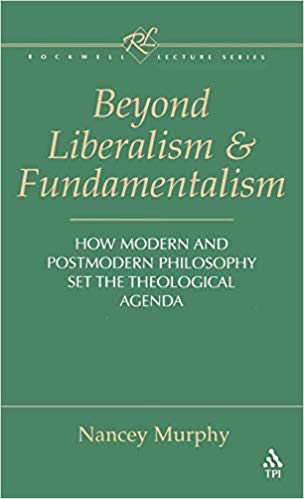
Beyond Liberalism & Fundamentalism // Nancey Murphy.

Wonderfully short — roughly 150 pages — Beyond Liberalism & Fundamentalism by Nancey Murphy makes a scandalous claim: conservatives and liberals are closer than one might think! Indeed, they share a common philosophical ancestor: foundationalism of a Cartesian bend. Foundationalism is best understood, I think, with a building imagery: just like how every building floor is grounded and upheld by the foundation at the bottom, every knowledge is built on an indubitable — impossible to doubt — foundation. This is to avoid circular reasoning and infinite regress (a never ending chain of justifying a claim with another claim in need of justification). Indeed, knowledge must be grounded in some indubitable foundation for certainty’s sake, so the argument goes. This narrowing of epistemology (the study of knowledge and how we can know stuff) limited the modern Christian’s choice between two indubitable foundations: Scripture or experience. The former foundation gave rise to Fundamentalism, while the latter to Protestant Liberalism. The products, it seems, could not be more divergent, yet their common ancestry — foundationalism — betrays their similar way of arguing. In other words, conservatives and liberals might only differ in content, not in form. 

Other implications follow: for conservatives or Fundamentalists, religious language must be propositional (truth statements about reality) because Scripture is the indubitable collection of absolute data about everything. For liberals, on the other hand, religious language is metaphorical and expressivist (expressions of our deep religious experiences) because experience is the indubitable foundation for belief in God.

It should be clear by now that Murphy is not convinced that foundationalism is a suitable system of knowledge because the (self-proclaimed) indubitable foundation will always be dubitable. But she is not as naive to abandon all foundation(s) (i.e., like non-foundationalism). Rather, she suggests, following W.V.O. Quine, that a system of knowledge is like a web. Instead of one (self-proclaimed) indubitable foundation and unidirectional arguments (from foundation upwards), knowledge as a web allows multiple foundations and multidirectional arguments, thus coherence (the parts make sense with other parts in the whole) as truth-value is highly prized. 

There is much more Murphy argues, and one short amateur book review cannot do justice to her work. What I appreciated the most is unveiling the idol of certainty: should Christians strive certainty of their faith more than, say, love of God and neighbor? Does certainty save doth Christian? I don’t think so. Instead, we should aim for confidence

The Nature of Doctrine // George Lindbeck.

Very few theologians spark a generation(s) of scholarship, much less just one work of those theologians. Yet George Lindbeck’s The Nature of Doctrine accomplished such a feat in less than 150 pages. The Nature of Doctrine is, as Lindbeck confessed, an introduction to what he calls “postliberal theology.” Unfortunately, Lindbeck never got around to publish a fuller treatment on his methodology, but some of his students have made great strides on his behalf.

Lindbeck’s thesis is as follows: in our postmodern (and postliberal) age, there is need for better religious dialogue. The cognitive-propositionalist (truth-statement and truth-claims) and experiential-expressivist (emotive and subjective) approaches are limited, or at least they do not facilitate religious dialogue well. Instead, the nature of doctrine or religious claims should be cultural-linguistic. Lindbeck draws influence from Wittgenstein (philosopher of language), J.L. Austin (linguist), anthropology, and sociology. In short, the cultural-linguistic approach parallels talking about God and learning a language. Much like how learning a language demands the subject to immerse oneself in another’s culture, environment, native speakers, and history, learning how to do theology or say religious claims equally demands the like. In other words, cultural-linguistic approach prioritizes communal or common language about God or religious objects. It’s absorbing how people talk about God that forms how to talk about God.

Lindbeck’s proposal is attractive and, I think, simple enough for the laity or congregation (the true theologians of a particular church) to get excited about. This is the clear benefit of Lindbeck’s postliberal or cultural-linguistic theology. But it is not without some limitations. First, if theology is just a particular community’s talk about God, then can theology be reduced to ecclesiology (doctrine of the church)? Theology then is not really about God or Jesus, but how God or Jesus is perceived by this or that church. Second, if theology is cultural-linguistic, then does it have any reality or metaphysical grounding? Put differently, if theology is just language, then does it matter if that language is historically accurate — e.g., Jesus actually rose from the dead? I don’t see how postliberal theology can demand this from its followers. Thus, Lindbeck’s postliberal or cultural-linguistic theology must be supplemented, I think, to make it a thicker and more grounded way of doing theology. 

The Wounded Healer // Henri Nouwen.

In this deeply moving short, Henri Nouwen displays pastoral sensibility’s at its best. Wounds are real and painful but worthy of contemplative scrutiny. In fact, contemplative scrutiny exposes wounds — possibly deepens and intensifies them — but it also starts their healing: wounds are healed through knowing the wounds, feeling the wounds, and sharing the wounds. The sharpest felt-wound that plagues and terrorizes the modern person is loneliness. Profound loneliness leaves a chasm that begs its filling, so we seek “the one” solution: the one spouse, the one job, the one community, and so on. But Nouwen thinks this solution as a dead-end. Instead, Nouwen prescribes what seems at first counter-intuitive, and repulsive: treasure loneliness as a gift. Loneliness, perhaps more than any other dismay, forces us to consider something Beyond — it strangely stirs hope and yearning. Placing this brooding wound under contemplative scrutiny does not glory it — as if loneliness is greater than it is — but honors it as something worthy of care. To honor loneliness is, in my opinion, to identify it as it is, which is also to keep it in check — neither blowing it out of proportion nor diminishing it into nothingness. This crucial step opens the scrutinizer to be hospitable — a good host is a host who is comfortable in his or her own home. Indeed, the par excellence of a wounded healer is Jesus himself. To be hospitable with — not despite — our wounds is to model the Great Doctor and to embody the gospel:

Thus ministry can indeed be a witness to the living truth that the wound, which causes us to suffer now, will be revealed to us later as the place where God intimated a new creation.

— 102.

Nouwen is clear and precise. As it befits the title — The Wounded Healer — Nouwen structures each chapter with a diagnosis and a prescription. The four chapters are as follows, with each successive chapter being a smaller concentric circle inside the previous: society at large, current generation, archetypal patient, and archetypal minister/healer. Below is a short outline.

Society at large
diagnosis (3 symptoms): historical dislocation, fragmented ideology, and a search for new immortality
prescription (3 options): mystical way, revolutionary way, and Christian way

Current generation
diagnosis (3 symptoms): inward generation, generation without “fathers” (or authority figures), and convulsive generation
prescription (3 components): clear articulation of crisis, compassion, and contemplative critic

Archetypal patient
diagnosis (3 symptoms): impersonal milieu, fear of death, fear of life
prescription (3 components): personal concern, faith in the value of life, and hope

Archetypal healer
diagnosis: loneliness
prescription: hospitality with two components — concentration (contemplation) and community

If any of these sound appealing, then pick up the book and read.

Pachinko // Min Jin Lee.

Pachinko’s very first words are…

“History has failed us, but no matter.”

Who is the speaker? Is she one of the main characters? Is she the narrator? Or is she the author, Min Jin Lee? Personally, I think it makes the most sense if this is the author’s aside: a statement even beyond the scope of the narrator, because, as one reads along, there is no one omniscient narrator.

So, what does this opening line mean? There are so many ways to interpret what “History has failed us…” means — possibly showing the brilliance or ambiguity of this aside and its connection to the larger whole. Thus, I will start with its subordinating clause: “…but no matter.” What spunk and audacity! An entire discipline, in fact, the discipline of remembering and understanding the past has failed these people, whoever they are, but no matter. Perhaps, for this author, telling these stories — fictional as they may be — is a refusal to quit, rather than just spinning interesting war-time stories. History has failed them because these are poor, abused Koreans in Japan during war-times, because these are women and children, because public pain is shameful and public shame is painful — probably, better left forgotten. But no matter. For Hoonie, Yangjin, Sunja, Isak, Noa, Mozasu, Yoseb, Kyunghee, and Solomon, being forgotten happens — an inevitable part of life — but no matter. 

One of many things I love about this book is its “thick” description of women and their experiences. By “thick” I mean a detailed, non-reductionist, not-stereotypical, and not-one-dimensional, but varied descriptions that somehow cohere together without being frustrating. In short, the thick description seems to reflect life’s realities (caveat lector: I, of course, can only speak foolishly ignorant as a man who will never fully understand women’s experiences). Consider the following repeated refrain:

“A woman’s lot is to suffer.”

Nearly every woman with enough narrated time in Pachinko has said this. Sometimes, it was prescriptive: this will be your unavoidable burden. Other times, it was descriptive: this was my unavoidable burden. Additionally, it was said with hopeless abandonment and as a source of pride and strength. Yes, suffering is horrible. But it is not wholly horrible — few things are in our complicated but beautiful world. 

Double Particularity // Daniel D. Lee.

Theology is a saturated academic field, yet there is a dire need for constructive Asian American theology. Double Particularity is a commendable attempt to fill a part of that enormous need. And, no, this is not “Asian theology,” though it very much appreciates and stands on the shoulders of Asian theologies. Demarking the difference between Asian and Asian American is crucial here, and one often missed both under popular and academic eyes. 

Double Particularity does two main things: appropriates Karl Barth’s massive theology and constructs a dynamic hermeneutical lens for the varied Asian American experiences — the Asian American Quadrilateral (AAQ). The four components of AAQ are (1) Asian heritage, (2) migration, (3) American culture, and (4) racialization. All four operate in Asian Americans lives with astounding variation: 3rd generation Chinese Americans navigate San Francisco differently than, say, the Vietnamese refugee in Los Angeles. Daniel D. Lee encourages Asian Americans to be aware of themselves and their environment through the AAQ. Instead of frozen descriptions of themselves (“All Asian Americans are like ___”), which leads to essentialism, the AAQ allows both fluidity and concreteness — one can ground emotions and experiences in one or more of these four categories. But the final word does not come from them; it comes from outside ourselves and to us through the “humanity of God” in Jesus. Barth’s mature christological ground says that God reconciles with us through Jesus: we are justified, sanctified, and called to vocation in Spirit. These three give us “dialectical grammar for cultural engagement.” For example, parts of our AAQ must be justified: God says his No and Yes to them. God’s No is refusing any one part or parts of AAQ to have the final word over us, but God’s Yes is embracing those parts, which leads to his work of sanctification and calling to vocation in us. The final product of Barth’s triplex gratia (justification, sanctification, and vocation) and AAQ is a nimble framework to be aware of our Asian American experiences, interpret them with and against the scriptures and tradition, and allow God’s gracious Yes to speak over us. But I wonder, how much does one need to be aware of his/her own concreteness to be considered Asian American theology? How much of the form or content of one’s theology must adjust — does it even to be? 

Daniel D. Lee, director of the Asian American Center at Fuller Theological Seminary has done us (Asian, Asian Americans, and others) a tremendous work of breaking the theological-bamboo ceiling.

From Nothing // Ian A. McFarland.

From Nothing is an impressive work of constructive and systematic theology: Ian A. McFarland, Regius Professor of Divinity at Cambridge University shows his creative craft and meticulous scholarship in this original work on the theology of creation. Prior to this, McFarland has made significant contributions to theological anthropology. Actually, the impetus for From Nothing came from his wrestling with how to ground, theologically, the worth and uniqueness of each person. He then rediscovered the doctrine of creatio ex nihilo — creation from nothing — as a fitting starting point. All persons — and all of creation — are equal in one significant quality: they are all created from nothing by GodThe first half of the book is devoted to each of the bolded words above: God, create, and nothing. A common critique leveled against creatio ex nihilo is that it makes God (1) arbitrary and (2) deistic, and McFarland argues quite the opposite. One of his anchors is the immanent trinitarian dynamics of God: the Father eternally begetting the Son and eternally proceeding the Spirit. These eternal productions show that God is productive. It would be tempting to imagine the Son and Spirit as creative products of the Father — as if they are separate entities. But nothing could be further from the truth. Rather, the Son and Spirit are the Father’s full “self-givings”; whatever the Father has the Son and Spirit have with equal fullness. Creation, on the other hand, is ex nihilo (“from nothing”) and therefore is utterly unlike God. Thus the distance between God and creation is not of space-time but of kind of being. A favored analogy McFarland uses is the distance between an author and her fictional characters: they are not in the same space-time but fundamentally different ones. This then easily welcomes the deistic critique: God is too distant — to the point of absence. Surprisingly, though, McFarland argues against deism by stressing more of God’s transcendence: because God is infinitely distinct from us, he is infinitely near to us. Here’s another analogy to make sense of this critical point: No matter who or where one is on our planet, she will feel the force of gravity (near) equally. Gravity is not of the same “stuff” as matter and therefore interacts with humans differently than, say, wind (gaseous matter). For example, one can go indoors to escape chilly winds, but going indoors does not change the force of gravity she feels than staying outdoors. It could be said then that material walls do not obstruct gravity’s pull on us. Likewise, because God is not of the same “stuff” as us (he is God, and we are not-God; we are from nothing, and he is Life), nothing obstructs his nearness to us. (Where this analogy fails, however, is that a significant amount of matter could change the course and force of gravity, but this is not the case for God-world relation.) What’s more, God wants to be near us; he is Love, not deistic. And, yes, the triune God created the world ex nihilo, but also because of his love, not of arbitrariness.

Most of the argumentation above is in part one. Part two discusses evil, providence, and glory. Personally speaking, part one is better. 

The Drama of Doctrine // Kevin J. Vanhoozer.

During Kevin J. Vanhoozer’s itinerant time at Wheaton, word of this book, his magnum opus, was buzzed as the book to read for eager students of theology. So, desperately wanting to learn more, I bought the book, read the first few pages, and closed the book. I thought, “What in God’s name is he talking about?” His verbosity dwindled my fragile excitement.

Now years later and having just finished the book, I both bemoaned my prior weak grit and celebrated how much I have learned since then. His verbosity, rather than being stifling, was a delight to thumb through — he’s a fun (albeit wordy) read!

The purpose and thesis of the book are fairly simple: to restore the Bible and doctrine as trusted twin sources of authorities for the glocal (global + local) church. The scope and the means by which he staked his claim, however, are vast and deep. Personally, I felt him to be a bit redundant. But I can imagine that Vanhoozer even shortened his work due to the immensity of the project. Again, it was impressive how he juggled and argued on multiple fronts: against anti-intellectuals, reductionistic accounts, liberals, postliberals, modernists, and more. He constantly returned and re-tested his hypothesis, at times, to his readers’ grief and, at other times, to their enlightenment.

One of Vanhoozer’s great concerns and, consequently, the book’s strengths is the broken bridge between theology and praxis, theory and practice. As systematician and committed Church member, he bends over backwards to convince readers and fellow “in Christ” members of the role and benefits of doctrine for the local church. Originally, doctrines are meant to expand the mind and heart to overlap one another into truth, so that what Paul said of “renewing one’s mind” (Romans 12:2) is fundamentally a sanctifying endeavor. In other words, the more you know is not merely for knowledge’s sake, but for holistic integration of the Christian self to itself, to others, and, most importantly, to God.

At first, I thought this book was related to drama and acting, and it is on some level. One of the book’s repeated metaphors is performing the drama of Scripture with doctrine’s aid and the Spirit’s guidance. Christians take the script—Holy Script—and act as God’s actors and actresses on God’s stage—the world. Performance is integral to unlocking the meaning of Scripture: there’s no theology without praxis.

Just as I heard The Drama of Doctrine as the book to read for budding theologians five years ago, I cheer the buzz to this day.