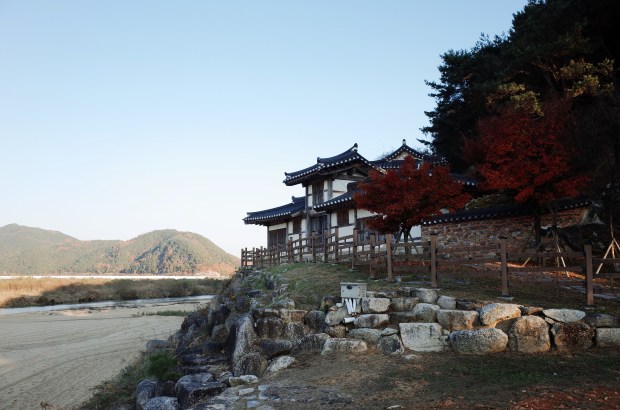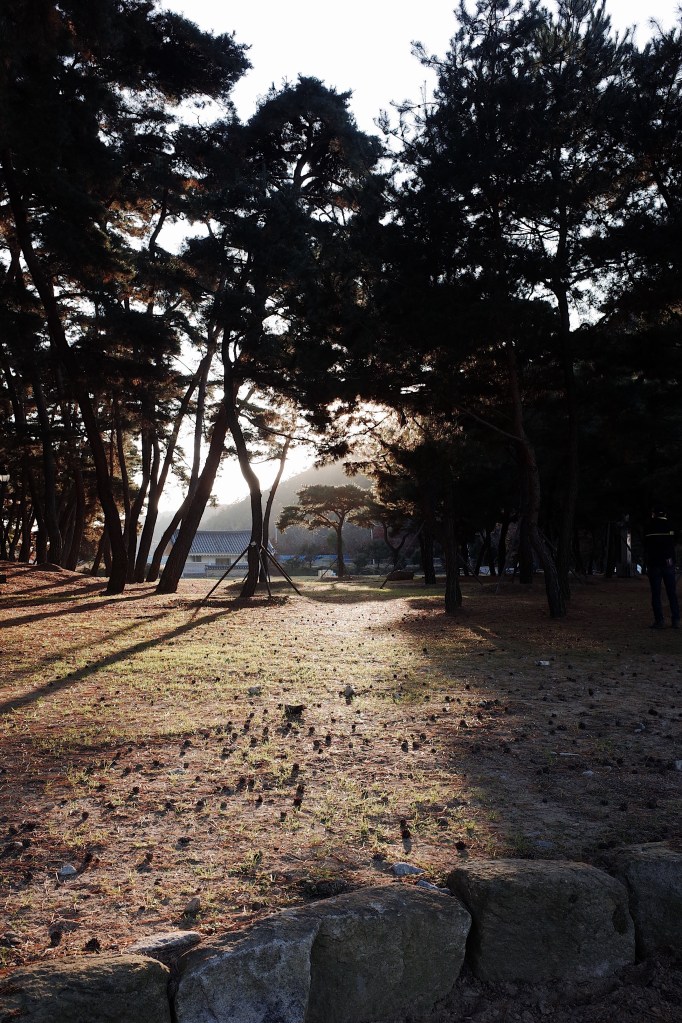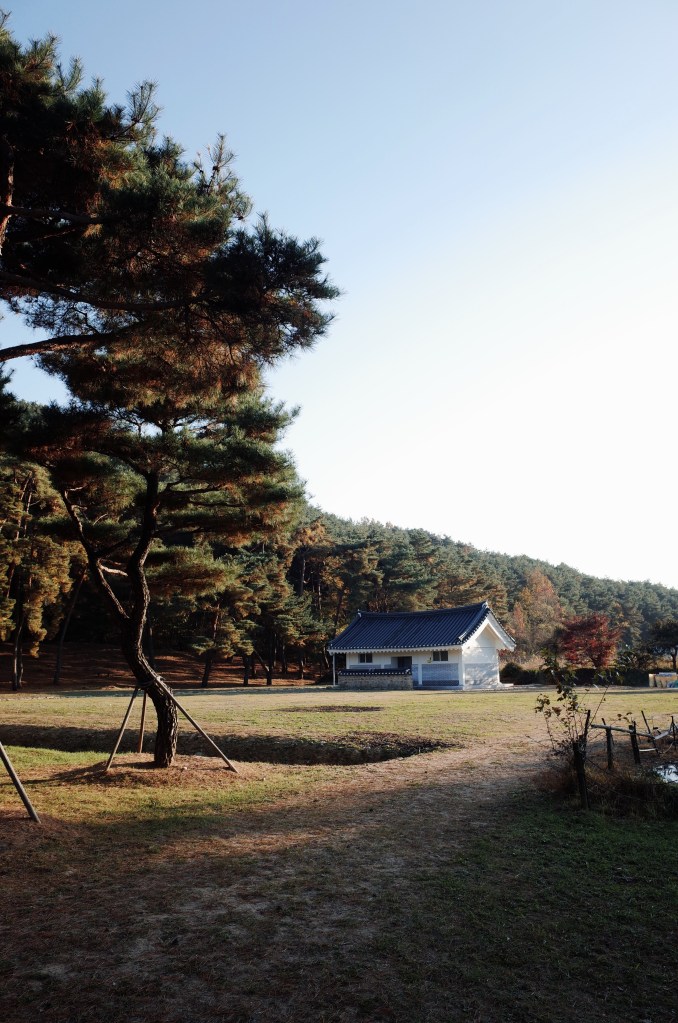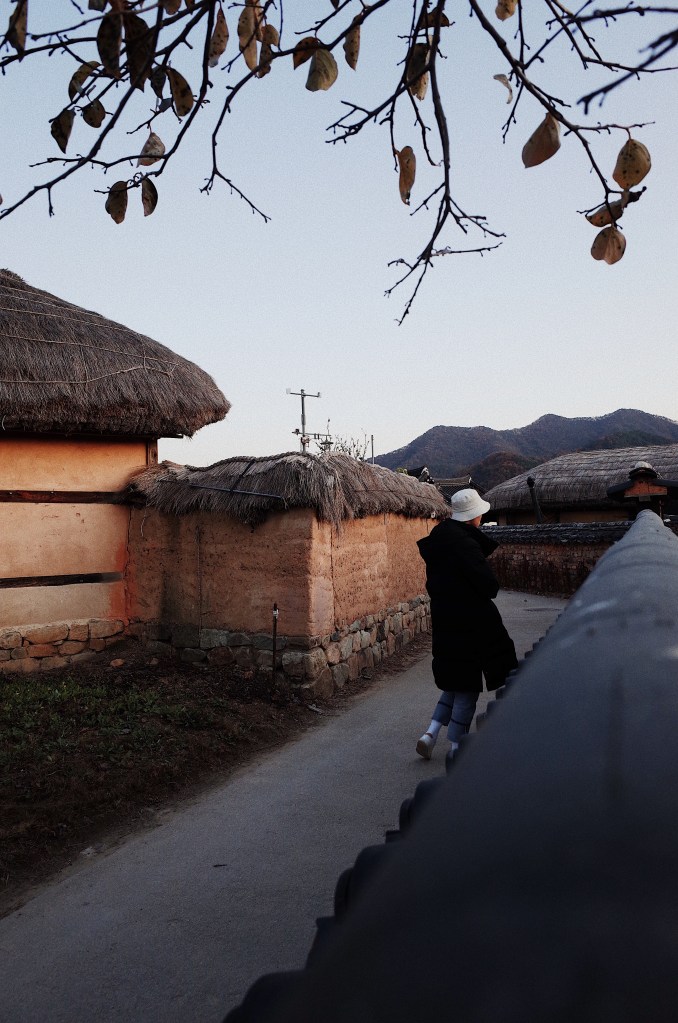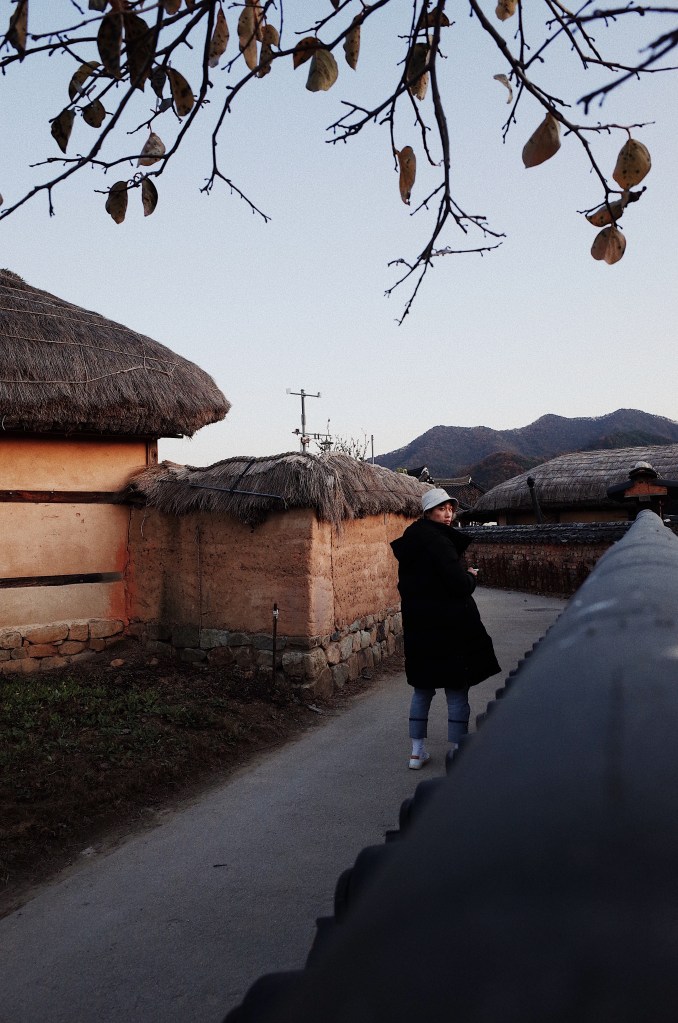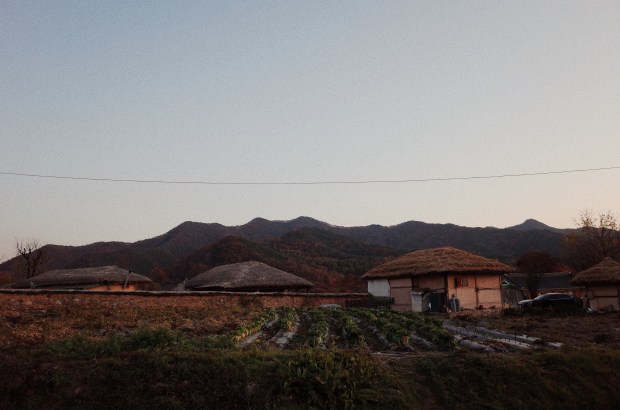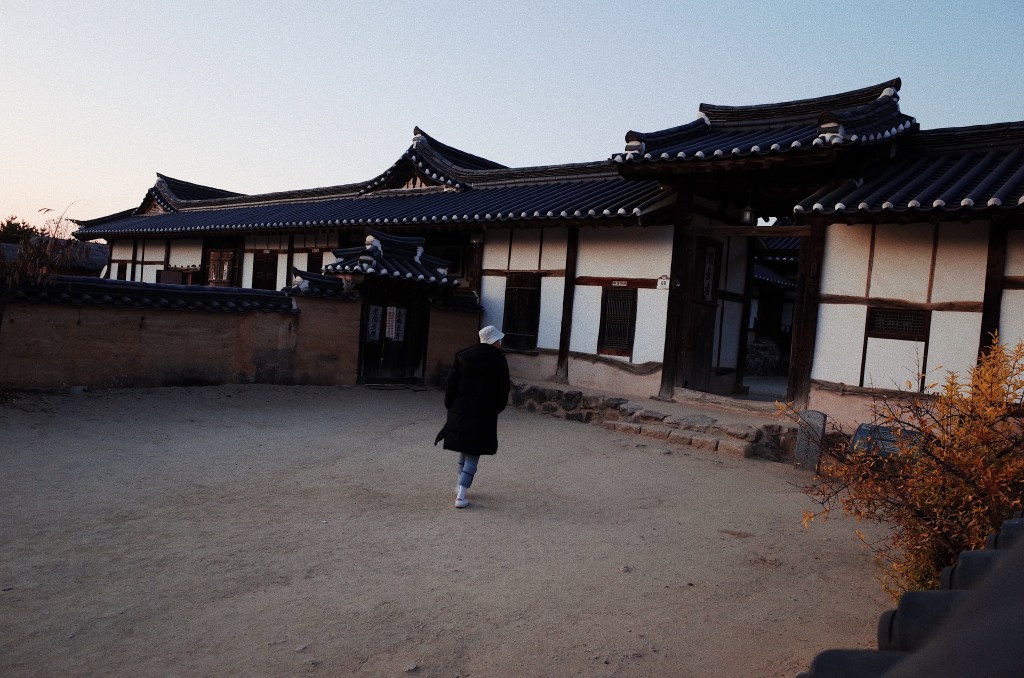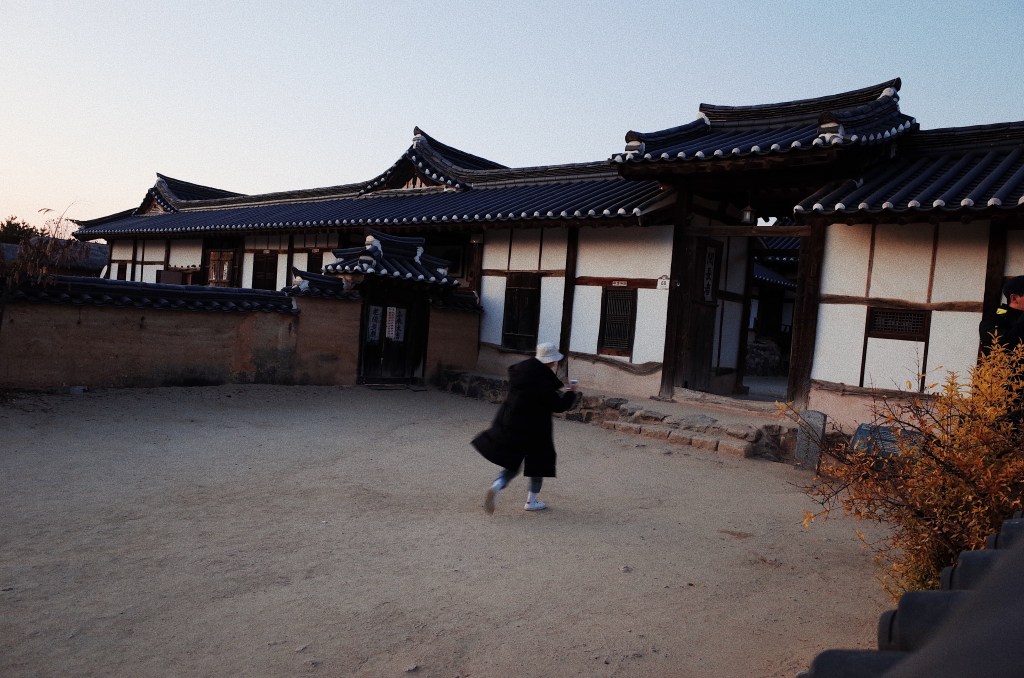
Parting from Seoul

Well, my life for the next six months in Europe is all packed in two suitcases. Packing for spring and summer and at least six countries with varied terrain is difficult; hopefully, I won’t freeze or melt or, worse, lose one of the two suitcases.

There was a surprising amount of Koreans on my flight to Budapest. Are they all visiting there or is this their connecting flight? There’s a girl across the aisle who’s been drilling Spain facts and Spanish; whereas I slept in and out uncomfortably for nine hours. The numbers give me hope: where two or three handfuls of Koreans are gathered, there Korean food will be in their midst.

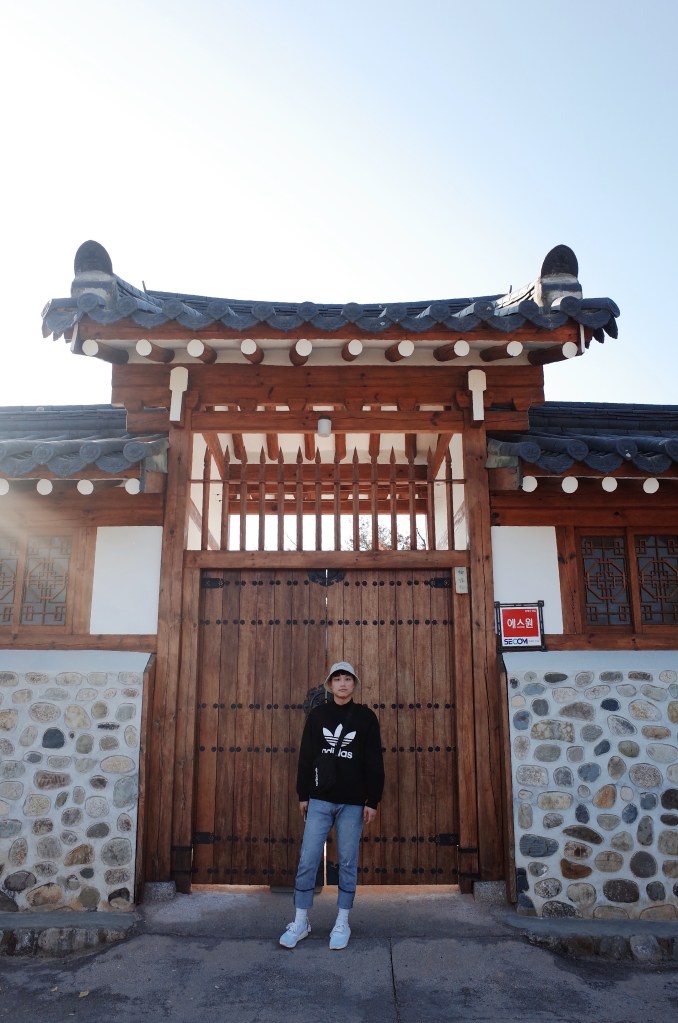
I’ve left Seoul—my home for the past four and a half months. It quickly became a haven after leaving for this fellowship. When I left for Japan and Taiwan, I looked forward to going back to Korea—and have 김치찌개 (kimchi stew) as my first meal. Originally, I’d planned to stay the entire year in Korea; something I’ve always wanted to do since graduating college. But plans changed to include Europe, which is a better decision—it’s more challenging and surely very different. Still, parting from Seoul is more sour than sweet.

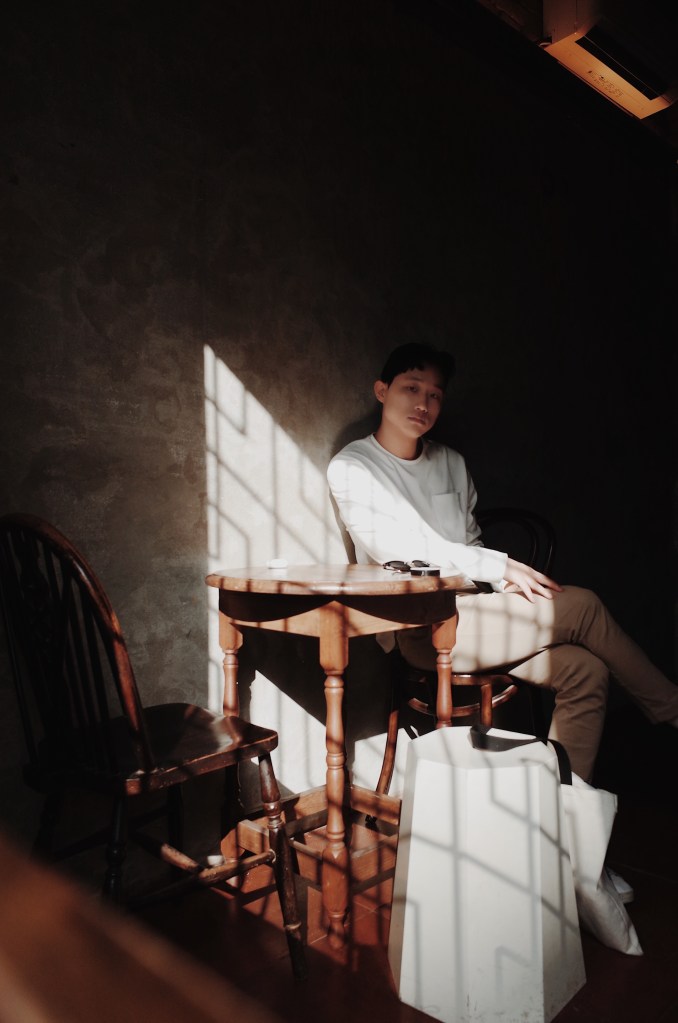
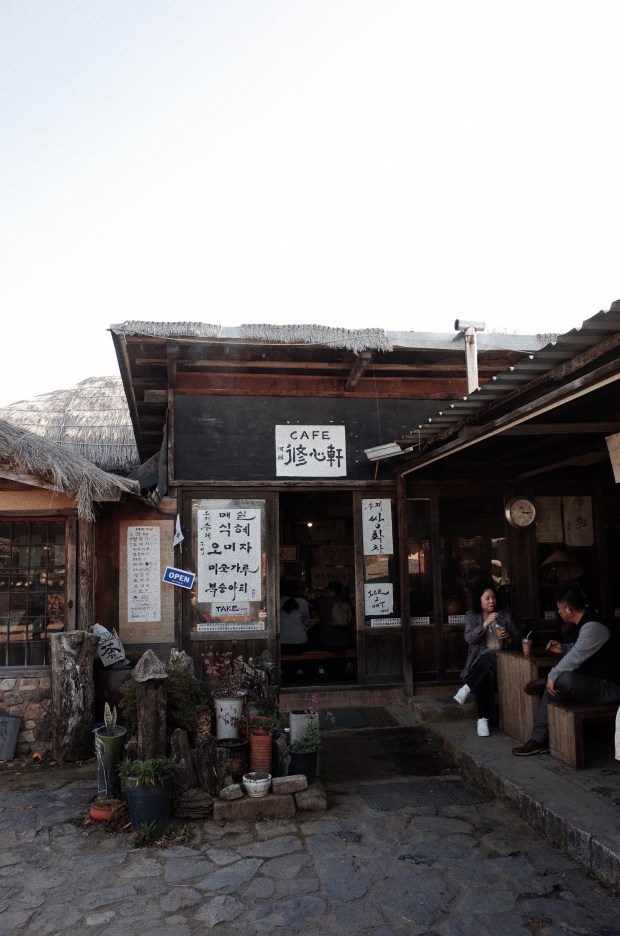
고로커피로스터 (Goro Coffee Roaster), possibly my favorite cafe in Seoul. pc: Sungmin

Four and a half months in any new place is long enough to cycle through first impressions and second thoughts more than once—more if you like to dwell in your own thoughts. Some of my loves at first encounter are food, cafes, transit, and convenience. Korean food just matches my palette; it is 9/10 my go-to. There are enough cafes to coalesce as its own city, and some are true gems—boasting great tastes, atmosphere, views, and Instagrammable interiors. Seoul is a vast city, so its equally vast and efficient transit is impressive. And it’s clean! Finally, sleepless Seoul is tirelessly convenience. 편의점 (pyeon-e-jum) or 24-hr convenience stores (GS25, CU, 7-11, E-mart) are always within 3-5 minute walk; 배달 (bae-dal) or delivery service is nearly limitless; and Korea’s internet speed is second to none. But as with all loves at first encounter the honeymoon phase passes, and second thoughts are considered.

Some of these second thoughts come from repeated observation; others are reflections filtered through some lens or framework, commonly class division. I still don’t understand today’s more hip Korean cuisine’s obsession with low-grade, bland cheese sprinkled on anything and everything. I am bias, however: I’m a bit lactose and suffer from dairy products. I noticed different things at older establishments or more traditional Korean dining: only older women wait tables. A middle-aged man, perhaps the owner, would sit comfortably while two older ladies frantically take orders, deliver food, and bus tables. There are exceptions: I’ve also seen elderly men drift slowly to put water and cups down. But that’s just it—they’re exceptions.

Cafes open and drop like flies. A new, cute cafe would hit make-it-or-break-it point within a year or two, much less if in a prime location. Some of the cafes I visited in 2018 were closed or had a change of ownership and branding when I came back in 2019. Ironically, some cafes survive not because of their drinks or foods but their Instagrammable reputation. On KakaoMap most places will show a 여성/남성 (women/men) ratio. If the majority is women, then it is guaranteed to be a pretty cafe. I’d hit these up.

First time I took 2호선 (Line 2) at 11 am, I was impressed with how clean and ordered the whole experience was—people wait in lines behind certain train cart and door numbers for the quickest exit. Then I took the same line at 7 pm: never have I ever had my personal space so violated and felt like sardines.

Who takes which transit at what times? After all-night drinking and clubbing, barely sober people in their 20s take the first running subway. Waiting with them are older ladies leaving for work or elders in hiking gear waiting to taste mountain air at sunrise. The juxtaposition was almost too funny. Whereas people in 30s or 40s—or people with disposable income—would just take taxi at around 2 or 3 am, either going home or, I don’t know, a hotel.

Just as older ladies dominate the food service, older men fill transit service. I have not seen one female taxi or bus driver. My hunch is that the public does not trust women drivers.

Also there’s this strange thing: Seoulites think it takes inordinate effort to cross the Han River, so they don’t go unless for special occasion. My aunt shared that she hasn’t seen her friend in some 10 years because she lives south of the river. Her friend lives a neighborhood away from where I stayed. At first I thought this ridiculous: living in LA I’ve grown accustomed to driving at least 20-30 and sometimes unexpectedly 60 mins (damn traffic) to see friends and family. But during the last few weeks in Seoul, I rarely made it up north of the river. What was first strange became normal.

Convenience comes at a premium and a cost. 24-hr 편의점s are amazing—I miss them as I write in Budapest—but who are the people working those long graveyard shifts getting what I assume to be meager pay? 배달 drivers, I hear, can do well, but they’re constantly hustling—finishing one drop-off to pick up the next. Food delivery service is a booming global industry (요기요 and 배민, Korea’s top two 배달 apps, are owned by Delivery Hero, a multinational corporation based in Berlin, Germany) making billions. It capitalizes on lazy people (like me), people who don’t want to go out (like me), or people exhausted from work (not like me).

My most used apps while in Korea

배달 is not the only way eating has become convenient. Go outside, walk for about ten minutes or less, and you’ll find late-night restaurants or eateries. Or go pick up some microwaveable meals, which are absolutely delicious—Bibigo (CJ) and Youus (GS) nail it almost every time. But all these eating conveniences can make the eating experience quite isolating. Why go out when you can stay at the comfort of your own home? If 배달 is too pricy (the minimum basket and fees can add up), then pick up something quick at 편의점 or a food stand or just heat something up. If you want a sit-down dining experience, then wait until a friend is available or brave yourself to be the only solo diner. And since eating is made so accessible, cooking (not heating up) at home can be pricier. So, there is no meal prepping or cooking for others—but Koreans don’t really invite friends to their homes anyways. This is sad. Having friends over or visiting a friend’s place is one of the things I miss most about the US, and one of the things I love about Lovett and Koheun, but—goddamnit—they live so far in 잠실 (Jamsil).

Something I won’t miss: 미세먼지 or fine-dust pollution

I think I was a quiet observer growing up. Later I would come to learn the term “people-watching.” I’m fascinated by how people go about their way, the unique quirks or normal behaviors that go unspoken. For instance, how younger and able-bodied people prefer doors 2 and 3 when riding subways (doors 1 and 4 have seats reserved for the elderly or handicapped). Prolonged observation can lead to adopting some idiosyncrasies. Only after being inundated amidst Korean speakers did I realize just how rude 반말 (informal) speech is at first encounter. I apologize for all the unknown ways I’ve offended people… As I move throughout Europe I’ll continue to observe, appreciate, adopt, and, of course, laugh at myself for any lack.
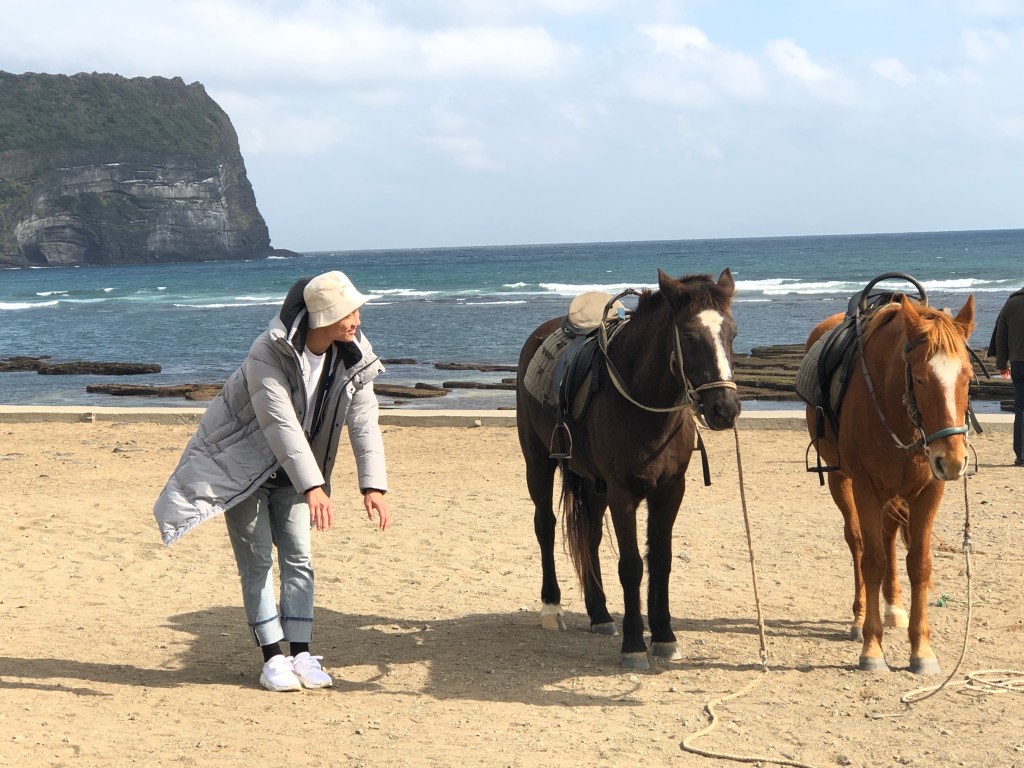
Me trying to befriend horses (while also being terrified) at Jeju

Korea has been very good to me. The motherland has been a good host. I can’t wait to go back—and eat 김치찌개 (kimchi stew).

“Nice While It Lasted”

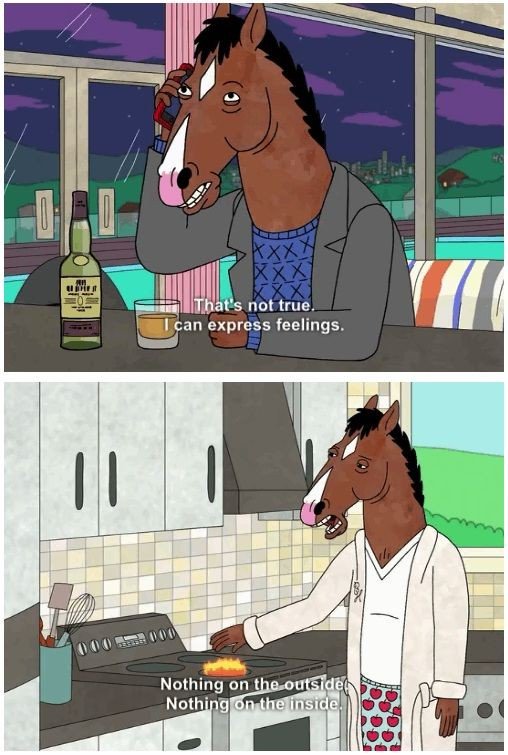
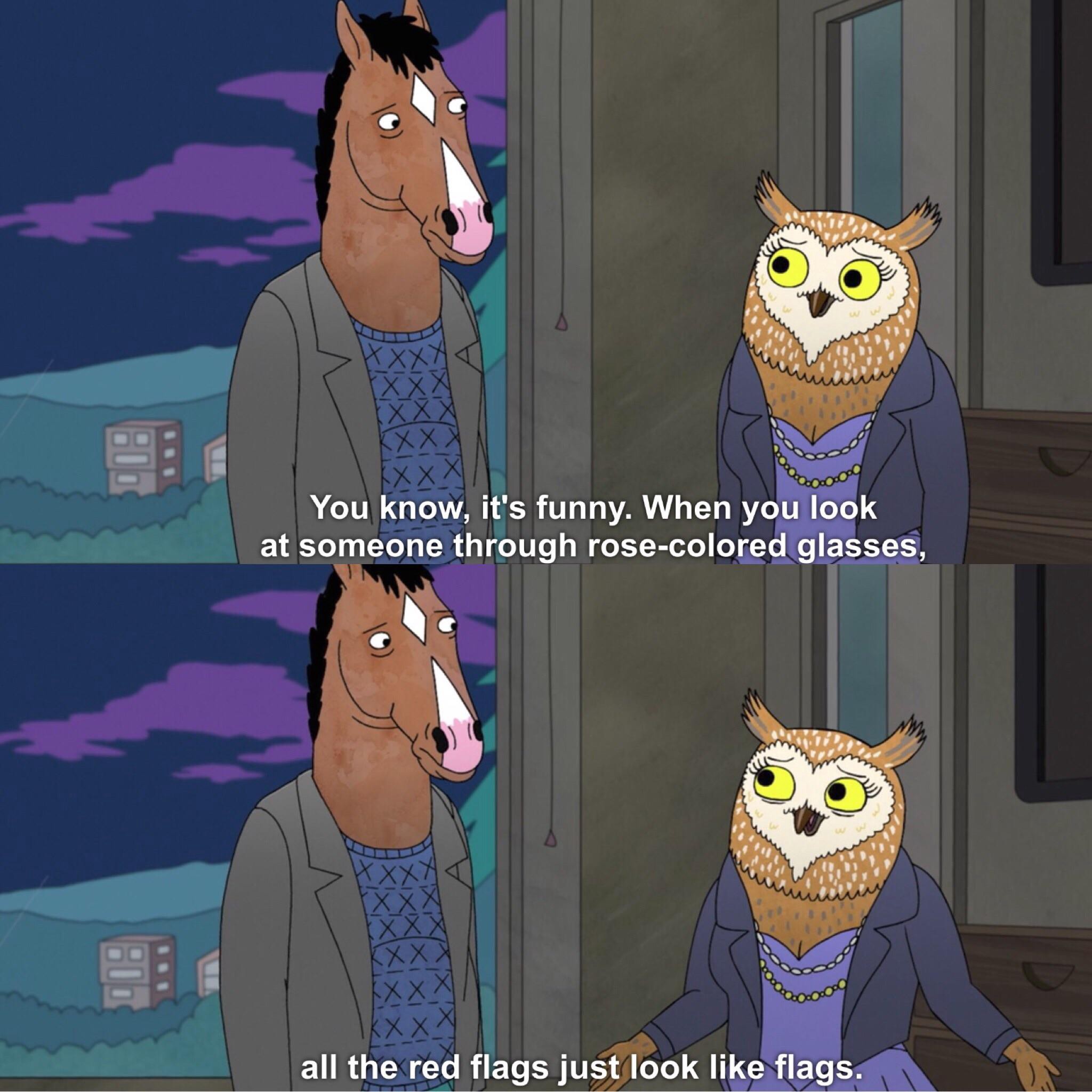
BoJack Horseman is one of the best TV series ever created, and that’s my personal opinion.

I’ll admit that it’s not a show for everyone. It’s anthropomorphic animation touching on depression, drug and alcohol abuse, sex and misogyny, the entertainment industry, toxicity, friendship and unhealthy relationships, growth and relapse. It’s raw, and much like digesting raw material it takes time to stomach BoJack Horseman. It’s dark—darker than I sometimes would like it to be. It’s also honest; not the neat “the good, the bad, and the ugly” kind of honesty, but more like the beauty in the ugly, the ugly in the beauty, and the ugly in the ugly all held together as some unshapely mass. It neither idolizes nor shames ugliness. It’s offensive because it’s revolting. In our disgust it simultaneously pulls on our empathy and morality: BoJack Horseman beckons us to sit in judgment but also be okay without a final sentence. We are shown that “life’s a bitch,” but we grow to say either “and then you die” or “and you keep living.”

The brilliance of the show is its script. Packed with animal puns, hilarious spin-offs of famous names,

a string of elaborate rhymes and tongue twisters (“You’re telling me your dumb drone downed a tower and drowned Downtown Julie Brown’s dummy drumming dum-dum-dum-dum, dousing her newly found, goose-down, hand-me-down gown?”), punchy one liners (actually so many to choose from),

and just some honest to god good writing.

The animation is also brilliant. There are hidden nuggets and subliminal messages everywhere critiquing or mocking everything and anything. Coupled with phenomenal voice acting (I still can’t believe that’s Will Arnett’s real voice) the animation brings the whole spectrum of emotions alive. How can one horse show so many different faces?

But possibly the best part is how good life advice and insight come from the mouths of very broken people. Just because it comes from broken people, who often fail to uphold what is advised, does not diminish its value. Often what one character advises conflict with another, maybe even contradict what the same character said prior. That’s fine; they’re broken. We butt heads and grow and reform. It’s possible to label each character embodying some philosophical tradition or movement (BoJack, nihilism; Mr Peanutbutter, optimistic nihilism; Princess Carolyn, pragmatism; Diane, postmodern, ecologist, third-wave feminism; Todd, YOLO), but that’s too narrow-thinking. BoJack Horseman is not a philosophical debate; it’s people learning to live healthy lives in the midst of theirs and their neighbor’s toxicity and trauma. It’s life, real life.

It’s hard to pick a favorite episode, but these stand out in no particular order:

  • “Free Churro” (s 5, ep 6): It’s just BoJack monologuing for 22 minutes, and it is absolutely gripping. “I see you.”
  • “Fish Out of Water” (s 3, ep 4): An almost completely silent episode.
  • “BoJack Hates the Troops” (s 1, ep 2): Honestly, the first episode where I realized that this is a brilliant show. “Maybe some of the troops are heroes but not automatically. I’m sure a lot of the troops are jerks. Most people are jerks already, and it’s not like giving a jerk a gun and telling him it’s okay to kill people suddenly turns that jerk into a hero” (BoJack).
  • “Thoughts and Prayers” (s 4, ep 5): Mass shooting and gun control, rape culture and safety. A scathing take on America’s desensitized reaction to mass shootings. Also, a what-if situation where a mass shooter was a woman; America would pass sensible gun legislation: “I can’t believe this country hates women more than it loves guns” (Diane).
  • “Time’s Arrow” (s 4, ep 11): Beatrice Horseman, who I thought was the hidden antagonist becomes remarkably… human. She, too, is a broken person, something she told BoJack earlier before her dementia. It’s the ending, however, that gets me: “Can you taste the ice cream, mom?” “Oh, BoJack. It’s so… delicious.” That prolonged pause at the end: was Beatrice really tasting it or was she just going along with BoJack’s attempt to comfort her as her own effort to comfort him?
  • “What Time Is It Right Now” (s 4, ep 12): A rare heartwarming season finale where BoJack finds a new family member. It gave me so much hope.
  • “Intermediate Scene Study with BoJack Horseman” (s 6, ep 9): Another rare heartwarming episode where BoJack gives life to people he would otherwise be annoyed by: college students.
  • “Stupid Piece of Shit” (s 4, ep 6): An immersive internalization of self-loathing and depression. The animation especially makes the viewing tangible.
  • “Good Damage” (s 6, ep 10): Diane’s parallel to “Stupid Piece of Shit.”
  • “Stop the Presses” (s 3, ep 7): When BoJack tries to cancel a newspaper subscription he ends up unloading his life to an unknown higher-up in the business.
  • “The Face of Depression” (s 6, ep 7): After rehab BoJack goes back home but quickly leaves due to the haunting memories the house holds. He travels and visits (or runs into) friends: he thanks Diane and cleans her apartment while she’s struggling with depression, and he finally humors Mr Peanutbutter’s crossover-episode fantasy. Such growth.
  • “The View From Halfway Down” (s 6, ep 15): A dark, dark, dark, just dark episode. BoJack joins a company of the dead: Herb Kazzaz, Crackerjack Sugarman, Corduroy Jackson Jackson, Beatrice Horseman, and Butterscotch Horseman imaged as Secretariat. They share about the meaning of sacrifice, best and worst part about their lives, and regrets they’ve had and conversations they wished they had. “There is no other side. This is it” (Herb).
  • “Nice While It Lasted” (s 6, ep 16): The final episode; BoJack is still alive; there’s no clean ending, but if there was it wouldn’t really be BoJack Horseman. He’s sentenced to prison, and while there his friends move on and somewhat thrives. It’s more bitter than sweet but, I think, fitting. Mr Peanutbutter is riding high on success but still picks up BoJack from jail. Todd is his usual aloof self with his own concerns, but he still encourages BoJack to stay sober. Princess Carolyn is married to someone who is just as married to work as she is, but she’s not going to let BoJack be her work any longer. Diane and BoJack share what could be their last conversation on the roof: she was beaten by her own and BoJack’s toxicity but still “keep[s] living.” And BoJack does not seem too threatened by these losses. Losing or moving from relationships is part of life. Relationships have their course—even good ones—and hopefully we’ll learn to appreciate them during and after they end.

Again, there are so many other episodes I love, but these are enough.

BoJack Horseman, thanks.

This is Sooho, Lee, obviously.

A Gift of Love // Martin Luther King, Jr.

An orator with few peers, Martin Luther King, Jr. towers as a shining example of speech and homiletics (the art of preaching). What I would give to hear him speak in the flesh! I remember in elementary school watching a recording of his famous “I Have A Dream” speech before MLK holiday. Despite my barely workable English then I was in trance as he repeated “I have a dream that one day…” I thought then and still do today: this man can speak!

King is a magnificent man, though not perfect (we do well to keep in mind some of his glaring mistakes and praise Coretta Scott King for her charity). He saw with piercing clarity refracted by deep love for all humanity, affectionately called “the beloved community.” This short collection of sermons exhibits King’s expert qualities.

King is a model-worthy preacher for many reasons. He repeats but is not repetitive; he decorates each repetition differently to make them feel novel yet familiar. He touches his audience in real-time; King is aware of the day-to-day of his listeners. He expands local sight to global perspective, and vice versa; he connects individuals to the world: “All men are caught in an inescapable network of mutuality tied in a single garment of destiny. Whatever affects one directly affects all indirectly” (“The Man Who Was a Fool”). He also expands the now to include the not-yet; King acknowledges the present and painful evils of racism, poverty, and militarism but also sees in and beyond them the long arm of God’s justice and love at work: “The dawn will come.” He tightly weaves social action with spirituality; instead of some physical force, King encourages “soul-force,” or a kind of resilience that only comes from spiritual maturity and charity.

All 16 sermons are useful and delightful, but four stand out in particular: “On Being a Good Neighbor,” “Loving Your Enemies,” “Antidotes for Fear,” and “The Drum Major Instinct,” especially this last one—I’ve read it multiple times, and it never fails to move me. Nearly 60 years since still his words ring frightfully relevant:

And I would submit to you this morning that what is wrong in the world today is that the nations of the world are engaged in a bitter, colossal contest for supremacy. And if something doesn’t happen to stop this trend, I’m sorely afraid that we won’t be here to talk about Jesus Christ and about God and about brotherhood too many more years. (“The Drum Major Instinct”)

The highlight for me is when he shared what he hoped his eulogy would say:

I’d like somebody to mention that day that Martin Luther King, Jr., tried to give his life serving others.
I’d like for somebody to say that day that Martin Luther King, Jr., tried to love somebody.
I want you to be able to say that I tried to be right on the war question.
I want you to be able to say that day that I did try to feed the hungry.
And I want you to be able to say that day that I did try in my life to clothe those who were naked.
I want you to say on that day that I did try in my life to visit those who were in prison.
I want you to say that I tried to love and serve humanity.

Dear, King, I’d say it. You did love deeply, and I hope for the same thing for myself that day.

That Hideous Strength // C.S. Lewis.

When I first read That Hideous Strength I was bored by its slow and uneventful pace: it lacks the brevity of Out of the Silent Planet and poetic depth of Perelandra. Or so I thought. This second reading brought out so much more. Though I would still rank it third out of the trilogy, it neverthless ranks higher than other works in general. This is why rereading is so important: it’s not just finishing a book; it’s being immersed in a new world.

A disagreeable couple, Mark and Jane stand as dubious protagonists of That Hideous Strength. Mark in particular is pathetic: wanting to be part of some inner circle since age ten. His unmet insecurity leads him to mingle with some dangerous people at the ironically named NICE (National Institute of Coordinated Experiments), or an elusive organization with national-level, bloated funding. Jane is, however, particular in a different sense: she is a seer, or someone who receives visions of current or near-future events. This supernatural gift-curse makes her an invaluable asset to either the good or the evil side. And poor Mark is lured by NICE, thinking that his academic accomplishments got him a foot in the door to be part of an exclusive inner circle when in reality they just want him for his seer wife.

Not much is known about NICE except their ridiculous funding and outlandish promises of fixing corrupt humanity. The government sanctioned NICE to test correctional experiments on criminals as part of restoring them to society. While this already sounds horrible, that’s only PR stuff. Their true goal is simpler and more devious: the full exploitation and eradication of matter. It is post-industrial revolution gnosticism. They want to terraform nature into a concrete jungle, abandon decaying bodies to put heads in vats, and desensitize emotions so that pure reason can reign. This, they believe, is the necessary step to humanity’s evolution and eternal success.

Unlike the prior two in the trilogy, That Hideous Strength is more “earthy” in the literal sense: none of the events happen outside the third rock from the sun. The mood is also more ominous. A dystopian fog clouds the story. It warns of exploiting nature and humanity’s destructive obsession with progress. While most real-life discussions about human progress dance around the topic of exploiting mother earth, Lewis jumps to the heart of the matter: all matter must be totally exploited. Perhaps, at the time, Lewis took an extreme position for shock effect, but 60 years later the extreme seems uncomfortably close to reality. What is the cost of such human progress? What are the gains? Who or what can stop such destruction in the name of progress?

In That Hideous Strength a ragtag group of two elderly couples, a wife with an imprisoned husband, a skeptic, a therapist, Jane, and the man who claims to have traversed the Deep Heavens—Ransom—dare to take a stance against NICE. What can they do against a secretive organization with bloated funding? By themselves, really not much, and Ransom knows it. But with Deep Heavens on their side, things are not so settled and the future still unsure. In the meantime, until divine aid comes, they eagerly wait and do the small tasks they are told. When Deep Heavens descend—or more accurately when planetary masters (Oyarsas) run with earth’s orbit, for these spirits do not occupy space like bodies do—then they’ll take action.

The gods’ descent is probably my favorite part in the book: the way Lewis paints this scene is vivid and sensuous. Words fail when Viritrilbia the spirit who rules Mercury, the planet closest to the sun, and is head messenger heralds down; charity and love burn like fire when Perelandra the spirit who rules Venus graces the room; valor courses through when Malacandra who rules Mars storms down; solemnity falls heavy when Lurga who rules Saturn with deep wisdom alights; finally, power and laughter both weightier and lighter than all previous planets combined fill bodies when Glund who reigns Jupiter strides in. But do not be fooled: none of these, not even Glund, match their matchless Maker: Maleldil. “So little did [men of old] dream by how many degrees the stair even of created being rises above [Glund].” While the gap between, say, Viritrilbia and Glund is immense, it pales in comparison unto insignificance between Glund and Maleldil—there are an infinite degree of stairs. Lewis’s imaginative scope of the hosts of heaven or counsel of angels figured here as planetary spirits or eldila is captivating.

Finishing That Hideous Strength takes more effort than the previous two combined, in my opinion. It’s certainly different. But any Lewis fan should read for themselves this dystopian novel that even George Orwell thought exceptionally perceptive at the time.

Fourth Moon in Seoul

Originally, a fourth month in Seoul was not planned. But things happen, and they mess plans.

One of the reasons why I extended my time in Korea was because I got LASEK at the end of last year. LASEK is a less-invasive procedure than LASIK, but its recovery time is much longer. To comply with the doctor’s suggestion, I decided to stay at least until first month’s check-up, which was sometime mid-January.

The surgery was painless, not frightening but certainly unnerving. Though my eyes were numbed, I saw everything. During LASEK the machine lasers off a thin layer of cornea (this felt like I was looking at strobe lights at a night club or something). The most unsettling part was what the doctor did after lasering. He grabs a metal tool and scrapes off the lasered layer. Scrape, scrape, scrape. He then grabs what might be surgical grade auto-toothbrush to wipe off residual cornea flakes. Again, none of this pained my eye, but I saw everything.

At first I was scared that the surgery failed. I had slightly blurred vision for about two weeks, which the doctor forewarned. I was still scared. But like magic, every day my sight got clearer. I started to read signs 10, 20, 50, 100, then 500 feet away. One day on my way to my favorite coffee shop I almost had a holy moment after I read “불가마” (sauna) in the far distance. To this day I still can’t believe I’m not wearing contacts.

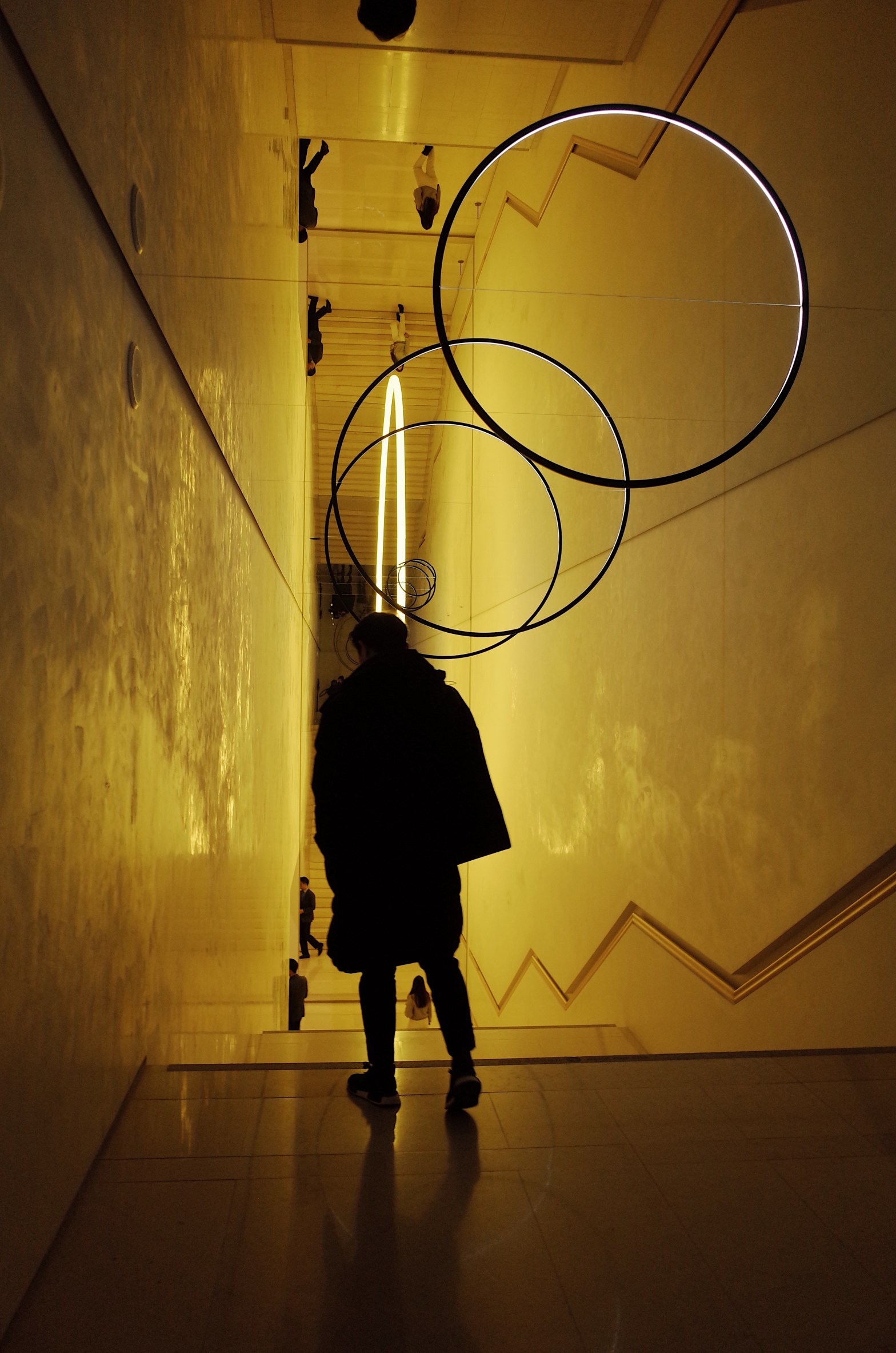
Enjoying the Leeum museum despite slightly blurred vision…

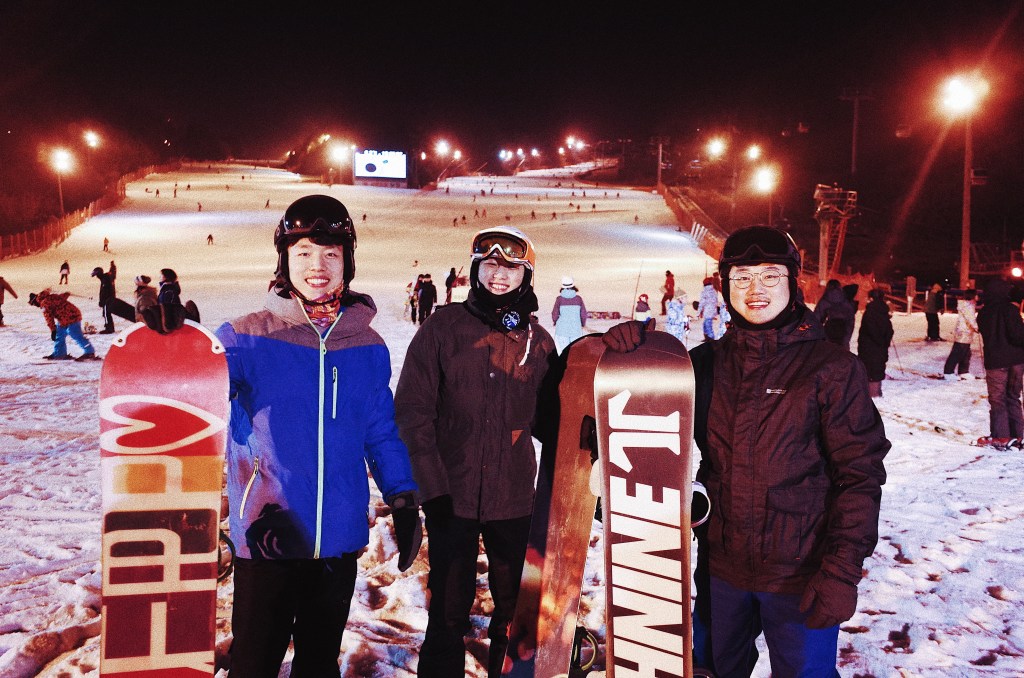
My cousins are amazing. Last time I was in Korea in 2018, first time in 15 years, I told them I wanted to go to Busan. They made it happened. This time I told them I wanted to go snowboarded. Again, they made it happened.

Our smiles: ctrl + c, ctrl + v

Come mid-January, shortly after my eye check-up, my sisters say they are coming to Korea: our 큰이모 (oldest aunt on mother’s side) is sick. For the first time in 23 years the three of us were in Korea together. We cramped into my tiny Airbnb. I showed them my foster neighborhood 낙성대 (Nakseongdae). We feasted on good food. We visited 큰이모 at the hospital; her cancer relapsed. We reconnected with cousins and aunts, my mom’s nieces and sisters. 큰이모 passed away short days after. We attended the funeral. We went to see where I spread a bit of mom’s ashes. We went back to our childhood apartment and ate delicious 한우 (“hanwoo” or Korean beef). We said our goodbyes. It was good, very good, to have them in Korea.

Mom with her three kids.

Seeing 큰이모 at the hospital brought back some unpleasant memories of mom, however. Like how similar mom looked like 큰이모 in that state, despite being 20 years younger. My 큰이모 was 76 when she passed; my mom was 57. I felt again the sharp grievance of her passing: she was so very young. I miss her.

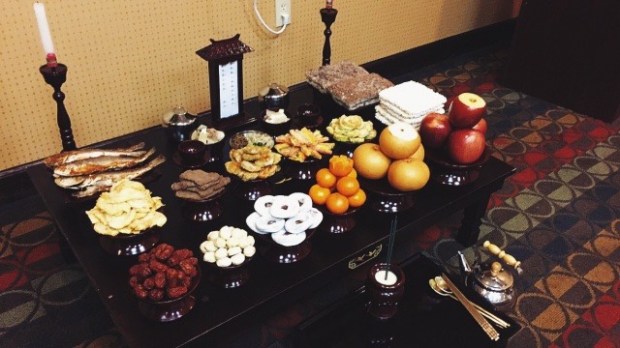
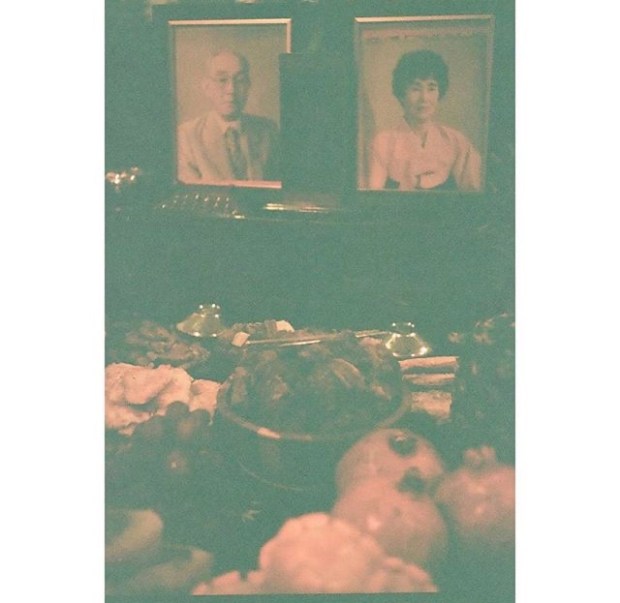
Although a sad affair, attending a Korean Buddhist funeral was fascinating. Instead of fixed hours at some future date at a church or some place special, 큰이모’s funeral started within 24 hours of her passing and right on hospital grounds. Nowadays Korean hospitals have a separate building called 장례식장 (“jangraeshikjang”), or funeral hall, where the family of the deceased stay on-site up to three days to welcome guests and friends (used to be 5-7 days, but word spreads faster now). Guests are invited to bow in front of a photo of the deceased twice before turning to the host family to bow once (the count is important). Right across the memorial space is a dining hall to feed and entertain guests (some who might have come from afar or skipped meals to attend). Near midnight before the third day, family members (only) are led to see the deceased and say their final goodbyes. This was the most beautiful yet painful part that I was able to participate. We saw her and said first goodbyes before she was wrapped elegantly with gorgeous yellow linen. (보자기, “bojagi,” is the traditional Korean art of wrapping, and it is graceful.) The coffin hugged her body with flowers, and we said our final goodbyes by placing accenting red linen in the shape of petals. The final act, which I did not attend, is taking the body up for burial the following dawn. It was exhausting, physically and emotionally; it was special.

pc: my sister. Doesn’t it look so good?

I messed up my visa for Vietnam, but it worked out for the better. So, I cancelled my flights and rerouted to Taipei, Taiwan. I love Taipei; what a gem of a city. I’ll share more in a future post with photos! Instead, enjoy these photos from my new favorite tea shop in Seoul.

차분 (Tcha Boon)

This month was by far the hardest month in the Fellowship. I’m starting to feel the effects of being away from home more deeply. I’m not an adventurer or traveler, but here I am on this extraordinary 21st-century version of Robinson Crusoe—-but, you know, without castaway, cannibals, and captivity. I guess it’s more like Eat, Pray, Love, but mine is more Eat, Read, Take Photos.

No, I haven’t been praying. I think that’s one of the reasons why January, culminating on previous months of negligent prayers, was so difficult. I’m not convinced, however, that my lack of prayer has made God fled—-God is not that petty. Rather, it’s the opposite: my lack of prayer has barred God from touching me. And theology might have aided in setting these barriers.

I want to be careful here. I still believe that theology is a gratuitous endeavor, flowing with lush satisfaction. It is absolutely indispensable for the Christian life. So, theology in of itself does not hinder prayer or intimacy with God. It is a good, a very good thing. But humans are quite good at twisting good things.

The theologian goes awry when theology stops at knowing. At least, that’s what I figured happened to me. I’ve learned a lot of theology the past 10 years, and I know I’m better because of it. But my knowledge has kept me from that vulnerable act of opening up. I’ve mistaken of not exposing myself with God’s all-knowing, as if there’s no need to oust myself when God already knows.

Oh, Sooho, you foolish theologian. Where’s the intimacy? What then is prayer? Jesus says you can know a person by her fruits; Barth says you can know a theologian by her prayers. Theology can never replace prayer; prayer is part of theology and vice versa.

Another way to put it is simply this: theology illuminates, prayer sears; theology lights, prayer burns; theology shows, prayer makes.

May I continue in such manner: further in, further up.

Perelandra // C.S. Lewis.

I’m embarrassed to admit that the first time I read Perelandra I did not enjoy it. I would like to fully recant my previous sentiment with wholehearted repentance: Perelandra is a brilliant stroke of theological rumination. I think before I was on the heels of Out of the Silent Planet‘s more adventurous narrative that I was dismayed by long stretches of what seemed like circular philosophical discourse. But Perelandra is its own luminance, and the philosophical discourse transformed into an exciting, existential face-off between pure evil and good-in-training.

Ransom embarks on another, his last, interstellar space mission. He is chosen not because Ransom is particularly a remarkable person. It’s simply because he knows Old Solar, the ancient language of the planets beyond Thulcundra, the silent planet, earth. Sometimes, or often, the most remarkable missions are taken by the most unseeming people. Ransom tells Lewis: “Don’t image I’ve been selected to go to Perelandra because I’m anyone in particular. One never can see, or not till long afterwards, why any one was selected for any job. And when one does, it is usually some reason that leaves no room for vanity.” In stark contrast with Ransom’s unremarkable status is how epic, even ambitious, his mission. Ransom is tasked, in short, to prevent a second Fall on the younger planet Perelandra, or Venus. At the time of his sending, however, he does not yet know the scale following his simple obedience.

By the time Ransom lands on Perelandra the planet is still bubbling with creative activities: floating islands are carried by waves, save one fixed land. Ransom rides one of these floating islands (from the descriptions, it seems more like standing on top of a waterbed than a large freight boat) until he happens upon a Lady in a neighboring island. She frolics gracefully with her luminous, bare green skin. He makes contact. Her speech is light and her presence affable with an aura of innocence, much like child-likeness. Still quite unsure what Ransom is to do, they talk about each other’s home: most particular is Maleldil’s prohibition for the Lady to spend the night on the singular fixed land.

Then arrives Weston. His steps and speech are more off-setting than usual. After an odd chat about the human spirit with Ransom, Weston stalks the Lady not with sexual appetite but certainly a lust to corrupt. Weston wants the Lady to spend the night on the fixed land and thereby break Maleldil’s prohibition.

From this point in the book the next third is devoted to some intense dialogue. Weston, who is later discovered to be merely a possessed body by the fallen eldila of earth, wants to corrupt the Lady by luring her to embrace complete autonomy from Maleldil. Ransom tirelessly tries to defend Maleldil and His mysterious ways. The Lady wavers back and forth, sometimes being drained by Weston’s words and other times rejuvenated by Ransom’s—-and sometimes she just tells them to be quiet as she goes to sleep. This portion is chock-full of brilliant sayings; yes, even some of Weston’s are insightful, much how The Screwtape Letters are. Below are some of my favorite lines:

“To walk out of His will is to walk into nowhere.” // Lady
“Where can you taste the joy of obeying unless He bids you do something for which His bidding is the only reason?” // Ransom
“We cannot walk out of Maleldil’s will: but He has given us a way to walk out of our will. And there could be no such way except a command like this. Out of our own will.” // Lady

A personal favorite is chapter 11, Ransom’s internal voyage of discovering the intense melding of freedom and predestination, of what we ought to do and what God does, of what it means to be God’s viceroy. There are rare moments when a person realizes that some divine destiny is inevitable. The realization is almost overwhelming to the point that questioning free choice is moot. In fact, they meld into obedience.

From here the story takes an awesome turn. I’ll let curious readers read for themselves.


There are two themes I want to touch on further. First is feminism. I’m not sure what Lewis’s position is—-I figure it’s still quite conservative by our standards—-but some of the reasoning Weston voiced sounds awfully like what feminism would say: women should live autonomously, no need to listen to (male) authority figures, pursue her own beauty, live confidently, etc. I don’t think Lewis is as flat as to say feminism and her arguments are evil by putting them on the Weston’s lips. But maybe Lewis is alarmed or uncomfortable with how divisive and isolating some feminist voices could be. Take how Ransom fumbled over words in response to Weston: often times he agreed with Weston’s diagnosis—-the world have grievously silenced women—-but disagreed with some of his prescription—-namely, becoming a wholly separate individual.

The second is this idea of how “the same wave never came twice.” It comes early in Ransom’s interaction with the Lady after observing some floating islands pass by. The idea lingers in the background, much like how a wave comes and goes. At first I had no idea where Lewis was going with this. Things clicked, however, when I came upon Isaiah 43:18-19:

“Do not remember the former things,
or consider the things of old.
I am about to do a new thing;
now it springs forth,
do you not perceive it?
I will make a way in the wilderness and rivers in the desert.”

Often Ransom felt stuck while arguing with Weston. He kept remembering what happened on earth and imagined how things could have gone differently. But what if God is doing a new thing? I mean, floating islands, green skins, and dragons (yes, there are dragons on Perelandra) sound awfully different than earth. The old paradigms of Thulcundra do not fit nicely on Perelandra. A new thing is scary because it’s uncharted territory, but God still goes with us—springing life out of deserts.

Fifty Famous Stories Retold // James Baldwin.

Time to time I break away from theology to read fiction, but I was already too preoccupied with many other books. So, this short collection was the perfect choice with short stories not much longer than a few-minutes read. I’m not sure how famous these are since I probably only heard about 10 of the 50. I’m also not sure in what way these are retold. But I do like James Baldwin, who is an unparalleled writer in his own right. It’s very impressive that someone like James Baldwin, a fireball in his nonfiction work critiquing contemporary society and culture, to write children’s work. It shows the breadth of his literary prowess. There’s not much to say except that these short stories are 98% Western. Still fun, I’d say.

Third Moon in Seoul

This post is coming late due to recovery from LASEK surgery at the end of December. The surgery went well; I am still in wonder with my new 20-20 vision—it’s a whole new world.

Forgive thy sinner for I have been indulging on my guilty pleasure: starting too many books at once.

At one point I have had these on the roster:
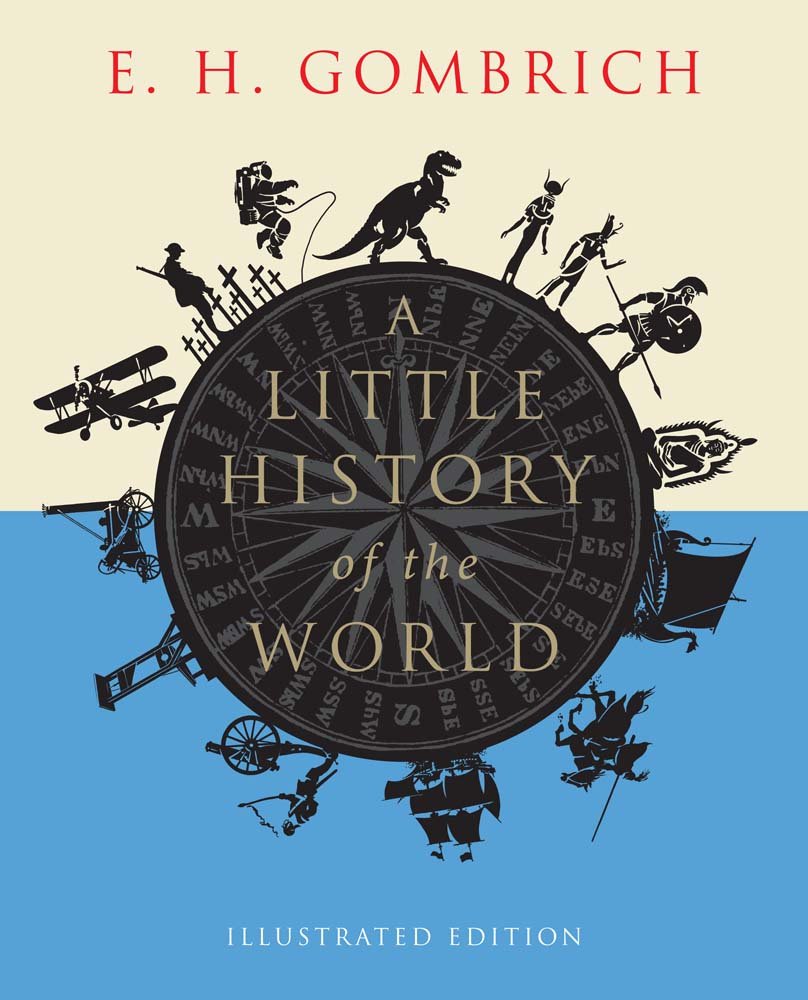
E.H. Gombrich, A Little History of the World (1936)
C.S. Lewis, Perelandra (1943)
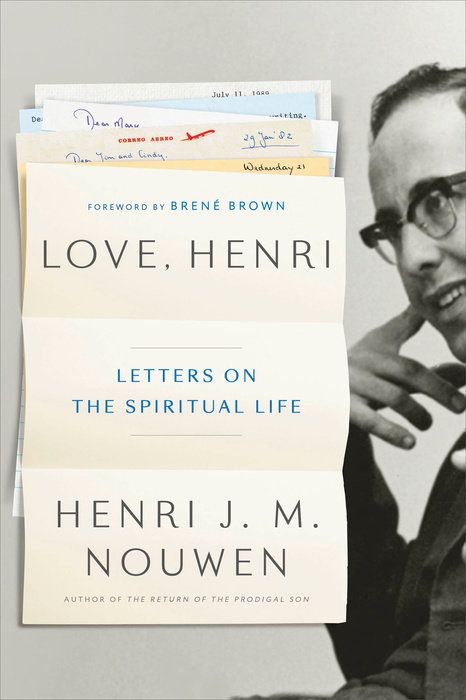
Henri Nouwen, Love, Henri (2016)
Eugene H. Peterson, As Kingfishers Catch Fire (2017)
Fleming Rutledge, Advent (2018)
Kathryn Tanner, Christianity and the New Spirit of Capitalism (2019)
Martin Luther, Lectures on Deuteronomy (1960)
Frances Young, God’s Presence (2013)
Paul Tillich, The Courage To Be (1952)
Margaret Atwood, The Testaments (2019)

If this isn’t a chronic problem, I don’t know what is.


This month was tougher than months prior. I’ve started to feel homesick. But it’s a kind of longing without the devastating troughs of loneliness. I miss my family, my friends, my old rhythms, the familiar bed and trinkets (namely, books) my room stored, the drives and walks I would take, the time I would spend with beloveds. In short, I miss what I had—the things I’ve treasured and taken for granted, the grand and small things.

Me and my adorable nephews
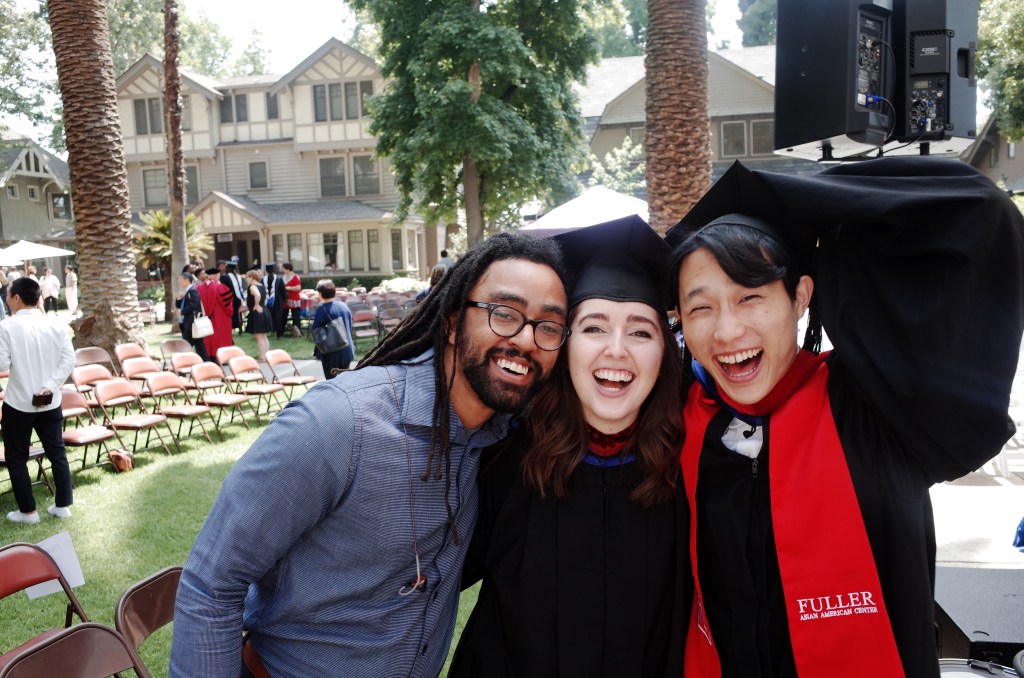
Me and my adorable Fuller friends

Longing without loneliness, it’s definitely a foreign feeling. I’ve struggled with loneliness for so long that having my heartstrings pulled in intense longing without the grooves of loneliness felt new. The tug felt visceral, but not painful. Couple nights I teared in bed, but not out hopelessness. It was as if all the sweetness and savor of passing time the old ways were sapped, and all that’s left is barren memory. It’s strange, really, because other days the memory would be sweet, stirring gratitude. Homesickness, however, accents the bodily emptiness—the not-here- or not-anymore-ness of memory. I don’t think it’s bad. Homesickness is a companion to memory as much as thankfulness, and I believe it has its own place in maturity.


To extend my visa, I had to make a quick trip overseas. Japan was the obvious choice: tickets are cheap (I think because of Korea’s No-Japan boycott) and I’ve never been. Kyoto was pure bliss. I don’t think I’ve ever been to a more idyllic city. Walking around was a delight. Taking in the sights felt scrumptious to the eyes. (See more photos from Japan, here, here, and here)

The most sobering moment was visiting Nijo Castle, former residence of the last shogunate. The pairing could not have been more opposite: admiring Nijo’s impeccably kept gardens and remembering Japan’s brutal imperialism of Korea and other Asian nations. The last shogunate Tokugawa Yoshinobu, however, already relinquished his powers to Emperor Meiji by the time Japanese imperialism started. But the symbol of Japanese power was still palpable. Even strolling through minkas (traditional Japanese houses) reminded me of how many hanoks (traditional Korean houses) were razed (not all because of Japanese imperialism, mind you; Korean War also devastated Korea’s topography). And as someone who is a sucker for traditional architecture, the realization was a downer. This didn’t stop me, however, from marveling at Kyoto’s various constructions, from minkas to shrines.

Nijo Castle

Advent reflections this year were somber, as they should be according to Reverend Fleming Rutledge. The message of Advent is a movement from dusk to dawn, but starts in utter darkness. For four weeks, we grope through the long night, stumbling over the atrocious and odious. We put our hands and feet into the mire and swamp. We weep aloud that all is not well and groan with creation awaiting redemption. Only at peak darkness do we marvel at the child of light, who promised to come again. This is Advent’s rhythmic movement.

These past months a growing fear has crept in, showing its ugly face under Advent lens: virulent nationalism. It presents itself as a most noble attribute, to stand for something bigger than one’s own life. It inspires courage and camaraderie. It unites people for something, but more often against something. I wonder: Is nationalism possible without some of its destructive ways? Can there be Korean nationalism that is not against Japan, or US not against Arab nations? Gombrich thinks so:

I know a wise old Buddhist monk who, in a speech to his fellow countrymen, once said he’d love to know why someone who boasts that he is the cleverest, the strongest, the bravest or the most gifted man on earth is thought ridiculous and embarrassing, whereas if instead of ‘I’, he says, ‘we are the most intelligent, the strongest, the bravest and the most gifted people on earth,’ his fellow countrymen applaud enthusiastically and call him a patriot. For there is nothing patriotic about it. One can be attached to one’s own country without needing to insist that the rest of the world’s inhabitants are worthless.
// E.H. Gombrich, A Little History of the World

It is this need to insist that other nations and the people therein are less that is frightening.

But, of course, things are always more complicated. For example, I think it’s garbage that some of Japan’s highest authorities (not Japanese people, en masse) refuse to acknowledge and recompense comfort women atrocities. There’s need for justice. But that doesn’t make Japan an unjust nation or people group, much like how Trump’s actions and behaviors does not accurately paint all of America. But how will accountability be held for the deep wounds of history? Will boycotting Japanese goods be enough to pressure higher authorities? Sadly, it has so far only fanned the flames of an economic war between Korea and Japan.

These uncertainties, questions, and general feel of discomfort are fully expressed in one question: how can one be a citizen of the world? What does it look like to grow into a human who stands for humanity and not just a nation, for God’s world and not merely a handful of people’s? I’m reminded of Martin Luther King, Jr., who Benjamin Mays said in his eulogy to that great man:

[King] drew no distinction between the high and low; none between the rich and the poor… He was supra-race, supra-nation, supra-denomination, supra-class and supra-culture. He belonged to the world and to mankind. (emphasis added, read Benjamin Mays’s full eulogy, here)

How do we live lives that shows we belonged to the world? I hope this question will continue to sear me into 2020 and beyond.


To end on a lighter note, along celebrating Christ’s birth I celebrated Will Hamin Lovett’s entrance. I’m so excited for Lovett and Koheun’s next chapter!

A Little History of the World // E.H. Gombrich.

Art historian by training, E.H. Gombrich is not the obvious choice for writing a children’s book on the history of the world. He sort of stumbled onto it and wrote marvelously, entertaining children and adults for decades.

While a doctoral student at University of Vienna in 1935, a friend in publishing approached Gombrich to skim an English history book for children and consider translating it to German. Gombrich was not impressed, so much so that he told his friend he could write a better one. His friend welcomed the idea. At the time, Gombrich was familiar with explaining complex ideas in simple prose to some friends’ curious daughter. Tired of academic technicalities, Gombrich wrote a lively chapter on the age of European chivalry, which his publishing friend happily engorged. But to meet deadline Gombrich had six weeks to write an entire history of the world. He took that challenge: reading in the morning, consulting references in the afternoon, and writing at night, save Sundays, Gombrich finished 39 chapters in six weeks’ time.

The enormous and lasting commercial success of Gombrich’s children’s book was what eventually encouraged his more popular The Story of Art (1950), which is more up his area of expertise.

A Little History of the World is an entertaining introduction to world history. Gombrich is a lively writer, though at times a bit patronizing—it is a children’s book after all! It is, however, wildly skewed towards European or Western world history—I mean, E.H. Gombrich was an art historian in Vienna in 1935; how much could he had known about American, African, and Asian histories? I never took European history, so I found the book educational and enjoyable. European history can be summed like so: Europe was a hot mess for about two millennia. Seriously, when was it not burning?

Another thing I found enjoyable is how different histories are, say, between my area of growing expertise (Christian theology and philosophy) and Gombrich’s. What are of staggering importance in theology are glossed over or altogether omitted in world histories (save Martin Luther), such as the Four Ecumenical Councils (Nicaea, 325; Constantinople, 381; Ephesus, 431; Chalcedon, 451). Vice versa, theology would be all the better, I think, if it is learned coterminously with world events, such as rise and fall of the Holy Roman Empire, French Revolution (1789-99), and the Industrial Revolution (1800s). Thus showing that theology is not an incubated product: it is forged in the heat of everyday life and of things brewing for centuries.

For fun, here are Kurzgesagt’s videos on adding 10,000 years to our AD calendars and human origins.

Love, Henri // Henri Nouwen.

It took a long time to finish this index, but I’m grateful I did. Henri Nouwen was a gem of humanity, and his precious letters show that.

I’ve always wondered how Nouwen and his books were incredibly in touch with humanity. Was it because he was a modern-day mystic? Was it because he studied psychology? Was it because he traveled the world? Was it because he spent time with the poor and the marginalized—first in Latin America then with the mentally challenged people at L’Arche communities? Possibly all of the above and more, but be sure add this to the list: Nouwen befriended people from all walks of life.

Nouwen’s correspondents range from parents; family friends; childhood friends; friends he met on the road; friends he fought with and lost; friends he reconciled with and reconnected; friends he never met and friends he planned to meet; people he wanted to talk to and people who wanted to talk to him; fans of his works and critics; people with hidden sins and people with apparent faults; couples going through divorce; the physically, sexually, and emotionally abused; people struggling with loneliness; people wrestling with their sexuality and sexual orientation; long-time Christians frustrated with the church; new believers questioning purgatory, eucharist, and social justice; people who lost jobs and enormous amounts of money; people who just got a promotion; teenagers questioning the existence of God; senators doubting God’s sovereignty; nuns and monks; circus workers; politicians and millionaires; men entering priesthood and being kicked out of it; women struggling with ministries; people who left the faith, people of Jewish faith; widows and widowers; those who lost loved ones; pretty much anyone who can write “Dear Henri,” Nouwen would respond “Love, Henri.”

Nouwen was in touch with humanity because he allowed humanity to touch him. And often the weak and vulnerable parts of humanity are windows into transcendence. God is found in the broken because Jesus is the broken human as well as God Incarnate.

Nouwen rarely responded as a teacher or someone who obviously knows more or better. Instead, he would come alongside as a fellow wandering Christian. He understood very well that Christian maturity is not so easily measurable and therefore comparable. We are all on the way together; it’s not a competition; it’s a communal pilgrimage.

Nouwen never failed to point to Jesus. How in every hardship and struggle, Jesus is already there awaiting our return. How in all kinds of doubt, Jesus walks with us as a lamp onto our feet. How in every abandonment, Jesus weeps with us and comforts us. How in every high and low, Jesus can and must be deeply loved.

One of the highlights is celebrating Nouwen’s own growth. The 16,000 letters (not all in the book) span 1973-1996, right until about a month before his sudden death. The most persistent demon, or the one that stuck out most, that Nouwen faced was loneliness. Earlier in his letters, he would tease out that the short-bits or long-bouts of loneliness and depression could form some sort of spiritual development, but a tinge of hopelessness lingered. He described them as “dark nights of the soul,” as if that’s all they were; he’s just waiting for them to past. But by the last year of his life, his outlook deepened: “Don’t forget that our deep loneliness is our gateway to the love that our world hungers for.” No longer a demon, but a burden to bear for a world equally lonely and desperate for God’s love. Loneliness and depression are terrible, Nouwen would not deny, but God is found there nonetheless.


Love, Henri is so beautiful that maybe with the start of the new year I would do something likewise. I’d be a fool to think I can ever emulate his prose and poise, but wouldn’t hurt to try, right? Nouwen started correspondence, wisely I might add, right before his 42nd birthday. I’m turning 28 in 2020. But then again, I don’t dare try to replace nor be Henri Nouwen; he’s his own and me mine.

So, I welcome you, whether I know you or not, to write me a letter by using the Connect. page; I promise to close each response with “Love, Sooho.”

Top Reads of 2019

Being the year when I finished seminary and started Parish Pulpit Fellowship, I’m pleased to say that this year’s readings are very assorted: theology, philosophy, mysticism/spiritual, fiction, sci-fi, high fantasy, dyspotian, letters, and even punctuation! It seems, more than previous years, there was a high number of gems and goldmines—as evidenced by the many different kinds of “Best” and “Most” categories I had to conjure. Or maybe I feel like that every year.

I also finally read figures I’ve been meaning to and genres I had to overlook during seminary. Every since I heard the fantastic name Friedrich Schleiermacher—it just dances off the tongue—and his infamous legacy, I’ve wanted to read him. I’m delighted to report that I found his On Religion: Speeches to Its Cultured Desires (1799) more agreeable than not. And one of my favorite genres I had to shelve during seminary is dystopian. At their best they accurately present our world in a foreign-not-so-foreign ways; in such way, I guess, they do merit theological value. I was, however, pretty disappointed by Ray Bradbury’s Fahrenheit 451 (1953)—maybe it was too hyped?

Without further ado, here’s my varied list because I didn’t want to pare down too much:


Best Re-read of 2019:
C.S. Lewis, Till We Have Faces (1956)

It’s hard, very hard, to name a favorite C.S. Lewis book—but this one comes very close. The second time around was even better than the first (see my review). I took it slower this time, chewing not only on the story but also on Lewis’s masterful storytelling, and I’m glad I did. I sunk and soared with Orual. Her plight became ash in my mouth and her revelation honey on my lips. She was answered.
Runner-Up: Henri Nouwen, The Return of the Prodigal Son (1994)

Few books merit re-reads: either it’s that good or that complicated. This is that good and that simple. The Return of the Prodigal Son is one of Nouwen’s most mature works. The way he expounds on the younger and elder sons seems to me a bit distant, as if he’s more remembering lessons learned; he really wrestles with the father, however. It’s hard being faithful and loving for so long. I’m glad Nouwen is with me and so many others on the way.

Best Fiction of 2019:
Frank Herbert, Dune (1965)

Dune!!! Acclaimed as the most sold sci-fi novel in 2003, nearly 40 years after publication. It’s more than a classic; it’s a gold standard of sci-fi (see my review). I loved nearly every minute listening to it—so much so that I even took nighttime walks to hear more! That’s damn good storytelling, and voice acting.

TED-Ed made a video about why you should read Dune!

Runner-Up: Brandon Sanderson, Mistborn: Final Empire (2006)

After sci-fi, I wanted to try my ears on fantasy. Mistborn did not disappoint (see my review). At times it’s a bit long-winded: that’s quite unavoidable since it is nearly 25 hours long on Audible. But more often than not it delighted some of the long commutes in Seoul. And more often than I would like to admit I dreamed about swallowing bits of metal to burn and harness allomantic powers. But I dared not: I don’t know the proper proportions, and allomancy is hereditary.

Best Dystopian of 2019:
Octavia E. Butler, Parable of the Sower (1993)

A modern-day prophet, that’s what she is. It was chilling to read a dystopian because of climate change and not some nuclear war or global warfare (see my review). Set not too far into the future and just around Riverside, California, it was eerie to read streets and places I know—mostly within an hour drive (minus traffic) of Pasadena. I should learn some survival skills, just in case.

Runner-Up: Albert Camus, The Plague (1947)

Another fascinating dystopian not based on Cold War fears but Black-Death-esque pandemonium! What would happen if an entire city was quarantined with an unknown but terrible disease? Would panic take over? Would old habits go on? How would a town handle such horrifying news? The Plague is not an action-packed page-turner; rather, it is a simmer that bubbles up a rich stew.

Best Theology of 2019:
Katherine Sonderegger, Systematic Theology Volume One (2015)

Katherine Sonderegger is one of my theologian-heroes. She’s creative, poetic, and unflinchingly confessional, as evidenced in the first installment of her systematics (see my review). I think one of the most captivating aspects is the way Systematic Theology Volume One reads. It’s commanding not with dominant airs but rather with staunch rootedness. It’s rhythmic like a sermon—and, no, not the boring kind. It’s ravishing to the soul—charging weary ones like me.

Runner-Up: Sarah Coakley, God, Sexuality, and the Self (2013)

Sarah Coakley is not afraid of taboo topics: sex, sexuality, gender, desire, and the Trinity. She’s not weaving these together to be sensational; instead, she thinks things are already that complicated (see my review). Our desires—even sexual ones—are hopelessly (or rather thankfully) entangled with God’s desire. And this is good news: God’s unyielding desire for us will purify and reenergize our desires properly for God and neighbor.

The next two categories before naming the best book of 2019 are more fun.

Most Informative of 2019:
Kathryn Tanner, Christianity and the New Spirit of Capitalism (2019)

Do economic theory and theological ethics go together? Well, whether we like it or not, they are already molded together, and it’ll be for the better the quicker we reckon this. Kathryn Tanner had decades ago and Max Weber centuries before. Max Weber almost made Protestant ethics subservient to capitalism. But this time Christian theology strikes back to destroy the Death Star of finance-dominated capitalism and win back humanity unto God (see my review).

Christianity and the New Spirit of Capitalism wins this category because it unpacks finance-dominated capitalism and Christian theology strong enough to combat and undo the former’s treacheries. There’s a lot, almost so much so that it merits a re-read.

Runner-Up: Daniel L. Smith-Christopher, A Biblical Theology of Exile (2002)

Scripture is saturated with exilic theology—both from and for exiled peoples. This is a Copernican Revolution of viewing Scripture as written by winners to, quite frankly, losers. The smelting pot of exile, abandonment, and divine judgment makes for some of the most wise, beautiful, hopeful, and loving theology. As Paul says, God’s power and grace are made perfect in weakness.

Most Pleasantly Surprising of 2019:
Saint Anselm, Monologium and Proslogium (1076-8)

I think Anselm gets a bad rep for being dull and narrow-minded for his Ontological Argument (or the argument for God’s existence) and ruthless for his Cur Deus Homo (or a treatise on why God became man and for Jesus’ death). Bad press, I’d say! I found Anselm to be the very opposite: exciting, open (yet critical), and full of awe before God’s majesty. Monologium and Proslogium are meant to be instructional, yes, but they are also prayers. They’re also prime examples of Anselm’s principle: fides quaerens intellectum (“faith seeking understanding”). Also accurate is the old man’s desperate plea before Jesus: “I believe, help my unbelief!” I felt like I was pluming the depths and heights of human reason with Anselm in Monologium and Proslogium. In the end, all is for more praise to God.

Thank you, Doctor Magnificus.

Runner-Up: Richard Feldman, Epistemology (2002)

It’s no surprise that the two books in this “Most Pleasantly Surprising” categories are philosophy: I always had a slight phobia to it. But I’m glad to say that it does not have to be that way—at least, not all the time! Richard Feldman is a wonderful guide into modern, analytic epistemology (fancy word for “the study of knowledge or knowing”). It’s incredibly helpful and thereby delightful.

Best of 2019:
Willie James Jennings, Acts (2017)

It’s Willie James Jennings. Need I say more? Well, I did in my review.

Jennings is one of today’s best and most articulate theologians. When he speaks or writes, one is strongly advised to heed him. Even in this more lay-level theological commentary, it is jam-packed with empire-toppling theology, such as the revolution of the intimate! The Spirit is moving through brother Jennings, hallelujah!

Runner-Up: Henri Nouwen, Love, Henri (2016)

It almost took the entire year to finish these letters. Such a beautiful human being, Henri Nouwen is. These letters exhume with love and grace. Patience and understanding saturate them, always pointing to Jesus. What a wounded soul, yet it is precisely his woundedness that so deeply touches his correspondents and readers. I have benefited and will continue to benefit from his vulnerability.

Christianity and the New Spirit of Capitalism // Kathryn Tanner.

What has Wall Street to do with Jerusalem? What has the stock exchange to do with the Great Exchange? What has economics, specifically finance-dominated capitalism (FDC), to do with Christianity? Well, when the stakes are this high, a whole lot. Lives and the very fabrics of societies are being undone at the seams by the ravages of FDC. This new spirit of capitalism drains lives and communities, enslaving them under its dark clutches of hopelessness and debt. A response, a most powerful one, must be made.


Kathryn Tanner, one of America’s foremost theologians of our time, tackles the behemoth, the Charging Bull of Wall Street, and substantiates a profound, disruptive Christian response. Instead of Max Weber’s old Protestant work ethic—namely, good Christians work hard as a sign of their salvation—Tanner proposes a new Protestant anti-work ethic: Christians who have received salvation knows that hard work is superfluous and always an idolatrous temptation. But capitalism has changed since Max Weber’s visionary and monumental Protestant Ethic and the Spirit of Capitalism; there’s a new and more menacing spirit: finance-dominated capitalism. And the kind of ethics or way of life that FDC enforces is relentless, brutal, and seemingly inescapable. Nevertheless, Tanner stands with bravado: “I am critical of the present spirit of capitalism because I believe my own, quite specific Christian commitments require it” (7). Christianity and the New Spirit of Capitalism is the fruit of her labors and commitments.

Confronting the Charging Bull requires perceptive diagnosis and compelling remedy. Tanner with prophetic prowess lists FDC’s demands. This is probably the most difficult part about the book: it’s complex because FDC is convoluted. Many times, I lost myself (and am still lost) about some things. I’ll try my best to sum her breakdown, focusing more on how FDC affects lives and communities.

Unlike the production and trades of goods or industrial capitalism where the consumer determines the production market (think supply and demand), FDC works with debt, loans, and stock exchange where investors determine the finance market (think buy low, sell high). The finance market (hereafter, just “market”) is inherently volatile: a stock can swell and inflate beyond its capacity and can free-fall in an instant. Though investors determine the market—the more they buy stocks, the more the stock-price increases and so the more lucrative the sell—investor do not coordinate with each other when to sell, due to vicious competition. The longer the stock is held, the bigger the payout, so investors stay until the stock reaches its breaking point and free-falls. When a stock free-falls, the first one out or the one who initiated the free-fall wins the most. Such volatility and such big money makes investors, finance corporations, companies and their stocks, and all employees involved slaves of the market—it demands total commitment (ch. 3).

Big money (think millions and even billions) can be made and lost within microseconds, so all parties involved sway this way or that way according to the market’s whims. The most ideal scenario is the full convergence of desires: what the employee wants is what employers want (maximally efficient use of capacities: think no vacation, overtime-work with no overtime-pay, constant stream of deliverables); what employers want is what investors want (maximal profit, even if it means huge layoffs to meet profit margins at the end of the fiscal year); and what investors want is what the market wants, which is total commitment (26-7). All that matters are the present whims of the market. One is not allowed to slow-down and reflect on the past or plan for a different future. Only the present matters, and in such totalizing way, nothing really matters since it is only the chaotic market that matters.

Anyone who disrupts or strays away from such totalizing desire for maximal profit can easily be let go or replaced. This makes for the most isolating yet most competitive environment. People compete for the credit, argue their flexibility and commitment, adhere to company’s budget cuts for quarter reports to stock-holders, and otherwise dehumanize themselves to be nothing but a dispensable part of the company.

Those outside the finance corporation are also affected. FDC thrives on loans and debt: it needs people to service their debt for investors to profit. Because of the incongruity between living wages and living costs, people often pull out loans (think any college or graduate student in America). High-interest loans are repackaged and sold to investors. These investors need people to stay in debt in order to make money off of interest; the worst would be a loan paid in full. Thus, people and investors are “chained to the past,” where servicing debt is of the highest priority (ch. 2).

FDC nurtures a kind of ethics and anthropology, or how a human should be, that is utterly constrictive and vacuous of anything truly human. The human is chained to the past of debt and loans, is overworked unto maximal efficiency due to total commitment, is lost in the chaotic and competitive present, and is stuck in FDC-morphed world. She is reduced to insignificance: an individual lost in the collective consciousness for maximum profit. She is no longer a particular human; she is a dispensable tool.

The moral narrative of FDC claims that one is completely responsible for her successes and failures. Failure to work hard has the unsurprising outcome of failure. Success is the fruit of her labors, no matter how she achieves it. But this makes little sense when all hangs on the volatile market: how is one responsible for its chaotic nature? In the end, there are no winners in FDC, except those who can afford loss—e.g., big investors with big cash-reserves. And those who literally cannot afford loss are the losers.

Christianity tells a different tale, presents another world. Instead of servicing and being enslaved to debt, God breaks the chains to the past: we are forgiven sinners. Instead of total commitment to a chaotic market, total commitment to a loving and active God is asked. Instead of being lost in the present, God reconstructs our being-in-time: we were sinners, we are being saved, and we will be saved. Instead of being responsible for one’s own salvation, God in Christ is “the motor”: nothing we do (fail to do) does not add or subtract from our salvation. “Grace remains untouched for all that, and holds out to one, as ever, sufficient power to turn” away from the past and towards the future (133). Indeed, it is the future that is pulled into the present: “The grace that is necessary to change things radically exists and is at work in the world now… the future to come in this way funds the struggle for realistic proximate futures in the present” (164). The future of God’s kingdom is already here, breaking chains and giving meaning to our lives, not just to our work.


Christianity and the New Spirit of Capitalism is a monumental work of breath-taking breadth and depth. Tanner digs deep into FDC—how its octopus legs drive extreme competition unsuitable for sustainable life. She also offers a powerful counter—another world as “an imaginative counter to the whole world of capitalism” and its Protestant anti-work ethic (219). I’ve tried my best to canvas her more important arguments, but I just couldn’t cover it all. In fact, I might need to revisit this work again and again; it is a rich reserve.

The Handmaid’s Tale // Margaret Atwood.

It’s been about 10 years since I first read Margaret Atwood’s masterful The Handmaid’s Tale (1985). It’s one of the earliest books I’ve read that left a memorable mark during a time when I loathed reading — yes, there was a time when I loathed reading. At the tail end of high school, I read The Handmaid’s Tale; it awakened me to dystopian fiction. (I’ve read The Giver in middle school, but it did not have the same effect as The Handmaid’s Tale perhaps my reading skills were not primed?) I think what captivated me most then was how terrifying and gripping fiction can be only in ways dystopian can. Also, in some preliminary fashion, I glimpsed into the terrifying reality women live in our patriarchal world. I didn’t have the lens or language then to pin-point or describe the discomfort and awry things I felt. I did not yet have my deeper awakening to misogyny — mine and the world’s — that came later and slower. Still, seeds were sown. Something is very wrong, so said 17-year-old Sooho; something is still very wrong, so says 27-year-old Sooho.

I still remember this from the first time: why does Atwood talk so much about Christianity? Why is it the Wizard of Oz or puppeteer figure of the story? Like the Boogieman, it lurks around, scaring and jading people. Internally, I was defiant — that’s not the Christianity I know! Externally, I was a timid high school student, so arguing with fellow students and the teacher was red-light all the way. And I’m mostly glad I did not stand up for Christianity. Sad to say, the more I’ve wrestled with theology, philosophy, sociology, and whatever else, the more I’ve realized how Christianity has been strange bedfellows with many un-Christian things. I’ve heard of Christian cults, abusive pastors and churches, manipulative sermons and talks, blind-sided theologies, and oppressive and marginalizing church polity. These are now the Christianities I know but that I don’t abide by. This second time around, I was almost de-sensitized to Atwood’s cast of Christianity.

What stood out more this time was the narration of Offred (or “Of Fred,” for handmaids have no names). Before, I had little patience for the haphazard style and got frustrated after failed attempts to make a neat linear story. It’s not meant to be linear. It’s not even meant to be detailed. It’s meant to be snapshots that provoke. This is the world of Offred and the handmaids: constrained and always on the verge of madness or meaninglessness. I mean, it does something to these women when the interior design of their housing gives more attention to suicide-prevention than aesthetics: shatter-proof windows, no ceiling fans or any hooks, no sharp corners, no sharp things. How many suicides must have first happened to take such precautions? The haphazard nature also reflects the constrained voice of the handmaids. They have precious little opportunities to say things, and when they speak it is always tempered by their oppressors or superiors: one false word or tone and off to the colonies — the nuclear-waste infested quarantine. Their voices are also constrained by towing on the line between madness and meaninglessness for too long. Often times, Offred would interrupt her memories and say “I don’t want to talk about this,” either because what she had is gone and painful or the numbness and hopelessness of her current situation. And as reader and listeners, we don’t really have the right to be frustrated at her. Let her be heard, in her way and in her timing, for empathy should welcome objectivity or “what really happened” and not vice versa.


I listened to this on Audible because I saw that the long-awaited sequel, The Testaments (2019), 35 years after The Handmaid’s Tale, is also on Audible. According to a few reviews, some were not pleased, calling the sequel a poor shadow of the original. Nevertheless, I bought the audiobook; it will be heard.

I did not, and probably will not, watch the TV series. I don’t think if it’s being snotty or lazy, but I rarely watch video forms of books — maybe because of too many disappointments? The three biggest shockers are probably these: Harry Potter (saw movies 1, 2, and half of 3), Lord of the Rings (saw Two Towers), and Game of Thrones (haven’t seen any, but planning to listen to all available audiobooks).

Eats, Shoots and Leaves // Lynne Truss.

Here’s a book about cringing at misplaced apostrophes and commas, about being sticklers, about Aldus Manutius the Elder (1449-1515) and his innovative printing standards, about raw potential energies of semicolons and colons, about the high duty of a writer to her audience, about itches and sensibilities — in short, a book about punctuation.


I bet, if physically able, you have a suspended eyebrow. Yes, you’ve read that correctly: a book about punctuation. What’s more, it’s an entertaining book about punctuation. Please, try to suppress your laughter of disbelief. This is serious business; this is the craft and art of writing.

Punctuation is a craft because “there are simple rights and wrongs,” but it’s also an art because “one must apply a good ear to good sense” (27). At minimum, the writer must be clear and lucid; at best, the writer is engaging, engrossing, and riveting. Often, however, the writer’s art stretches, bends, and pushes against the simple rights and wrongs of punctuation. But from this, the smelting pot of craft and art, her unique prose rises.

Proper punctuation is “both the sign and the cause of clear thinking” (202). Clear thinking here is twofold: clear to the writer and clear to the reader. The writer must know what she is writing — at minimum, it has to make sense to her. She must, in other words, be clear. Clear writing generates clear readership — at minimum, it has to make sense to readers. And the honey between is proper punctuation. It is “a courtesy designed to help readers to understand a story without stumbling” (7). Thomas McCormack puts it altogether so well:

Punctuation to the writer is like anatomy to the artist: He learns the rules so he can knowledgeably and controlledly [sic] depart from the as art requires. Punctuation is a means, and its end is: helping the reader to hear, to follow. (Thomas McCormack, The Fiction Editor, the Novel, and the Novelist, 1989, referenced in 202)

In other words, the rules — the rights and wrongs — are learned to be bested in all the more wonderful ways “as art requires.” Punctuation is its own beauty along with the beauty of her function — of making sense to readers.


Two chapters I most enjoyed — “That’ll Do, Comma” and “Airs and Grace” — correspond to my two favorite punctuation marks: comma and semicolon (and colon). Oh, the comma, what elusive yet pervasive role you play. You are the jack-of-all-trade, or you’ve at least mastered multi-tasking. You sneak up, sometimes uninvited, and play around with word-order, cadence, and clauses. People argue about you a lot: one side says the more the merrier, the other the less the fairer. To be honest, I don’t know where I’m at all the time. But I do know this: you shine in the most unobtrusive and inconspicuous way, just like in this story:

Thurber was once asked by a correspondent: “Why did you have a comma in the sentence, ‘After dinner, the men went into the living-room’?” And his answer was probably one of the loveliest things ever said about punctuation. “This particular comma,” Thurber explained, “was Ross’s way of giving the men time to push back their chairs and stand up.” (70)

How lovely is that? Albeit, I didn’t notice you at first, but once I did, I cannot unsee it, and smile (wow — four commas in the previous sentence).

The semicolon and colon, such raw potential for energetic prose. You two are almost always preferences. Your grammatical functions can be fulfilled by the period (or what the Brits call full-stop) or comma + conjunction, except the colon’s unique role of introducing at list. But don’t fret! You two are the hidden gems of punctuation’s gala: once people realize who you are and what you can do, they would want to dance the night away with you. But because you two live in the limbo of artistic preference, it’s hard to clearly define you. But this helps:

Expectation is what these stops are about; expectation and elastic energy…. while the semicolon lightly propels you in any direction related to the foregoing (“Whee! Surprise me!”), the colon nudges you along lines already subtly laid down. (114)

You are the body language of writing. When you’re active, people should take notice of you, and be excited.


I think nearly all native English speakers assume one does not need to read any book on punctuation. But just review one’s text messages or emails and reconsider. Or scan ten advertisements or billboards and ask: “Should there be a comma somewhere?” or “is that a misplaced apostrophe?” If one has no response, then one either has perfect English (whatever that means), or one is in need of something like Eats, Shoots and Leaves.

I do have, however, some differences with Lynne Truss, but they mostly fall in the American-English vs. British-English field. For one, I will die on the Oxford-Comma hill.


Linguistically, I’m a bit of a mess. Korean is (technically) my native language, but I am not at all fluent — barely conversational, actually. I’m not a native English speaker either, but I’m goddamn proud of how far my English has come. I remember friends — if I should still classify them as such — ruthlessly dismantling my sentence structures and pronunciation. A good portion of them are American-born Koreans. They probably loathed the fact that someone who looks like them sounds that foreign, an embarrassment to them all. I was 12 years old. I thought then and still struggle here and there now with insecurities about English, more specifically writing. Nevertheless, I write; I write despite and in spite of those nay-sayers; I write because I can only get better; and I write because I love English. Suck it… just kidding.

Second Moon in Seoul

It’s cold! My SoCal body can barely handle it. Thank God for heat-tech, layers, down jackets, and 온돌 (“ondol”) or heated floors. 

Can’t believe it’s already December. The day I write this, December 3rd, was the first snow of the year; it lasted a pretty hour. I’m reminded of my first snow in college. It happened to coincide with my first reading of C.S. Lewis’s The Lion, the Witch, and the Wardrobe, making the whole experience a winter wonderland. Good god, that was nearly nine years ago.

Speaking of college, definitely one of the brightest spots of this second month has been reconnecting with Justin Lovett — my old roommate, trusted friend, and beloved brother. He’s such a goof, so much so that I forget he’s two years older than me; he does too. I mean, who thinks of creating a tent camera-obscura and then pitches it by the Han River — all pro bono?

Instead of late-night runs to McDonald’s or Dunkin’ Donuts or midnight finals’ week sledding, I grab dinner with him and his wife (whose due date is sometime this week — so exciting!) like sophisticated adults. Ha! Just kidding: we still joke, play board games (defending the little village people in Catan), drink beers and wine (not with his wife, obviously), watch TV, throw darts, and ride electric scooters together. Oh, actually, there was that one night we scootered for about 20 minutes in Jamsil to McDonald’s for late-night chicken nuggets.

I feel both younger and older when we meet. Younger because our friendship is eight years deep, and I flashback to our times then. Older because we’ve definitely changed, grown, matured: he’s married and about to be a father; I’ve obtained a MDiv and traveling the world. We’ll continue to change — mature, hopefully — but I’m confident of our friendship. I think it’s because our friendship has evolved from mere similar interests to mutual love and camaraderie.


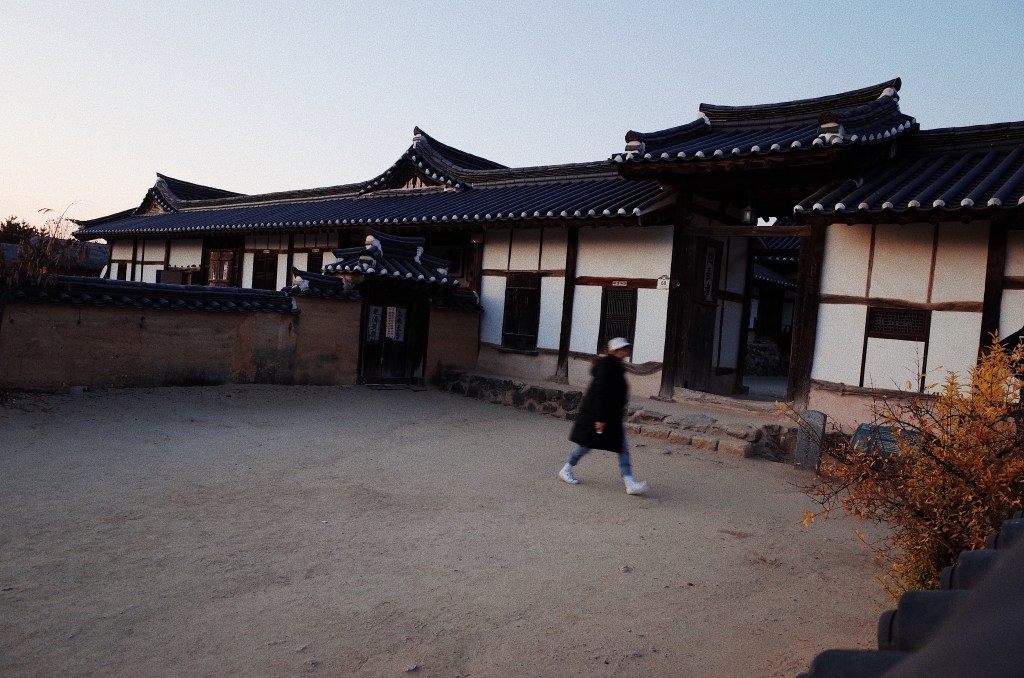
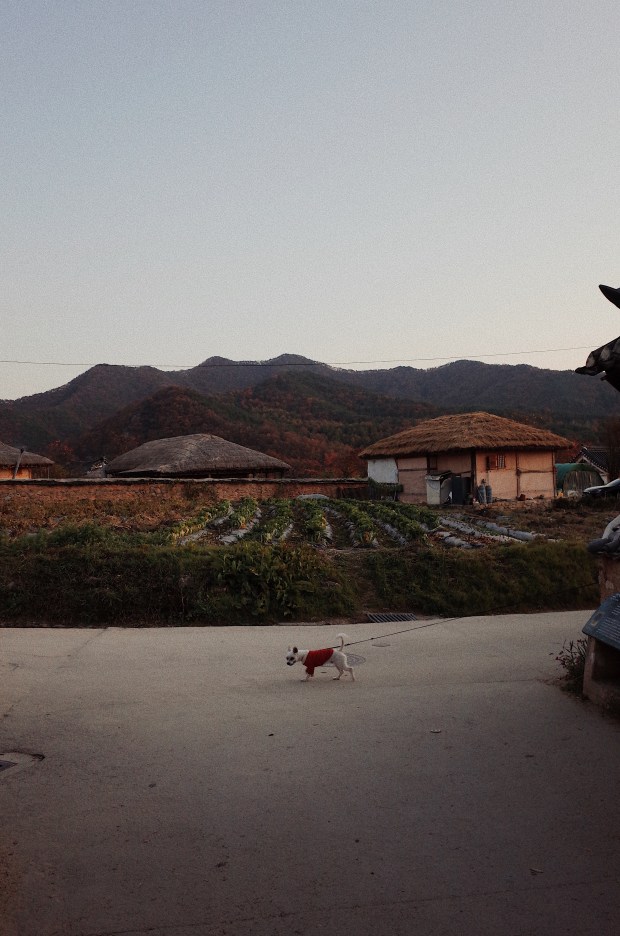
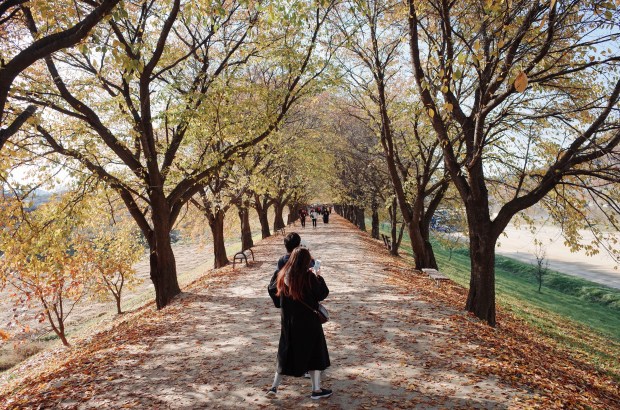
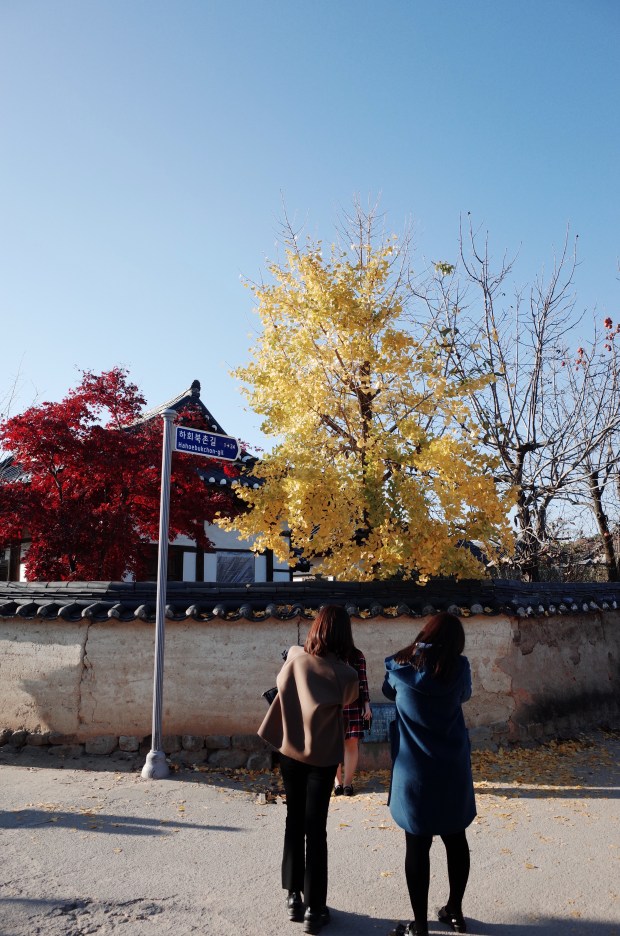
This month I got to travel more around Korea. First, I went to Hahoe Folk Village in Andong with AJ, a dear brother from LA (see more photos here). It was, wow, breath-taking in its own way. The village doesn’t captivate at first sight; no, it has a different charm. It lulls you in and invites you to stroll about her, to linger at her lasting beauty. It also prostrates in stark contrast to sleepless Seoul — Andong is dead quiet at sunset, which was about 6:00 pm when I stayed. Such a different rhythm. I wonder if places like these relax because they soothe us to match the land’s rhythm: wake up at sunrise; stroll around, not drive; lie down at sunset. Such alignment reminds that we are the land’s inhabitants, not merely some alien drone for quick profit.

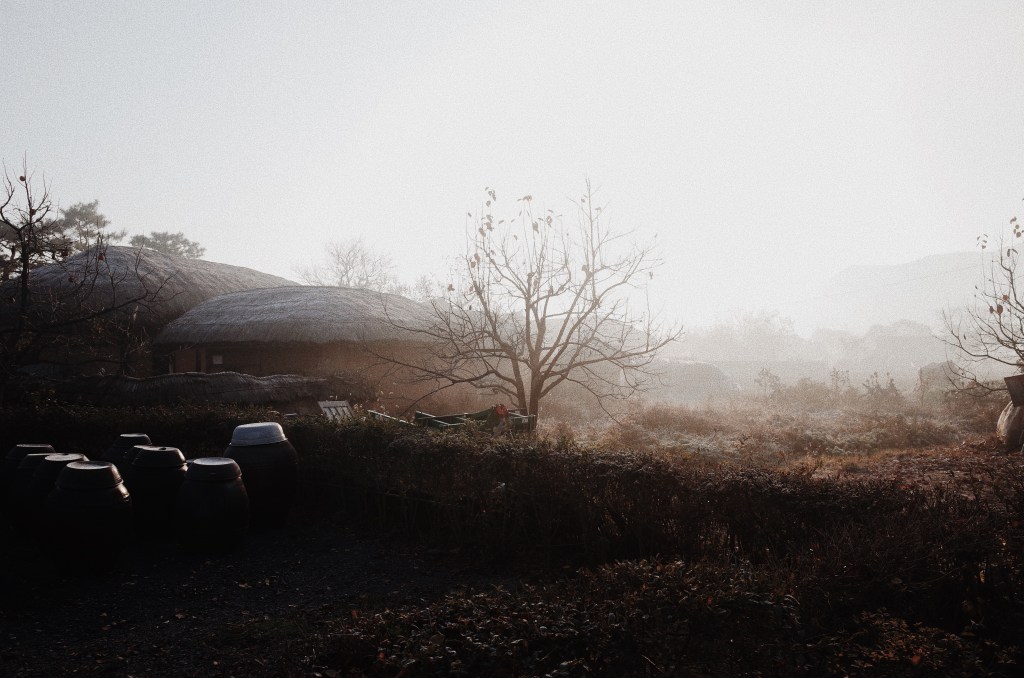
Foggy morning at Hahoe Folk Village, Andong, South Korea.

Then, I flew to Jeju lsland — back after about 17 years (see more photos here)! Despite being winter, it was quite warm, almost hot. This made walking and sightseeing that much more enjoyable. I went with my cousin and his girlfriend — they’re so cute. I was a bit of a tag-a-long or third-wheel, but they also knew I wanted to visit Jeju. It was just fun to be with them, and I cannot stress enough. It was being with them that was fun, not just the fact that it was in Jeju, though that did help.

Me, my cousin, and his girlfriend. Don’t we look so cute?

As I’m entering final weeks in Seoul and third month on this Parish Pulpit Fellowship, I’m realizing so much more the gift of bodily presence. Recently late at night, I find myself stretching out my hand into the air, as if trying to touch something. I miss what I had before terribly: the people, the places, the schedule, the habits. The most surprising thing is that I don’t feel lonely; I just miss those things, full-stop.

My rhythm has been shoddy this past month. I’ve gotten lazy, seriously lazy. Now I’m feeling guilty and pressured to work and study harder. Too much free time for too long has not been conducive for productive work. Here’s to changing it during these last weeks in Seoul!


I’m continually finding picturesque, snap-worthy places and cafes: just gawk at this interior!


Holidays are coming. Holidays are tough for some people; I’ve heard that from adults growing up. Probably because the older you get, the more people you lose. I’m thinking about my mom, though we didn’t celebrate many Christmases or New Years together. I’m also thinking about Rodney Sisco (Dec 2018) and now Stephen Rometti (Nov 2019), both precious, precious lights. All three passed away due to cancer. Goddamn it; cancers are the worst. They are painfully paradoxical: cancer cells are undying cells that cause death. They’re malicious.

I’m thinking and praying for the many families during this holiday and advent season.

The two photos above are pictures of where I spread a little of mom’s ashes. Her resting place is near where I grew up. Last year when I was looking for the spot, I wanted somewhere mundane but with a view. Just by looking at the photos, one cannot determine precisely where it is. Korea is mountainous — this could be anywhere! But look at the view below: it’s breath-taking.


Pie Jesu, dona eis requiem
(“Faithful Jesus, give them rest”)

Telling the Truth // Frederick Buechner.

How is it that I only just read Frederick Buechner? What captivating prose! I must read more by him.


Telling the Truth is a short work on the art of preaching. It’s a sort of manual, but it reads like literary time-travel that highlights critical points of telling the truth. We muse with Pilate and the ultimate question of “What is truth?” We hear Jesus’ weeping at the premature death of Lazarus. We snicker with Abraham and Sarah and God at the thought of bearing a child at 91. We wonder with child-like fascination at the ‘high magic’ that is God’s victorious grace. In short, telling the truth is telling it as tragedy, comedy, and fairy tale.

The truth must be told as all three, but not in such a way that diminishes any one. The truth is tragic because our world is tragic. The world feels awfully void, as if God is absent. Before the gospel is good news, it is bad news, and bad news acknowledges that God seems silent and absent. To deny this overwhelming feeling is to deny that Jesus’ tears were real at Lazarus’s death. The preacher must, therefore, veer from the temptation to skip over tragedy. Not an actress or a magician but rather “[s]he is called to be human, to be human, and that is calling enough for any [hu]man” (40). For to be human is to experience absence that beckons her to search presence. “It is out of the absence of God that God makes himself present… God himself does not give answers. He gives himself, and into the midst of the whirlwind of his absence gives himself” (43). And tragedy must make way for comedy — God’s surprising gesture of grace.

The gospel is comedic because God is comedic (not haha-comedic, though that’s certainly a part of it, but unexpected-comedic). The good news is the punch-line that completes the set-up. It is the unexpected gag or the Charlie Chaplin “whoops!” that breaks the silence with laughter. It laughs alongside and in defiance to tragedy. God promises the elderly couple a child way past their bearing age. Sarah chuckles, Abraham snickers, the angel giggles, and God undoubtably cackles. The laughter that God brings sees tragedy as what it is but does not quiver. This is because to us tragedy is inevitable, but to God comedy is. This is what it means to have divine perspective:

I have spoken of tragedy as inevitable and comedy as unforeseeable and seen from the inside of each, that seems to me to be so…. But seen from the outside, seen as God sees it and as occasionally by the grace of God man also sees it, I suspect that it is really the other way around. From the divine perspective, I suspect that it is the tragic that is seen as not inevitable whereas it is the comic that is bound to happen. The comedy of God’s saving the most unlikely people when they least expect it, the joke in which God laughs with man and man with God… (72)

Telling the Truth is certainly a worthy read for any storyteller, though it is thoroughly Christian. Each chapter tells the particular truth of the truth, whether it be tragedy, comedy, or fairy tale. I was, however, a bit disappointed by the last chapter. It lacked the gripping storytelling of the first three chapters. Nonetheless, it is still a great chapter, especially for recapping the whole flow of the book with poetic prose:

Let the preacher tell the truth. Let him make audible the silence of the news of the world with the sound turned off so that in that silence we can hear the tragic truth of the Gospel, which is that the world where God is absent is a dark and echoing emptiness; and the comic truth of the Gospel, which is that it is into the depths of his absence that God makes himself present in such unlikely ways and to such unlikely people… And finally let him preach this overwhelming of trade by by comedy, of darkness by light, of the ordinary by the extraordinary, as the tale that is too good not to be true because to dismiss it as untrue is to dismiss along with the it that catch of the breath, that beat and lifting of the heart near to or even accompanied by tears, which I believe is the deepest intuition of truth that we have. (98)

Indeed, let us tell the truth.

Deuteronomy: The Torah of Life.

Deuteronomy is the only Pentateuchal book fully narrated from Moses’s perspective. We hear Moses — his successes as well as his failures and frustrations — in his own voice. We must hear his pastoral and vulnerable voice. Instead of the timid Moses at the Burning Bush, Moses thunders life, blessing, warnings, and even threats in these, his last words to wandering Israelites.

After decades of unaccounted time wandering in the wilderness, Deuteronomy records Moses’ last words. Keep this in mind: Deuteronomy always stands between life and death, wilderness and promise land. Moses preaches repentance as well as instructions for life. From this ledge, we are advised to look back and look forward, to remember God’s faithfulness and to hope in God’s continual love. For first listeners, Deuteronomy is Moses’ last words before entering the promise land. For listeners of Scripture, Deuteronomy is Moses’ eternal words between life and death, for we are always in between life and death. We stand with Moses at the cusp of the Jordan River, of life with God unbridled. This is also how I imagine Israelites in Babylonian exile heard Deuteronomy while they finalized its final form (whether one believes Deuteronomy was finalized right after Moses’ mysterious death or during exile a millennium later, it’s nevertheless fruitful to consider the exilic perspective, which permeates a good portion of scripture). So whether at the threshold of promise land or in the furnace of exile, Deuteronomy speaks.

Moses’ last words are most properly understood as sermons, though long stretches seem to drone on about the most minute laws. Consider, instead, these long stretches as preached law — they are thick with concern for the marginalized as much as fervor for uncompromising worship. Moses does not preach law for law’s sake; he preaches for Israelites’ sake, and that is a important distinction to keep in mind. Torah is law — or better, instructions — for life, and life abundant.

Why Deuteronomy?

It was senior year at Wheaton College, and I was auditing Daniel I. Block’s Hebrew Exegesis on Deuteronomy. It was a Master’s level class, but I had a good relationship with him, so I snuck in for free lectures. On the first day Dr. Block thundered: “Deuteronomy is the Gospel according to Moses! It is a book, through and through, on God’s grace.” That really stuck with me. It became and still is the lens with which I read Deuteronomy.

Deuteronomy is what Romans is to the New Testament (or Romans is what Deuteronomy is to the Old Testament). It is the heart of Old Testament — dare I say, the whole of Scriptural — theology. It concludes the Pentateuch, is the forgotten book during Deuteronomistic History (Joshua-2 Kings), is the obsession of the Psalter, is the main dialogue partner of Wisdom Literature, and is the fiery engine of prophetic speech. Deuteronomy is also the second most quoted book in the Gospels (Psalms is the first). Paul, Peter, and the other epistles make better sense with Deuteronomy in mind. Deuteronomy is the most detailed account of the heart of Torah. To understand or taste Deuteronomy is to understand or foretaste the rest of Scripture.

Broad Outline of Deuteronomy

  1. Moses’ First Sermon: Remembering the Grace of Yhwh (1:1-4:43)
  2. Moses’ Second Sermon: Explaining the Torah–the Grace of Yhwh (4:44-29:1)
    1. Second Sermon I: The Heart of Torah (4:44-11:32)
    2. Second Sermon II: The Torah for Abundant Life (12:1-29:1)
  3. Moses’ Third Sermon: Trusting in the Grace of Yhwh (29:2-30:20)
  4. Final Things: Joshua, Song, and Death (31:1-34:12)

Post Schedule (20)

  1. Introduction to Deuteronomy [this post]
  2. Remember Unto Life (1-4)
  3. Remembering the Covenant and Ten Words (5)
  4. The Shema (6)
  5. Exclusive Allegiance to Yhwh (7-9)
  6. The Core of Covenant Relationship (10-11)
  7. Exclusive Worship of Yhwh (12:1-15:18)
  8. Celebrating Yhwh (15:19-16:17)
  9. Division of Power I: Judges and Kings (16:18-17:20)
  10. Division of Power II: Levites and Prophets (18)
  11. Violence: Manslaughter, Court, and War (19-20)
  12. Domestic Cases I (21)
  13. Domestic Cases II (22)
  14. Social Cases I (23)
  15. Social Cases II (24)
  16. The Weight of Covenant: Celebration, Commitment, and Blessings and Curses (25-28)
  17. Final Plea: Choose Life! (29-30)
  18. Blessing the Next Generation (31-33)
  19. Singing the Torah (32)
  20. Conclusion to Deuteronomy (34)

Photo: “Moses with Tablets of Stone,” Marc Chagall, 1956.

Andong (2019)

AJ and I were, by no means, strangers when we first planned our trip. The beginnings of our relationship, however, never went beyond our Tuesday small group. But desperate for an English companionship in Korea, I jumped on the opportunity to meet him to visit a small, unsuspecting traditional village called Andong (안동 하회마을). The initial awkwardness quickly fizzled out: we connected through raving about the autumn foliage, uncanny similar food preference, acute need for introversion, and Korean ballads–욕심 by MeloMance.

First time riding KTX
Random noble’s house by a dried up river
Front door
Courtyard
Me looking like I’m picking my nose

Serenity. The morning exudes it. It’s palpable, served on a silver platter. Unlike in Seoul, where one is absolutely desperate for a sliver of it.

The host’s warm breakfast
Looks straight out of Kdrama
People were waiting in line for these red and yellow leafy trees

One of my favorite meals (above) was getting 제사밥 (ancestor veneration meal). All the traditional roots, vegetables, dried goodies served course-style. A typical ancestor veneration table (left) is set as a feast for the dead. This one was set by my dad, my step-mom, and me in Montgomery, Alabama of all places–guess the dead don’t mind traveling anywhere for a free meal.

The Well of Ascension (Mistborn 2) // Brandon Sanderson.

I went into the second book of the first Mistborn series with some hesitation—I was pretty disappointed by Frank Herbert’s Dune Messiah, the sequel to Dune. Brandon Sanderson did not, however, disappoint.


The impossible is done: the Lord Ruler—a god—is defeated! But his last words to Vin and her crew are chilling: “You don’t know what I do for mankind. I was your god, even if you couldn’t see it. By killing me, you have doomed yourselves…” Perhaps, he is just spewing nonsense right after his defeat—unable to accept his loss. His words bother Vin, nonetheless: why did he say “what I do” and not “what I did“? Everyone knows that the Lord Ruler became what he is—a powerful, god-like allomancer—after he drew power from the Well of Ascension and defeated the Deepness, a greater evil than the immortal tyrant himself. Had he not defeated the Deepness once and for all? What else did he presently do for mankind?

With the Lord Ruler disposed of, Elend, an ill-equipped idealist, becomes the new king. His radically opposite policies of democracy and equality are almost too good at the heels of a tyrannical, oligarchical, and slave-powered economy and politics. Nobles, rising merchants, and recently freed Skaa begrudgingly tolerate each other in Luthadel, the capital of what was the Final Empire. Elend barely has his throne. He’ll be lucky to have his city when there are not one but three armies ready to siege and conquer Luthadel: a wild Cett, a rouge Jastes, and a malicious Straff Venture—Elend’s father.

While everyone focuses on protecting Luthadel from any of or all three armies, Vin and Sazed stumble upon the greater evil that the Lord Ruler forewarned: the Deepness is coming back. What is it? Why was—is—it so terrible? How did the Lord Ruler defeat or keep it at bay? Can the Well of Ascension give her the powers necessary to hold back the Deepness, just like how the Lord Ruler did? The more Vin and Sazed dig into the Deepness, the more they realize that this is a greater evil than the three armies combined. Vin needs to find the Well of Ascension, perhaps she is the Hero of Ages foretold. Or perhaps not.


Unlike The Final Empire, The Well of Ascension is more political, especially how Elend develops as a king and ruler as he negotiates with three armies and their three equally crazed leaders. Sazed, the poised Terrisman, undergoes a terrific and tragic character development. Vin, the self-doubting heroine, is a bit more frantic in this book. I mean, she is the sole Mistborn in Luthadel, charged by Kelsier the Survivor at his death to protect his and her friends and her lover Elend. Breeze was another I enjoyed with his literary-time (also the tone and cadence that Michael Kramer voices for Breeze is just delightful).

Out of the Silent Planet // C.S. Lewis.

After Till We Have Faces, I’ve been feeling… C.S.Lewis-y.

Poor Ransom! Caught up in an interstellar mission without training or consent! Is a philologist or linguist even an acceptable person for the job?

Apparently, he is.

What happens when a philologist is taken captive by a mad physicists and an old, forgotten nemesis to Malacandra? Well, he would escape at his first opportunity, but then gets hopelessly lost in an alien planet filled with alien ecosystems and, well, aliens. Fear drives him mad and desperation to risk gulping the strangely warm river. He wanders and stumbles upon an alien—something that looks like an oversized bear-duck-penguin. He then hears with his philologically trained ears something akin to language. The thing is intelligent and, perhaps, not just rational but compassionate. He braves a first contact. The alien gestures an offering of drink—later he would learn that it is customary to share drink upon first meeting. And for the next months, he would live with Hyoi and among the Hrossa. He would learn the language and way of life. He would communicate and connect with aliens.

Ransom’s journey through Malacandra is a literary treat with theological depth. Simple conversations between Ransom and Hyoi are thick with insight. Ransom is baffled by the Hrossa restrained sexuality: why not savor its pleasures continually? Hyoi equally baffled responds: why can’t I savor the memory of the pleasure? Why think that memory is something less than the moment of pleasure? Why can’t pleasure be extended to memory?

When Ransom tried to explain something akin to sin or evil, which there was no word for in Hrossa language, Hyoi responded with “bent.” A “bent” hnau, or sentient being, is the closest thing to a sinful or evil human. Just let that simple word choice sink in. Something that is bent is not aright with oneself and others—there’s dissonance and harmony interrupted. But something bent can be set aright. I wonder, however, why Lewis did not use “broken” instead of “bent.” Maybe to still create distance between Malacandra and our world.

The only negative thing about Out of the Silent Planet is that it is woefully short, something that J.R.R. Tolkien said—unsurprisingly. The Malacandran world is textured with diverse life. The Hrossa are known for poetry and song but also seafaring ways. The Sorns, creatures with long faces and long limbs, are known for philosophy but also for cold cave-homes. The Pfifltriggi, small dwarf-like beings, are known for mining and craftsmanship but also being easily bored. Most of the book focus on Ransom’s interactions with the Hrossa, so the others are only given broad strokes.

Fun fact: Ransom is J.R.R. Tolkien—also professor of linguistics—in the Space Trilogy, just like how he is the Uncle in Narnia.

God, Sexuality, and the Self // Sarah Coakley.

After a lifetime of ground-breaking and ground-laying systematics and philosophical theology, Sarah Coakley returns to one of her earliest theological itches with the theological courage to write and publish on tabooed subjects—the messy entanglement of sexuality, gender, desire, the Spirit, and the trinity. The product, God, Sexuality, and the Self, opens her ambitious four-part systematic theology, titled On Desiring God. In following volumes, Coakley will address theological anthropology and race (vol 2, Knowing Darkly), the public realm and secular institutions of prisons and hospitals (vol 3, Punish and Heal), and Christology and eucharist (vol 4, Flesh and Blood). (As noted elsewhere, Sarah Coakley and Katherine Sonderegger are the first and only two female systematicians [that I am aware of] working on a multi-volume systematic theology. See my review of Sonderegger’s first volume here.)


While Coakley eschews an “excursus on method,” or what Jeffrey Stout belittles as “throat-clearing” (33), as the first volume of On Desiring God and a volume in its own right Coakley opens with theological prolegomena, or introductions on method. Coakley, however, draws a fine line between throat-clearing and what she has in mind, which is redirecting theological explorations with fresh imagination.

In the first two chapters, she redirects readers to look at overlooked sources, seemingly disparate things, and loosely connected strands with fresh and contemplative eyes. She calls such venture théologie totale (“total theology”), which is marked by a theology in via (“on the way”) and contemplative prayer. Such posture and movement allows—even privileges—prayer, aesthetics, and social sciences (cf. 88-92 for the nine hallmarks of théologie totale). Théologie totale calls strange bedfellows, such as sexuality and the trinity, as proper partners (pun intended). It is more than interdisciplinary work; it is an ambitious opening that makes the discipline of theology porous, even vulnerable, to interruptions.

What opens theology is not human work per se but human submission to God in contemplative prayer. Such submission opens the pray-er radically humble before the God who interrupts. Without this opening, this humble welcome, theology is just another human enterprise. For theology to be theological, God must be able to interrupt all levels of theology, hence théologie totale.

In such théologie totale spirit, Coakley brings together gender, sexuality, desire, and the trinity in all their messiness. Coakley starts that desire—Eros—is properly divine, and that human desires are secondary to divine desire. Human desires can go awry—desiring mastery in sex and gender ordering, for example. So, human desires must undergo the crucible of divine desire in contemplative prayer—when the Spirit interrupts the pray-er. Making desire fundamental puts sex, sexuality, and gender under theological light. Sexual desire is refined under desire for God, and the gender-binary—what contemporary gender theorists bemoan and conservatives zealously protect—is exposed to redemptive light. In radical divine desire, the Spirit enlivens hearts Godward to experience Sonship with the Father. In other words, the Spirit catches humans up to trinitarian life—threeness. This threeness interrupts the fallen twoness of gender-binary.

Coakley says so much more. Her analysis of three major critiques against systematic theology (being hubristic, oppressive, and male-center) and her responses thereof are piercing. Her exegesis of Romans 8 as a critical proto-trinitarian text that privileges the Spirit—the “incorporative” model of the trinity—and of Gregory of Nyssa and Origen are illuminating. Her chapter on icons and the disappearance of the Spirit is revealing. And her overall fervent defense of the Spirit’s place and primacy is fresh and inviting.


God, Sexuality, and the Self is a rich and thick read. Nearly every chapter (except four) is a storehouse of theological tour de force. She says it is written for the wider public, but I think she has entry or intermediate level seminarians in mind. Personally, I found her arguments cogent, but only with some effort. The places I’ve stumbled most, however, were due to the oddity of such an argument: who thinks that sexual desire is refracted desire for God that privileges the Spirit in the Trinity? But perhaps that is precisely why her work is so important—it’s odd but revealing.

I highly recommend listening to her yourself, here.

Systematic Theology Volume 1 // Katherine Sonderegger.

Many theology books are instructive, some delightful, and a few inspiring, but precious rare ones set a fire so deep within that it both burns me thoroughly and is impossible put out. Katherine Sonderegger’s Systematic Theology Volume 1 is such fire.


“Theology awakens a grateful heart.” (vii)

This is particularly true of Katherine Sonderegger’s first installment of her daring project: Systematic Theology Volume 1. To my knowledge, Katherine Sonderegger and Sarah Coakley are the first two and only women working on a multi-volume systematic theology; you can read my review of Coakley’s first volume here. So, Sonderegger’s systematic theology is a welcome breath of fresh air and daring testament.

Sonderegger dares to speak afresh tired divine traits, namely, omnipresence, omnipotence, and omniscience. We often drone these as divine attributes, not really chewing on its substance. “God is everywhere,” so says omnipresence. But if God is Light and Radiance, does the Holy One dwell in darkness and the hidden recesses of our abandonment and fears? “God is all-powerful,” so says omnipotence. But if power corrupts, then does absolute power—God Almighty—corrupt absolutely? “God is all-knowing,” so says omniscience. But if God is Knowledge itself, then what is the relationship or distinction between ours and God’s knowledge? Without fresh eyes and voice that tackles pressing questions, theology tends to crust and flake.

God is invisible and hidden; that is His Omnipresence…. God is humble and living; that is His Omnipotence…. God is Eternal Spirit and Lady Wisdom; that is Divine Omniscience…. God is Love; that is His very Nature and Goodness. (xvi)

Sonderegger also revisits these divine attributes because they’ve become so tired that they’ve devolved into stumbling blocks. The Omni-God is too stagnant and too unlike the dynamic, fiery God of Israel, so says critics. But Sonderegger, like her predecessor Karl Barth, rings a resounding “No!” Rather, we have misunderstood and misapplied these very biblical divine-attributes. Instead of abandoning them, the omni-traits are in dire need of rekindling—sparking their explosive depth.


Systematic Theology Volume 1 is rich and textured. Sonderegger is in constant conversation with theological giants—Augustine, Aquinas, Schleiermacher, Kant, Barth, and Jenson. This can make her a difficult read. The nuance of her claims can go undetected without some elementary grasp of these figures. Nonetheless, her overarching themes stand tall, some of which I’ll touch on below.


Subjective in Objectivity

Who is God? And what is God? (Qui sit et quid sit Deus). These are questions of an entire lifetime. Nothing reaches so deep into the purpose of human life, nor demands the full scope of the human intellect as do these two brief queries. (xi)

Just like how Thomas Aquinas opened his magisterial Summa Theologica, Sonderegger puts these two questions at the head. These are properly two questions, not one, and they mutual inform and shape one another. Philosophy and “abstract” thinking tends to dominate the What question: God as object of reason and speculation. Systematic theology obsesses over, however, the Who question: God as subject or actor in the Bible and history. And either side tends to keep each other at arm’s length. Sonderegger rejects such binary. God is both Subject and Object; just listen to her dynamic prose (best read aloud):

Almighty God, we say, is both Object and Subject: both What and Who. In just this astonishing truth lies the surpassing humility of God, that He will come within our roof, appear to heart and mind as Spiritual Substance, lie open to our investigation and praise. Deity will “receive predicates,” be described and set out as a Nature with Attributes. Divine Objectivity will invite us—a great wonder!—to explore the Unique Reality that is Deity: Omnipresence, Omnipotence, Omniscience, Infinity…. The Objectivity of God closes the intellect up in wonder. The richness of this Mystery is inexhaustible, and we study it only in prayer.
But this is not all that should be said; not by a great measure! For God is also Subject, also Person and alive…. Almighty God does not “possess” Perfections, nor “have” a nature: His Objectivity is not under the aegis of His Subjectivity. The Lord God, rather, is simply personal, Person, in all His Nature and Substance: he is this Living One, this Identity altogether in His full Reality…. [And] in all His unsearchable and infinite Mystery, God is Person and Nature, Subject and Substance: One God. (xii-xiv)

In other words, God offers Himself to be studied—to be an Object, Nature, and Substance. But God never loses His dynamic personhood—to be Subjective and Person in His Objectivity. God is humble but uncontrollable, knowable but mysterious. With such a stroke, Sonderegger reunites the What and Who questions and rekindles the omni-traits with God’s blazing presence.

Compatibilism and the Oneness of God

Sonderegger’s insistence on God’s Subjectivity in His Objectivity is reflected in her other repeated themes: compatibilism and the oneness of God. In short, all of God’s Who and What are compatible because of God’s oneness. God as Love, Goodness, Beauty, Truth, Light, Hiddenness, Power, Humility, Knowledge, and Spirit are compatible because God is One. This is the bedrock of Sondergger’s systematic theology: the mysterious unicity and irreducible oneness of God.

Such starting-point stands against the 20th-century trend of putting the Trinity or Christology at the helm. She characteristically responds, “not all is Christology” and “not all is Trinity.” She is not saying that either is unnecessary, but that they have their place only within and after the oneness of God (the Doctrines of the Trinity and Christology are addressed in her next volume). Sonderegger is not being revisionist; rather, she is trying to be faithful to Holy Writ, especially the First Testament (or Old Testament):

The Christian doctrine of God begins, is governed by, and finds its rest in the call to the One God, the One Lord of Israel. (3)

The shema, the first creed, confesses the Oneness of God (Deut 6:4). Everything else follows. Such compatibilism and oneness renew the omni-traits: God as Light and God’s Hiddenness in omnipresence; God’s Humility and Dynamism in omnipotence; and God as Knowledge and Eternity in omniscience (honestly speaking, I found omniscience the most difficult to understand; I’ll need to revisit this section).

Theology as Spiritual Language

Sonderegger’s prose is simply delightful and sublime. She writes theology as prayer and doxology. She heralds as she confesses Divine Fire. It’s devotional—a deep well of replenishing. It is one of the best features of her work. Satiate in her stylistic prose in the following quote on the gratifying nature of theology; I recommend reading aloud:

To speak of God, to name the Divine Perfections, should be honey in the comb, the river of delight, the freshness and strong elixir of love. Love is the Truth of God, but also the Beauty. God is sublime, a zealous Good. Love alone is as strong as death, its passion fierce as the grave. To know this God, the Living Lord, is to hunger and to delight and to hunger once more. Theology should pant after its God, the Love that is better than wine, for God is beautiful, truly love, the One whose Eyes are like doves. Eat, friends—all theology should ring out with this invitation—drink and be drunk with Love. (472-3)

She writes and does theology as it is should be done: full of praise and God’s rapturous love. And she writes as such out of theological convictions, for God is Love and Beauty. This stands against the typical, dry academic writing—boring as a sloth. Yes, there’s time and room for meticulous precision and clarity, but should not theology also reflect the beauty and allure of God? To feed the soul as it informs the mind—filling our lungs with God’s life-giving breath?

I hope to write and do theology as such. It is a rich and searing endeavor, allowing Divine Fire to scorch and warm, to consume but not destroy.


Many thanks to Oliver D. Crisp who introduced me to Katherine Sonderegger, or “Saint Kate” as we affectionately called her while feasting on her book.

Also, Brad East’s review is both fair and detailed. His example inspired mine.

Theology and the End of Doctrine // Christine Helmer.

In 1984, George Lindbeck, professor of theology at Yale University, published The Nature of Doctrine, a short manifesto that succinctly summarized a new way of doing theology: the so called “postliberal theology.” The proposal is simple: theological formation is best modeled after cultural-linguistic development. In other words, learning theology is like learning a language: one needs a community of “native speakers” and a handful of grammatical, or “orthodox,” rules set by said community. Thus, theology is properly bred in the Church: the community of believers and the heirs of the Tradition (as a Lutheran, Lindbeck most likely only had the Western tradition in mind). Lindbeck along with his colleague Hans W. Frei inspired a generation of theologians and instigated the Yale School of Theology. (You can see my review of Lindbeck’s book, here.)

The Nature of Doctrine also inspired some dissenters and critics—not always mean-spirited, however. Kevin J. Vanhoozer, for one, in his Drama of Doctrine adapted the postliberal proposal from cultural-linguistic to “canonical-linguistic.” In other words, Vanhoozer made Scripture, not the culture of one’s church, the fulcrum of theological formation. Vanhoozer appreciative yet critically builds upon Lindbeck. (You can see my review of Vanhoozer’s book, here.)

In Theology and the End of Doctrine, however, Christine Helmer more so corrects Lindbeck. This was inevitable. The Nature of Doctrine is about 150 pages, summarizing centuries and giants of theology in scant pages. He was bound to make caricatures, notable for Helmer, Friedrich Schleiermacher.

Lindbeck whisks off Schleiermacher, that “prince of the church” as Barth reverently (or pejoratively) labeled him, as merely an expressivist. Schleiermacher did nothing more than reduce theology to an emotion, a gut-feeling, or a subjective experience of God, so says Lindbeck. This distain for bursts of emotions and personal testimony of God in Lindbeck is actually representative of post-Enlightenment academia. Such distain causes a riff between one’s doctrine and one’s reality. When one’s experience of God is negated, then one’s doctrine is a mere husk of words, so says Helmer.

Thus, Theology and the End of Doctrine tries to restore the connection between doctrine and reality—not just the human’s but also God’s infinite and inexhaustible reality. And bursts of religious experience testifies of God’s immensity. They do not always discredit doctrine’s philosophical rigor. They do, however, force doctrine to look back to God as its rightful subject-matter. Doctrine should breathe life as it attests the life-giver.

Helmer does a lot in her book. On the one hand, she is correcting stereotypes in churches about doctrine being dry husks. On the other, she is solidifying the mutual beneficial relationship between personal experience and social sciences with religious studies, beyond mere deconstruction. She also traces modern German intellectual history while correcting misconceptions of Schleiermacher. It is thoroughly researched proposal. But it is also just that: a proposal. Lindbeck unfortunately never returned to writing a full treatment of postliberal theology; Helmer hopes to avoid that oversight in the future. In the meantime, I will return to Theology and the End of Doctrine as I wait in anticipation.

First Moon in Seoul

I find myself gravitating, more frequently now, towards the familiar and comfortable, usually in small forms. I enjoy fresh, clean sheets. I sip on warm coffee, either at home or at one of Seoul’s many fine cafes. I warm myself up with tea at night, usually after an exceptionally large meal. I watch the same shows I watched in the states, namely K-Dramas and K-Varieties. I read, and I write. I pray and confess. As I create new rhythms I incorporate old ones in this new place. Thankfully, my simple pleasures are not tightly space-bound. I can rest between mint sheets in or out of the States, as long as there are sheets and some sort of washing method. I can rivet about theology in or out of the States. And I can savor coffee, whether an exquisite pour-over or one of Maxim’s KANU mixes.

고로커피로스터스 (Goro Coffee Roaster), a neighborhood cafe, has grown to be one of my favorite nooks.
Their coffee is a bit pricey, though—but worth!

I have a little over two months left. As time’s arrow marches forward (a little Bojack tribute), questions germinate. Why am I here? What have I accomplished? More importantly, who am I becoming? Often people ask me the first question, Why Korea first? My go-to answer is: if I’m going to spend a year in unfamiliar places, I want to start with the least unfamiliar. I have friends and family in Korea. I don’t in the other places I’m looking. But go-to answers are often formed by a balance of what to show and what to hide. What I want to show is that I know why I am here. Ironically but unsurprisingly, what I want to hide is that I don’t know why I am here. But that’s not news. I’m sure that most people in the world do not do and live always with 100% certainty.


Life is lived in the mire of trust and doubt, hope and disappointment, wants and dislikes—not in absolute certainty.

Certainly, though, there are moments of absolute certainty, but they can fade away into doubt or solidify as trust. For example, I first was certain that this Parish Pulpit Fellowship was mistaken in choosing me. Then I was certain that it is an awesome gift. Now I continue to trust that it is God’s gift to do something in and through me. This evolution from certainty to trust is good because trust is sturdier than flutters of certainty. While moments of certainty can pass by, trust stays rooted. This is because trust is nursed by critical reflection and strengthened by action. So, I ask myself, what have I accomplished?

Not much, I think. According to my proposed reading schedule, I am very behind. But I’m delighted to report that I’m not too bothered by that, which is, again, big for me. Maybe “accomplished” is not the right verb. I’ve done a few big things: I went to Southeast Asia for the first time, saw the the great temple of Angkor Wat and others, and enjoyed the rapidly-modernized Kuala Lumpur (see photos from Cambodia).

Angkor Wat at 5 am.

I’ve also done many small things: ordered 배달 (delivery food), munched on street food, roamed my neighborhood, spent long hours commuting and listening to audiobooks (Mistborn! See review here), walked into restaurants at odd hours, drank wine and read, and frequented convenient stores (god-sends, if you ask me).

And I still make mistakes. I still get lost. I still get hot flashes when I mishear or misunderstand what someone says. I’m sure I’ve mispronounced or misspoke a word or phrase, exposing my foreign upbringing. I still sleep late and wake up late. I still lounge around at home instead of braving the (now colder) streets—exploring and learning with my senses. It’s hard to fit-in or adjust when time is relatively short… and when you’re an introvert.

All these—the big and small things I’ve done, and the mistakes I’ve gathered—help form and shape who I am.


The hardest doing is being—or becoming. So, the question of who am I becoming is crucial. It is the searing question.

Right after take-off from LAX, I cried for the first time (in a long while) on the plane. I left good people—people who loved me dearly. I felt both alone yet deeply loved. Precious memories of love and more importantly of those good people rushed and soothed as I shed tears. It was both an uncontrolled and silent sob—a mixture of grief and gratitude, sweet to the heart but salty to the lips.

I’m reminded of—because I’m reading—C.S. Lewis’s Out of the Silent Planet. As Ransom the inquisitive philologist, or linguist, dug into the alien Hrossa language and mind through Hyoi, he raised questions about customs and habits. The Hrossa are naturally, almost biologically, monogamous. What’s more, they rarely mate. This baffled Ransom: if a Hross has the chance and means, why not enjoy sexual pleasures more or have more children? Why be stuck with only the memories of these pleasures? Hyoi, equally baffled by Ransom, replied thus:

A pleasure is full grown only when it is remembered. You are speaking, Hman, as if the pleasure were one thing and the memory another. It is all one thing…. What you call remembering is the last part of the pleasure… When you and I met, the meeting was over very shortly, it was nothing. Now it is growing something as we remember it. But still we know very little about it. What it will be when I remember it as I lie down to die, what it makes in me all my days till then—that is the real meeting.

Likewise, I do not always interact with love ones, but I savor the memories we’ve garnered together. I do not savor them because the pleasure has ended, but because the they are part of the pleasure. I let them blossom in me, so that they might become cherished treasures. And these treasures, too, shape who I am becoming. So, when people meet me, I hope they’ll meet more than me. I hope they’ll meet the people who have treasured me and I them.

The Final Empire (Mistborn 1) // Brandon Sanderson.

That’s it. I’m sold. I am a fan: Mistborn is simply… amazing. Thank you, Brandon Sanderson. Thank you, Michael Kramer (Audible voice).

In this epic fantasy or high fantasy, Sanderson fills a world full of magic, metal, politics, and the age-old struggle between the oppressors and the oppressed. There is the underdog, Vin the street peasant; the whimsical teacher, Kelsier the famous thief; the evil tyrant, the immortal Lord Ruler; and a crew full of layered yet good men: Breeze, Hammond, Dockson, Spook, Clubs, and Sazed. Along with Vin, the crew decides to entertain one of Kelsier another crazy plan: to overthrow the Final Empire and the Lord Ruler. It’s crazy and out-right impossible. But the Lord Ruler has suppressed the skaa for nearly a millennium. And as skaa themselves, they want nothing short of a revolution and a new world order.

There’s magic with metals—metallic magic: Allomancy, a rare hereditary ability to “burn” certain metals or alloys that enhances the user. This is one of the most exhilarating parts about Mistborn. On top of weaving this epic tale, Sanderson meticulously spells out Allomancy. Such precision allows him to narrate clashes and tensions with such detail that it just absorbs readers (or listeners). Honestly, I don’t think I ever imagine a fight so vividly without visual aids. Let me name a few. Notice, also, how they work in pairs—it’s part of the magic:

Steel pushes metals; iron pulls.
Zinc enflames emotions; brass soothes.
Pewter increases physical abilities; tin increases physical senses.
Copper hides allomantic use; bronze detects.

There are more, but they are part of the unfolding of saga, so I’ll withhold.

An allomancer who can burn one and only one metal is called a Misting. An allomancer who can burn more than one, thus all the allomantic metals, is called a Mistborn. And a properly trained Mistborn is as deadly as she is rare. Allomancy is a rare hereditary trait. Only nobles have the slightest chance of being a Misting or, even more slight, a Mistborn. But, as always, where there are noblemen and a subclass of slaves and peasants, there are always halflings or metizos. Thus, some of the latter can inherit that precious ability. That is, if they can hide from the Inquisitors—a deadly group of creatures who hunt non-noble Allomancers—long enough to awaken their powers.


A huge portion of the enjoyment came from listening to Michael Kramer’s seasoned narration. He just has that voice—fit for listening for long stretches. It was a delight to hear him during long commutes in Seoul’s metro and walks around neighborhoods. I already purchased The Well of Ascension, the second installment of first Mistborn series.